
About the project
United Wisdom is a space for people who want to understand themselves more deeply and live with greater awareness.
Some questions need more than a quick piece of advice. Why do we repeat what hurts us? How can we stay true to ourselves in relationships? What can we rely on when familiar answers stop helping? How can we distinguish our own choices from fear, habit or other people’s expectations?
Who we are creating this for
For people who recognise these questions. For those who are searching, questioning, going through change, or simply trying to understand what is happening in their lives.
What we do
We explore how philosophy, psychology, science and spiritual traditions describe human experience. We compare perspectives, explain complex ideas and connect them with everyday life. We preserve the distinctions between scientific evidence, philosophical arguments, faith and the authors’ interpretations.
The main library
Explore a subject in depth, consider different approaches and return to the questions that matter.
Plain Words
Approach a complex idea through familiar situations, unusual images and humour.
Addictions
Read about addiction and recovery from different perspectives: for yourself, for someone close to you, or to understand what is happening.
Life touched by war
Life during and after war: safety, loss, relationships, returning home, and support for yourself and those close to you.
Ageing
Changes with age, dignity, independence, relationships and care — with attention to each person and their choices.
The person within a system
Life amid rules, power and dependence: retaining autonomy, recognising pressure and abuse, assessing risks and finding support.
Maria Method
Maria Method develops the project’s applied direction: exploring a specific life situation, your own points of reference and possible next steps. We are preparing this direction for a separate launch alongside the open library.
About the upcoming launch →Why we do this
We want people to have more clarity and freedom in their own decisions. We want difficult experiences to find words, and an encounter with different perspectives to help people find their footing.
You can read, return to what matters, disagree with the authors and find your own answers. The decision about what fits your life remains yours.
The Soft Power of Knowledge
We are creating United Wisdom in the hope that knowledge helps people see their lives more clearly, understand others better, and notice possibilities for choice where only one response once seemed possible.
Our purpose is not to set people against the system or to call for the destruction of the world as it exists. We want to help people understand the relationships they live within and find ways to change life with greater responsibility and less pain.
Families, organisations, societies and states are made up of human relationships, rules, habits, interests and expectations. Every existing order has its own history and ways of maintaining stability. When intervening in it, we need to understand what sustains people’s lives, what harms them, and what will happen after things change. Dismantling an old arrangement does not, by itself, create a more humane future.
Yet stability does not always mean justice. An order may endure at the cost of fear, silence or someone else’s exhaustion. A thoughtful approach to change therefore includes the ability to notice suffering, speak about it, and improve the conditions that keep producing it. People need both inner clarity and the opportunity to be heard.
We believe in gradual change that involves people at every level: from a president to the person who cleans the president’s office. Everyone has their own sphere of decisions. People differ in how much influence they have, and greater power brings greater responsibility. But a person’s dignity is not determined by their position.
For us, awareness takes shape in concrete actions: noticing our own fear, questioning a familiar explanation, listening to an objection, seeing how a decision affects another person. Acknowledging a mistake. Distinguishing what we can change ourselves from what requires collective action and new rules.
This work can happen in a conversation between parents and a child, in the way a manager treats an employee, in a scientist’s research, or in a decision made by someone on whom other lives depend. We hope that opportunities for peaceful renewal can emerge before accumulated tensions turn into a destructive confrontation. This leaves room for disagreement, protecting personal boundaries, and peaceful civic participation.
We hope to be useful to people across the full diversity of human life.
To those who learn and those who teach. To those who explore the unknown, build homes, grow food, make decisions or care for others. To those who fight in wars, those who live amid war, and those who help people return to peaceful life. To those who are starting again, living through loss, growing older, or seeking their place in a changing world.
And to those just being born — through the adults who welcome them, care for them, and create the environment in which they will grow.
Each person will have their own questions and find their own value in knowledge. It may help one person bear uncertainty. Another may reconsider a belief. A third may see the human being behind someone else’s role, uniform, age or point of view. We want to maintain equal respect for everyone while carefully distinguishing actions, their consequences, and responsibility for harm.
We are drawn to the image of a light that helps us see more clearly: ourselves, another person, the limits of our own knowledge, and the range of possible decisions. We can share that light while preserving each person’s right to think, doubt and choose.
We call this the soft power of knowledge: the capacity for understanding to become attentiveness, for attentiveness to become a responsible decision, and for that decision to become action that makes our shared life more humane.
How the materials are created
United Wisdom is created by Andrey Zarinsh and Maria Evilkut with the participation of artificial intelligence. Human work sets the topics, editorial direction and methodological boundaries. AI contributes to drafting, translation and companion formats.
The extent of human and automated review varies between materials. An author credit does not mean that both authors have individually proofread every text and translation. AI participation does not guarantee accuracy: errors in facts, quotations and interpretation remain possible.
Sources and qualifications help readers examine an argument and distinguish fact from interpretation. Questions & Answers explores the essay’s main questions; In Plain Words explains the topic in a different voice, with examples and humour. These versions do not replace the original sources.
If you notice an error, contact either author using the links below. Include the article address, the passage in question and, if possible, a source we can check.
The people behind the project
Andrey Zarinsh and Maria Evilkut are behind the project. We bring together research, writing and lived experience, and continue learning as the project develops.
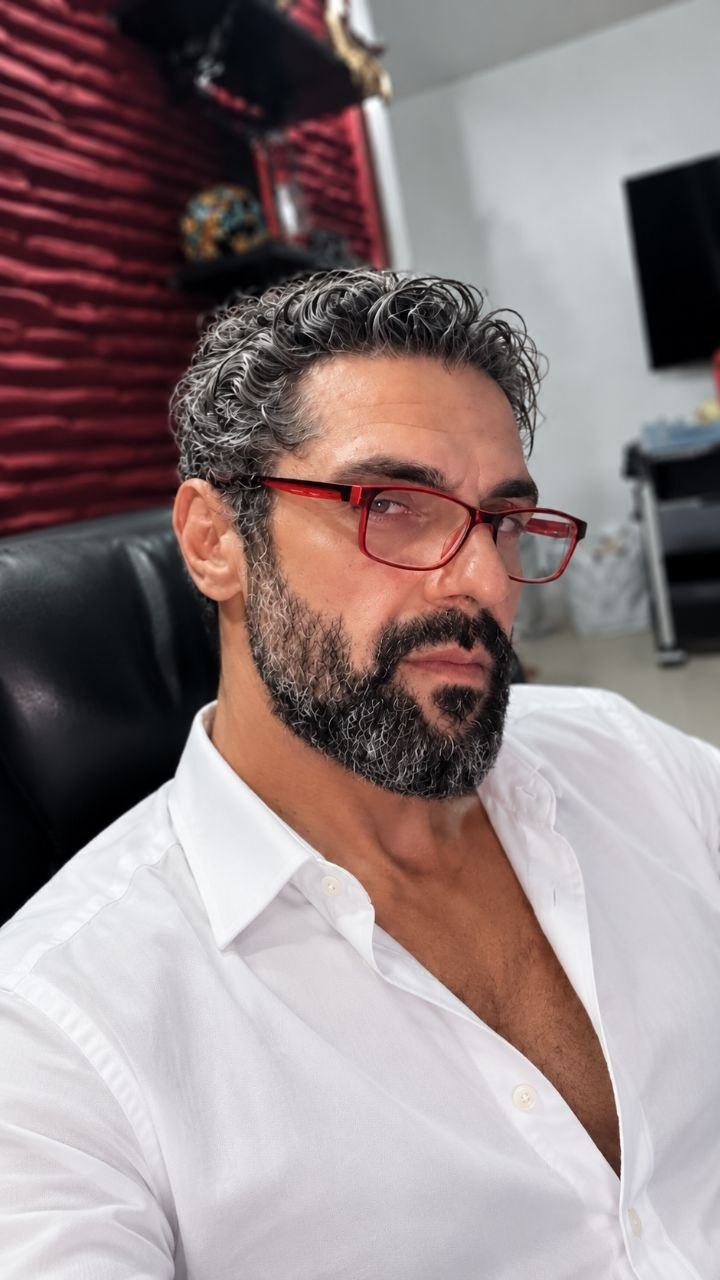
Andrey Zarinsh
Author and founder
Strategy, choice of subjects, editorial voice, final edit. Builds a deep archive on the structure of reality and its practical mastery.
@andrey.zarinsh
Maria Evilkut
Co-author
Practical testing of ideas, the link to lived experience. Keeps the abstract alive and applicable.
@ilkutkiContact
Andrey Zarinsh
Start with a question that matters to you now.
Open the library →