UNITED WISDOM
Ageing, care and independence
Dignity, support and the right to choose in a changing life.
159 · RU / EN / TH
Dignity, support and the right to choose in a changing life.
159 · RU / EN / THArticles found: 159

Discussing changing possibilities with age while retaining actual limits, assistance, and the person’s own voice.

How can an observed difficulty be separated from a premature explanation based on age, illness or the environment? The article explores describing change more precisely and choosing the next question while preserving the older person's voice.

How can age-based images replace knowledge of a person, even in caring words? The article distinguishes stereotypes from observations, assistance from taking over decisions, and respect from a demand to fit a role.

How can a conversation with an older person be accessible while preserving adult participation? The article distinguishes warmth from a childlike role, hearing difficulty from having no opinion, and a companion's help from answering for the person.

When does successful ageing become a demand to earn respect through youthfulness and activity? The article distinguishes personal aims and useful health support from performing youthfulness, and considers participation on terms that fit a person's wishes and resources.
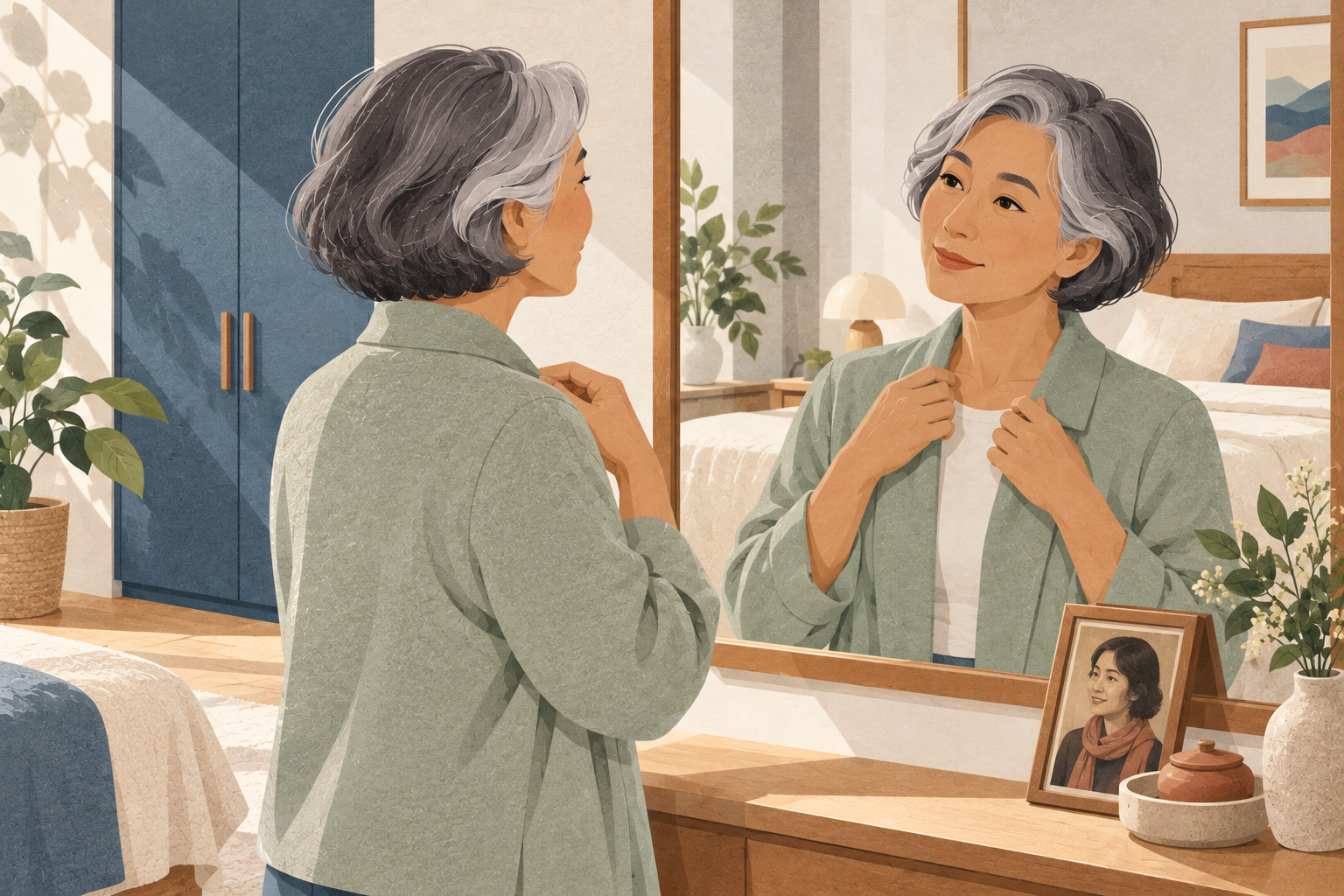
How can someone recognise themselves after age-related changes in appearance without having to like every change? The article separates resemblance to an old photograph, present bodily experience and judgments about looks, offering a way to describe change without judging the whole person.

How expectations about what should happen by a certain age become a verdict on oneself. The article separates personal wishes from family and social timetables and asks what deadline and real circumstances make something seem too late.

When praise such as “amazing for your age” assigns an older person a role as an inspiring example. The article separates admiration for an achievement from respect, leaving room for a personal voice, ordinary days and needed support.

How to ask for specific help after years of independence while retaining your decisions and responsibility. The article considers the scope of a request, the other person's right to refuse and reciprocity without unlimited debt.

How can help expand autonomy while keeping a person involved in decisions? The article distinguishes access from capacity and a person's purpose from another's execution, examining support through the choices it makes possible.

An adult can need another person. This simple statement becomes difficult when independence means doing without help and closeness means entitlement to unlimited participation. Most ordinary life remains between those extremes: we divide tasks, use other people's knowledge, support one another and make decisions whose consequences cannot be entirely separated from those around us.

Care can begin before a request while still leaving another person room to answer. The article distinguishes noticing, asking, offering, agreeing and acting, considering refusal, third-party involvement and repair after an intrusion.

How can walking, cooking or travelling independently be discussed with attention to both risk and what the activity means to an older person? The article distinguishes support from prohibition and explores specific conditions without a dangerous test of independence.

How can capacity for a particular decision be discussed without making age answer for the whole person? The article distinguishes support, understanding a specific question and legal status, preparing a focused conversation rather than a verdict at home.

How can help at a bank or social service preserve the person's place in the conversation? The article separates the recipient's question, desired assistance, understandable explanations and actual authority without requiring complete independence.

What information is actually needed to assist an older person, and when does help become access to an entire private life? The article clarifies the task, the purpose of information and who receives it, while preserving the choice to limit disclosure.

When temporary everyday assistance has become a lasting distribution of authority, agreements can be revisited. The article separates past help, remaining needs and future terms while preserving gratitude and an adult's right to choose.

How to distinguish a limitation in an action, conditions of participation and human dignity while retaining your own choice with others’ support.

When hearing becomes harder, greater volume alone may not restore participation in conversation. The article considers describing specific difficulties, seeking professional assessment and agreeing ways to communicate while preserving the person's own voice and choices.

How to remain involved in reading, finding your way and everyday tasks when vision changes. The article distinguishes one-off assistance from independent access to information and considers suitable support alongside medical assessment.

How to discuss returning to everyday activities after a fall and fear of recurrence. The article separates urgent care and professional assessment from family prohibitions or demands for courage, keeping the person's own wishes in view.

Incontinence, embarrassment, and intimate assistance raise different questions. The article considers professional assessment, privacy, and consent to a particular care action while preserving adult participation and dignity beyond a bodily difficulty.

How to support an adult's eating and drinking without pressure or guessing why food is refused. The article separates appetite, practical access and swallowing difficulties, clarifying questions for professionals and the helper's actual role.

When fatigue becomes a verdict about laziness, character or age, a label can replace an account of what happened. The article separates observation, a difficult task and its explanation to consider demands, rest and needed help more accurately.