
Freedom & action
Creativity: giving form to an idea that is still unclear
Finding form through questioning, trials, material and selection in a hypothetical exhibition.
Epigraph
I prefer commencing with the consideration of an effect.
Edgar Allan Poe, “The Philosophy of Composition,” opening design discussion, 1846.
What this article is about
An unclear idea often arrives before its form: a phrase, a sound, several observations or an image worth keeping, with no clear sense of what to make. Demanding an immediate plan may lose the material; endlessly collecting impressions may defer every decision. There is concrete work between these possibilities: name a difference, make a trial, examine the result and select relationships between parts. This article follows that work through a hypothetical small exhibition about a courtyard. Lida distinguishes private memory from what visitors can encounter, revises her question after meeting the material and completes a particular version without promising perfection. Dewey, Poe and Aristotle offer different grounds for questions about reflection, construction and a whole. Their comparison establishes no universal method of creativity. The practice concerns ordinary, voluntary work on form, considers other people’s participation and promises neither artistic success nor a change of condition. Its more modest purpose is to reveal which decision has emerged and what remains unclear.
I. A trace that is not yet a plan
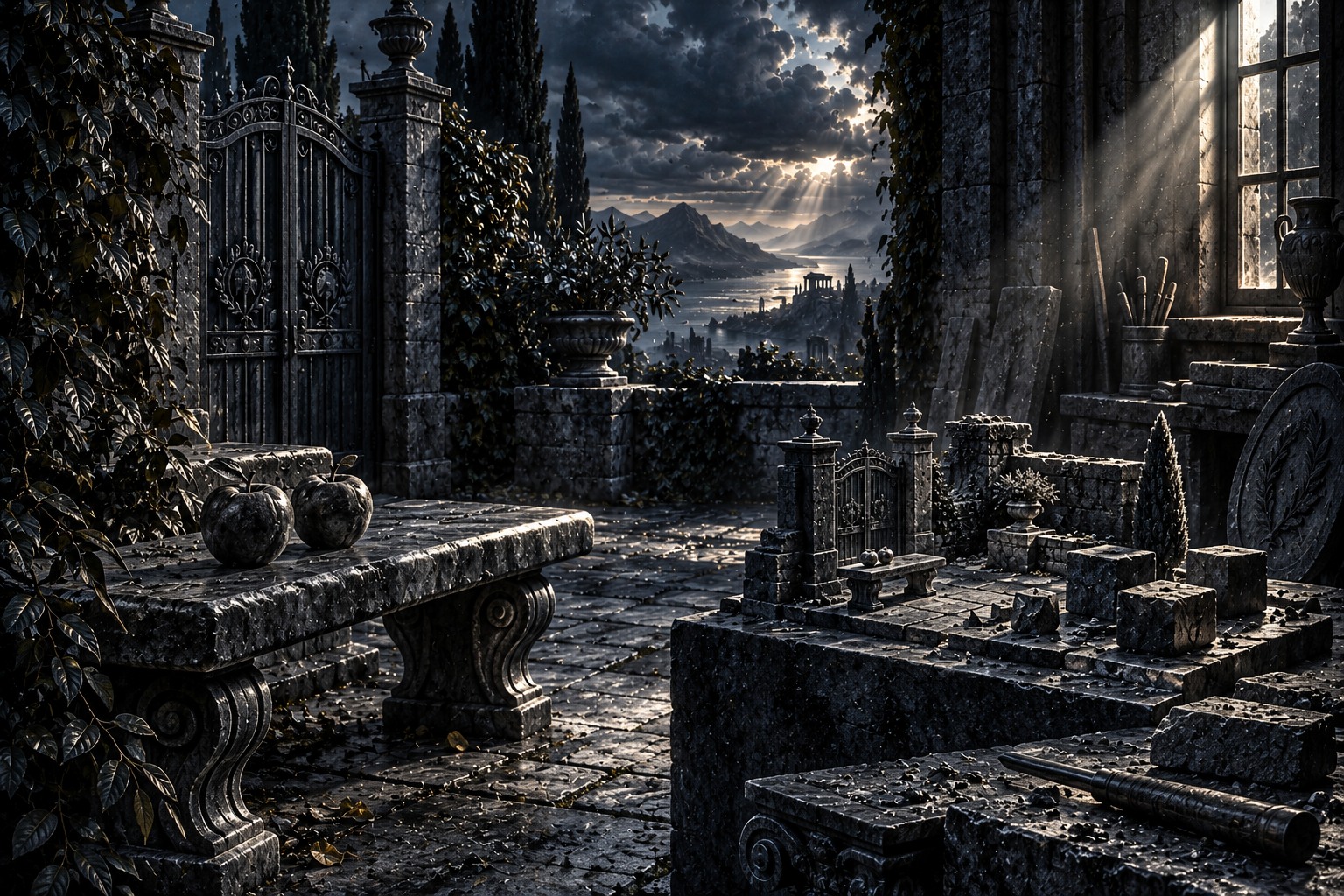
Lida is preparing a small exhibition about the courtyard where she has lived for years. Her starting phrase is “the place remembers us.” Behind it are the sound of the gate closing, light in the workshop window and a neighbour’s habit of leaving spare apples on a bench. These are impressions connected by personal attention; the exhibition itself is still undefined. A visitor might hear a story, examine an object or follow a route. Lida needs to discover which action lets another person encounter what she notices, and which impression belongs only to her own biography.
The uncertainty in this hypothetical scene has substance: there is material, but its parts do not yet visibly work together. Lida can record observations without demanding immediate unity. “The gate makes a sharp sound” and “the courtyard grows quieter in the evening” retain different features. Calling both “atmosphere” would erase something she could work with. An idea’s first form may be a distinction between two particular things. Recording it keeps that distinction available while the maker is still deciding whether sound, text or a spatial gesture will serve the work.
An unclear idea does not always conceal a future masterpiece. An impression may remain precious to its author without acquiring a suitable form for this task. Allowing that possibility from the outset means each trial need not confirm the grandeur of the original feeling. Lida may keep some notes in a private archive and use other material for the exhibition. That choice does not diminish what she lived through. It distinguishes the value of an experience from the suitability of a particular way of communicating it. A connection must be found; the strength of a memory does not automatically supply one.
A simple question about the material’s origin also matters. Lida can observe the gate sound herself; her neighbour’s story comes from a conversation with another person; an old photograph may include other people’s faces and circumstances. Possession does not settle the conditions of showing something. She marks what she can use, what needs agreement and what she will leave out for now. This gives the work an initial external boundary. She can consider it during the artistic search, before a finished composition becomes dependent on material that cannot be shown on the proposed terms.
II. A question that can hold the inquiry
The broad wish to “convey the place’s memory” permits too many different solutions. Lida tries a narrower question: “How could I show that the same courtyard sounds different in the morning and the evening?” It promises no expressive result, but names a difference that can be represented. Two recordings, two short descriptions or a map with time markers become possible. The choice of form can now be discussed. Another contributor can understand the relationship being sought and ask whether the material shows it, rather than debating whether memory itself is a sufficiently profound theme.
In Chapter VI of How We Think, John Dewey distinguishes a felt difficulty, its definition, a suggestion, reasoning through consequences and a test through observation. This is a logical account of reflection from 1910. It makes a question possible: where has this work actually stalled? Lida is interested in the material, but is still defining the difficulty: visitors do not share her memories. They need an accessible relationship between elements. The contemporary exhibition scene is our editorial argument; Dewey neither investigated it nor established the effectiveness of the sequence proposed here.
A working question remains open when several answers are possible. “How do I make an audio postcard?” already selects the medium. “What could make the courtyard’s change audible?” leaves room for text, an object or a recording. A venue may genuinely require a particular medium, making the first question appropriate. But a constraint chosen only because a familiar format came to mind can be suspended. Lida writes both versions and notices which solutions each excludes in advance. This is a small exercise in formulation, with no promise of finding a single correct route.
The question may change as material appears. After a first recording, Lida finds morning and evening less different than expected, while the pause between two sounds is clearly audible. She may revise the plan if the new version still connects with what interested her. Naming the change helps: she was examining a change of time, and is now investigating expectation between events. The note distinguishes development from a habit of declaring every outcome intentional all along. The inquiry’s history remains intelligible to Lida and to those helping her assemble the exhibition.
III. A first form should reveal a difference
For the first trial, Lida does not build the entire exhibition. She places a photograph of an empty bench on the table and plays a twenty-second gate recording. Then she reverses the order: sound first, photograph afterwards. In one version the photograph creates an expectation; in the other the viewer first seeks the sound’s source. The trial is small, but contains a decision about a relationship. She can compare that order. Adding music, a long explanation and her neighbour’s story at once would make it harder to identify what changed the impression and what needs further work.
Smallness is useful only in relation to the question. Twenty seconds may be too short if a long silence carries the idea. One photograph may not show movement through the courtyard. Calling a trial “small” does not by itself make it sensible. Its scale should allow the essential relationship to appear without requiring unrelated work. Lida might try a minute rather than twenty seconds because she needs to hear the whole pause. This change of scale serves the content, rather than a contest over who can work fastest.
A trial differs from a promise of a finished result through its purpose. A draft recording may contain technical noise that does not affect the comparison of order but would interfere with a public showing. Lida notes that separately. A useful compositional decision need not conceal a quality problem, and a technical problem need not invalidate everything discovered. Different questions require different checks: sequence now, audibility in the room later. Naming the stage accurately gives each observation its proper weight, without treating one useful attempt as acceptance of the exhibition.
Keeping both versions may help when it requires proportionate effort. The first may initially seem inferior, yet later reveal the pause that mattered. Keeping it does not require revisiting everything or turning the archive into an endless new task. A brief distinction is enough: “photo before sound,” “sound before photo.” Lida can check her recollection of the comparison. Selection then rests on accessible alternatives as well as the recent impression that new work must necessarily improve on the old.
IV. The plan encounters its material
Material responds with constraints absent from an imagined result. The gate sounds different indoors; a bright incidental sign distracts from the bench photograph; a short story needs an explanation of who is speaking. These observations do not necessarily destroy the plan. They expose a distance between intention and available form. Lida considers whether the recording, photograph, sequence or question needs revision. A material feature can become part of the work when it supports the meaning, or be set aside when it draws the viewer into another story.
A maker may attribute every difficulty to insufficient skill. Sometimes better recording or printing skills are indeed needed. Another possibility is that the selected form requires knowledge visitors do not possess. A technically immaculate recording will not resolve that compositional problem. Lida asks what relationship the work itself conveys and what she supplies orally each time. If an explanation carries all the meaning, she can incorporate it or choose a different relationship. Both options require an authorial decision; a source cannot make that decision for her.
A modest honesty about accidental discoveries helps here. A cup rings in the workshop window during the recording. Lida did not plan it, but notices a link between the courtyard and unseen life indoors. She can keep the discovery after checking its place and conditions of use. She need not claim every detail followed a strict preliminary calculation. In his essay, Poe describes composing “The Raven” as a carefully constructed sequence. That is his retrospective account. It invites attention to decisions without making every creative path equally predetermined.
The material may also require abandoning an attractive initial metaphor. If “the place remembers us” assigns the courtyard something the exhibition does not show, the phrase becomes an obstacle. Lida can leave it in her notebook and offer visitors a more precise action: listening to a shared passage opening. Losing a grand title may relieve the actual work of an excessive promise. In another version the metaphor might remain because the composition connects traces of the past. The distinction depends on its role in the developing form, rather than how precious it seemed at the beginning.
V. Selection creates relationships between parts
Lida’s folder now contains eight recordings and dozens of photographs. Each recalls a separate story, making removal difficult. The exhibition need not catalogue everything she treasures. Selection begins by asking what changes when an element is present. A tree photograph may introduce a different timescale; another bench image may merely repeat what is already visible. Repetition can stay if it creates the desired rhythm. If it remains because choosing feels difficult, that also deserves notice. The maker must distinguish an element’s function from her personal reason for keeping it.
In Poetics VII–VIII, Aristotle examines a whole and unity of action. One hero does not turn every incident in that person’s life into a single plot. The claim concerns poetic action, so its transfer to an exhibition is limited. It nevertheless helps ask whether originating in one courtyard is enough to connect every item. A shared place does not establish relationships. Lida considers the transition linking image and sound, what the change offers visitors and what removal would disrupt. The answers may also reveal a useful independence between parts.
Testing removal does not require every work to function as a tightly packed mechanism with no open space. A pause, repetition, optional detail or freely chosen route may be intentional. Their roles differ: allowing a visitor to linger, choose a direction or hear a difference without explanation. Lida need not justify every centimetre of wall as logically necessary. She can still know what experience the arrangement offers. The historical criterion becomes a question addressed to her composition, while she remains free to answer differently from an ancient theorist of tragedy.
An omitted element need not be rejected forever. The neighbour’s story might deserve a separate work rather than being squeezed into this exhibition. Lida keeps it apart without treating that as a promise of another project. Finishing one form need not create a silent duty to use every collected item later. She can thank the contributor, explain the decision and agree on retention where needed. Selection has a human dimension: another person understands what happened to their contribution, and the maker does not conceal an unresolved choice behind a vague reference to future creative plans.
VI. Another person sees without the maker’s memories
Lida invites an acquaintance to see two draft versions, explaining that she is comparing the order of photograph and sound. The acquaintance agrees to ten minutes. Her task is limited: describe what she first noticed and what connection she saw. She need not assess Lida’s talent or guess her personal history. This purpose makes the response more relevant to the present decision. If she wishes to discuss something else, Lida can listen separately while distinguishing the trial’s question from a freer conversation about the work.
The acquaintance says, “I expected someone to sit on the bench.” That differs from the intended theme of memory, but reports an expectation. Lida can examine whether she wants it and which feature created it. First she can retain the response without correcting it to “No, you should have understood something else.” Explaining her intention may be appropriate afterwards, once the unprompted encounter is clear. Otherwise the conversation becomes instruction in the right answer, losing the initial perception. Here the difference between intention and response supplies material for the next decision.
One viewing does not establish how all future visitors will respond. The acquaintance knows Lida, sees the work at a table and may pay more attention than someone passing through a room. Those conditions matter without making the response worthless. It concerns a particular encounter with a particular version. Audibility in a noisy room needs another check; freely choosing a route cannot be examined through a tabletop presentation alone. The question determines the appropriate viewing situation. More responses do not by themselves correct a mismatch between the check and its purpose.
Feedback does not transfer authorship entirely to the viewer. The acquaintance might prefer music, while Lida keeps the ordinary gate sound because it carries the intended relationship. She can acknowledge the preference and explain her decision without seeking complete approval. Authorial freedom does not, however, remove a concrete obstacle: an excessively quiet recording may genuinely be inaudible. Distinguishing a preference from an observed obstruction gives responses different weight. The maker retains the choice and the responsibility to understand which comment she accepts or sets aside.
VII. When the work becomes a whole
Lida gradually selects three elements: an image of the passage, the opening sound and a short caption about who uses the shared entrance. Visitors now have a beginning, a transition and room for their own observation. Artistic success is still unproven. But the form can be described: what is presented, in what order and with which support. The initial impulse is no longer the work’s only basis. It has an arrangement that can be shown, changed and discussed. The maker now works with a concrete whole, alongside the wish to express an important feeling someday.
For this version, Lida defines a boundary: the sound must be audible from the chosen position; the caption must not imply residents’ agreement where she has none; the elements must remain connected without her continual presence. Better lighting, printing and a new recording are still possible. Defining the boundary does not erase them. It makes it possible to distinguish what the promised showing requires from what belongs to a later version. Completion need not depend on a state in which an attentive maker can no longer imagine any revision.
A boundary may be insufficient when the relationship itself fails to come together. Postponement may then be more honest than polishing an incoherent whole. Lida tells the organiser early enough to change the arrangement. Other people are affected, and those consequences cannot be hidden within an attractive account of creative freedom. Showing any result merely to preserve the original date is not automatically responsible either. The decision must relate the work’s condition, commitments and available options: reduce the form, deliver a completed part or agree on a new date.
A form may be completed without a major public release. Lida can stop with a small domestic series if that scale fits her present interest and agreements. She can name the actual result: three connected works are finished; the exhibition project is not continuing for now. She need not invoke a lack of talent or promise an inevitable return. The description preserves what was created and the boundary of what she is currently doing. Developing an idea need not become a career programme for a particular work to matter to its maker and viewers.
VIII. Different sources leave different questions
Dewey helps examine movement from difficulty to a more definite thought; Poe describes selecting an effect and its means; Aristotle attends to relationships within a whole. Their purposes, genres and historical settings differ. Combining them into one ancient formula of creativity would be inaccurate. They serve different roles in our scene: questioning, construction and selection. Useful distinctions permit comparison without establishing a shared doctrine or proving that Lida’s proposed practice will produce a particular artistic result.
The distinction between an authorial account and an independently confirmed creation history particularly matters. Poe describes calculated decisions with confidence. Readers can analyse that account’s logic without treating every detail as independently verified. Lida need not present her process as an equally smooth sequence. It included an initial thought, an accidental sound, two versions and a decision after viewing. That mixed history is not inferior because it lacks the image of an immaculate plan. Accuracy serves it better than an impressive appearance of retrospective inevitability.
Historical comparison does not make every constraint beneficial. A small venue may suit one work and make another impossible. Insufficient time may require declining a showing. Someone else’s prohibition may prevent essential expression, and must not automatically be reclassified as inspiration. This article concerns an ordinary task in which the person can choose and revise. Coercion, threats, professional obligations and dangerous trials require other grounds. Creative language should preserve the difference between a voluntarily accepted frame and a lack of freedom to act.
The practice below is an invitation to observe one work. It does not measure creative ability, promise to remove doubt or impose an artist’s routine. Someone may proceed differently: make an object before finding a question, begin with a shared conversation or leave the material aside. What matters is an account that fits what happens and distinguishes intention, the resulting form and its examination. Naming one important relationship today is a concrete result. Its significance does not require a claim of proven transformation of the whole person.
What this means in practice
Choose one ordinary creative task in which you can freely revise your decision. Do not begin by promising a public outcome. Record two or three particular observations that aroused your interest: an object, movement, sound or phrase. Note the origin of each material and its conditions of use. If it includes another person’s story or image, clarify how you may handle it first. Unclear permission remains unclear; creative interest does not replace agreement.
Formulate one question about the future form. Check whether several answers remain possible or whether the question fixes a medium chosen incidentally. Make two manageable versions differing in one significant decision: order, pause, caption or placement. Choose the trial’s scale according to the question. A version too short to retain the necessary relationship does not become useful merely by saving time.
Examine the versions under conditions you can actually check. Distinguish a visible or audible material feature from your explanation of its meaning. When inviting another person, agree on the meeting’s scope and name the particular question. Record the initial response before explaining your intention in detail. One response retains the significance of one encounter; it does not represent every future viewer. A contributor can decline or suggest stopping without inviting an assessment of their attitude to your creativity.
Choose the next action from the difference you found. Revise the question, keep a relationship, remove an element or acknowledge that this form is not coming together now. Name a criterion of sufficiency for this version and what remains unchecked. Finish with two sentences: “I wanted to show…” and “This version actually presents…”. Describe any remaining distance calmly. The practice ends with an account of a particular work; it requires no declaration of success, diagnosis of your ability or immediate new project.
Key quotation
No cast-iron rules can be laid down.
John Dewey, How We Think, Chapter VI, p. 78. The sentence concerns reflection fitted to circumstances, rather than the absence of all requirements for a work.
Connections between traditions
| Source | Question for the work | Limit of comparison |
|---|---|---|
| Dewey, VI: defining difficulty | What is actually unclear? | Historical logic of reflection, not an exhibition study |
| Dewey, VI: observation and testing | Which difference did the trial reveal? | No compulsory creative chronology |
| Poe: selecting an effect | Which impression organises the means? | A retrospective account of one poem |
| Poe: varying a refrain’s application | How can repetition change a relationship? | A particular poetic device, not a general perceptual law |
| Aristotle, VII–VIII: whole and action | What connects the elements? | The exhibition analogy preserves genre differences |
These are distinct questions from three authors, without a claim that their traditions are identical.
Primary sources
-
John Dewey. How We Think (1910), Chapter VI, pp. 68–79. Project Gutenberg text. The complete chapter was read; its distinctions between difficulty, suggestion and testing are used. Historical reasoning does not establish the exercise’s efficacy.
-
Edgar Allan Poe. “The Philosophy of Composition,” Graham’s Magazine XXVIII, no. 4, April 1846, pp. 163–167. Poe Society transcription, Text-02. The opening and construction discussion through the combination of metre and stanza on p. 166 were read; the essay’s ending is not used. The authorial account is not treated as independently established history of every step.
-
Aristotle. Poetics VI–VIII, translated by S. H. Butcher. Internet Classics Archive. This context was read continuously; the interface does not identify an exact print edition. Applying questions about tragedy’s construction to an exhibition is our limited comparison.
Russian literal quotations are United Wisdom’s own translations; English quotations were checked against the named texts. Use consists of short quotations and commentary. Historical work status does not establish a general licence for a website, editorial apparatus or unrestricted source import.
Tags
creativity, idea, form, intention, observation, material, trial, selection, composition, question, uncertainty, completion, version, memory, exhibition, sound, image, rhythm, whole, parts, feedback, authorship, consent, attention, Dewey, Poe, Aristotle, responsibility, boundaries, craft
About the authors
Andrey Zarinsh is the author and founder of United Wisdom. He explores inner transformation, the unity of traditions, intercultural dialogue, and contemporary spiritual discipline. Instagram: @andrey.zarinsh.
Maria Evilkut is a co-author of United Wisdom. Alongside her research, she seeks to test these ideas in practice and observe how principles of unity and mutual understanding work in real life between people and cultures. Instagram: @ilkutki.
Keep what resonates with you.