
Recognising and naming the problem
The substance and the behavior: alcohol and gambling
“They do not take any drugs, so there is no real addiction.” “If betting resembles substance use, everything should be treated the same way.” Both statements miss something important.
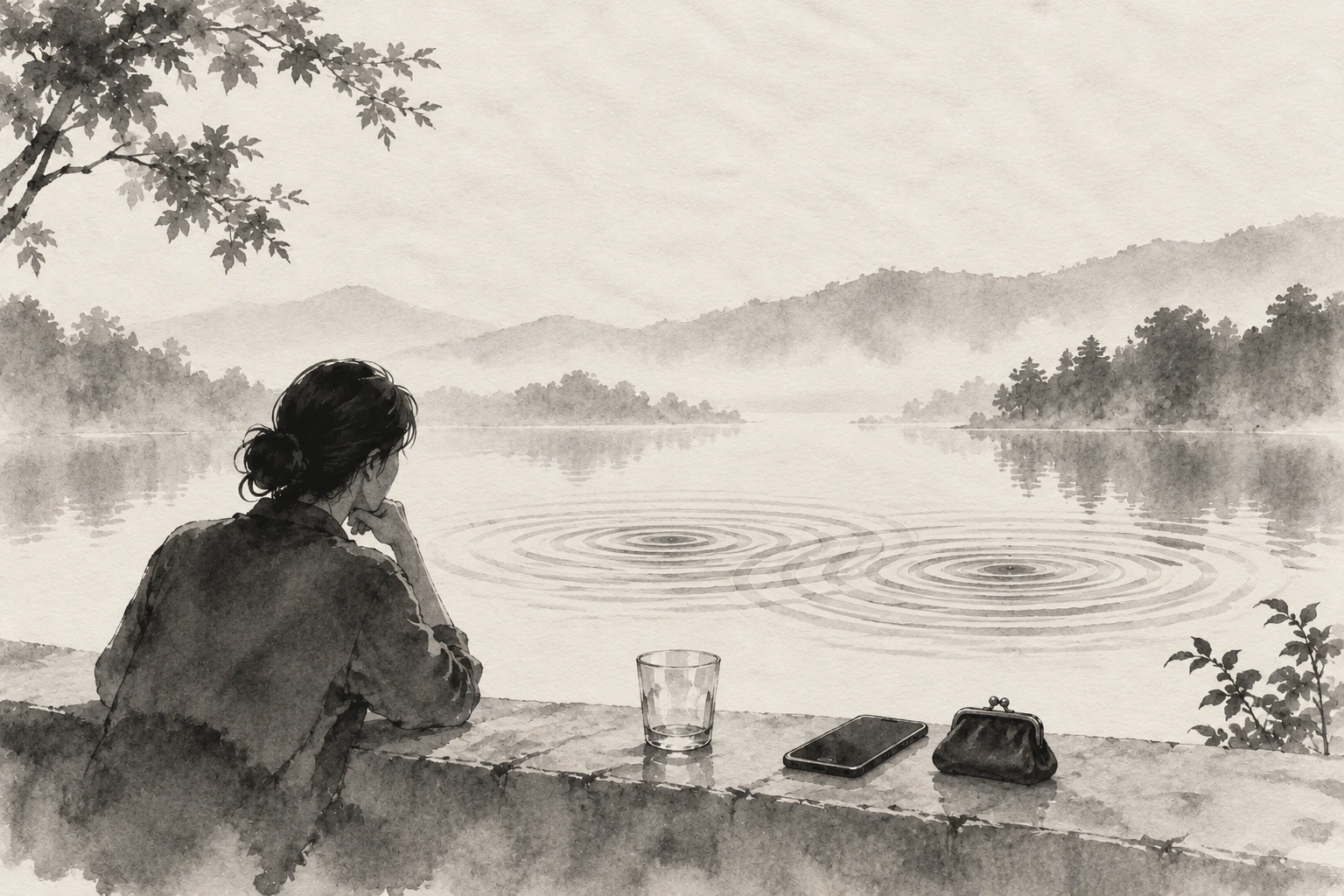
“They do not take any drugs, so there is no real addiction.” “If betting resembles substance use, everything should be treated the same way.” Both statements miss something important. A problematic behavior pattern can exist without taking a substance, but similarities in behavior do not make medical risks or approaches to care identical.
This article is for an adult trying to understand their own substance use or gambling, and for someone close to them. It compares alcohol use disorder and gambling disorder: which questions they share, and where the comparison stops working. A practical first step is to name the specific action, its consequences, and the help needed, rather than argue about which problem is “real.”
Immediate danger of suicide or self-harm requires immediate local emergency medical help. Seizures, marked confusion, or hallucinations after reducing alcohol also require emergency help now. Do not wait to identify a single cause. A financial problem does not cancel the urgency of a threat to life, and comparison with gambling does not make alcohol withdrawal safe. NIMH: depression and urgency, NHS: alcohol-use disorder.
Compare the pattern, rather than the object of interest
For alcohol use disorder, NIAAA describes a problematic pattern involving clinically significant impairment or distress. The substance and amount matter, but so do managing use, responsibilities, relationships, and continuing despite consequences. NIAAA: alcohol use disorder.
WHO describes gambling disorder through impaired control, increasing priority given to gambling, and continuation despite negative consequences. This is a clinical concern, rather than simply disapproval of how a person spends money. WHO: gambling.
The common issue is repeating an action that increasingly interferes with life and becomes harder to manage. Yet several similar everyday descriptions do not amount to a diagnosis at home. One evening of drinking, one bet, or a disagreement over leisure does not explain the whole situation. History, context, and assessment are needed.
Wanting to repeat and finding it difficult to stop
In either case, ask what the person intended and what happened. Did use continue longer than intended? Did betting resume after a decision to stop? These questions are more specific than “they have no willpower.” They do not require assuming weakness or dishonesty in advance.
The American Psychiatric Association's description of gambling disorder includes repeated unsuccessful efforts to reduce gambling, chasing losses, and concealment. Gambling to escape unpleasant experiences may also occur. These are individual features in a particular framework, rather than proof that every person who loses money lives this way. APA: gambling disorder.
A hypothetical scene: someone planned to finish in the evening but continues after losses, hoping to recover the money. Someone else planned to limit alcohol but continues to feel relief again. The comparison helps identify a gap between intention and action. It does not establish identical causes, brain processes, or treatment outcomes for the two people.
Priority and consequences matter more than one successful episode
An action may begin to displace sleep, responsibilities, relationships, or essential spending. Meanwhile, someone may still work, win, or follow their decision for a time. Those events need neither be denied nor treated as proof that every other consequence has disappeared.
For gambling in particular, a single win is a poor measure. WHO identifies harm below clinical thresholds, including money diverted from necessary household spending. Recovering some money does not reveal what is happening with new bets, debts, or access to food, housing, and medical care. WHO.
Damaged relationships and loved ones' fear are also not reducible to a substance being present in the body. They matter in their own right. Yet harm and diagnosis are different questions: help should not wait until the person or family can correctly name the condition.
Where the medical analogy ends
Alcohol enters the body and can cause intoxication, physical dependence, and dangerous withdrawal. Abrupt stopping can be dangerous with alcohol dependence; NHS recommends medical help when withdrawal symptoms occur, before trying to stop independently. “Just close off access,” borrowed from a discussion of betting, cannot replace this. NHS.
Restlessness or irritability may occur when trying to reduce gambling; APA includes these experiences in its description. However, those words do not describe alcohol withdrawal. Unpleasant feelings after stopping bets do not establish a medication, alcohol, or dosing method to relieve them.
This boundary does not mean gambling is harmless to the body. WHO links it with mental and financial harm, disrupted family life, and suicide risk. Sleep, nutrition, physical health, and safety may also need assessment. The absence of an ingested substance simply does not create the same task as preventing alcohol-related seizures, and “nonchemical” is not a measure of the actual severity.
Similar words do not establish one mechanism
People may say “a dose of gambling,” “withdrawal from betting,” or “needing more and more.” APA does describe a need to bet more for the desired excitement. But money staked and the amount of a substance are different units; verbal similarity cannot calculate a safe limit or transfer a medical withdrawal plan.
There is no need to reduce both disorders to one explanation, whether character, dopamine, or trauma. It is more useful to establish what currently sustains the actions: availability, expectations, distress, health, or social circumstances. A hypothesis about a similar experience does not establish an identical cause for everyone.
Even taking a medicine does not establish problematic use. In discussing antidepressants, the Royal College of Psychiatrists distinguishes physical dependence from addiction. Real difficulty withdrawing and long-term beneficial treatment do not automatically amount to the same pattern as impaired control over use. RCP: stopping antidepressants. Dependence and addiction need clarification in both substance and behavioral contexts.
Not every habit becomes a new diagnosis
A favorite activity, high engagement, and frequent repetition do not justify diagnosing a disorder yourself. Gambling and video games also cannot automatically be treated as one topic. WHO separately describes gaming disorder: a pattern of digital gaming involving significant impairment of functioning, rather than anyone who enjoys playing. WHO: gaming disorder.
It does not follow that every argument about work, shopping, food, or a phone is already a recognized “addiction” with the same criteria. The specific behavior, a suitable clinical framework, and assessment matter. This article does not provide a complete catalog of diagnoses or apply one classification to every interest.
Uncertainty about a label does not require tolerating harm. You can seek help with debts, lost sleep, conflict, or difficulty managing actions without assigning yourself a diagnosis first. A name helps clarify what needs attention; it should not become a prerequisite for seeking support.
Shared goals, different ways to help
Either situation may call for reducing harm, restoring everyday life, supporting distress, and addressing impaired control. But “both deserve help” does not mean “one method suits both.” NIAAA discusses behavioral and medication care for alcohol use disorder, as well as different treatment settings. NIAAA.
For gambling, WHO discusses psychological approaches and tools for restricting access; APA describes psychotherapy and support for associated difficulties. Medicines within a person's overall plan may address depression or another condition, for example. There is no basis for giving everyone the same pill or stopping prescribed treatment because the main concern involves behavior.
If the route to help is unclear, you can start with a primary care clinician or an available specialist addiction service; for gambling, ask whether someone has expertise in that particular concern. Local pathways and options need checking separately. With betting, discuss protecting essential spending, access to gambling, and self-exclusion where such a mechanism is available. Specific tools and rules do not guarantee that gambling will stop. With alcohol, the first question may be how to change use safely. If both patterns are present in one person, describe each: choosing one topic does not remove the other.
Loved ones need boundaries of their own
Someone close to the person does not have to choose which problem is serious enough for compassion. They can describe specific consequences and offer manageable help seeking care. Participation, however, cannot guarantee another person's change or make a relative a home clinician, financial rescuer, or constant monitor.
In a family discussion about betting, recovering losses should not become a condition for help. Essential expenses and children's safety are considered separately from a promise to “win everything back.” With alcohol, abrupt stopping under family supervision is not a test of sincerity. Children should not monitor accounts, substances, or an adult's condition.
Agreements about one's own money and involvement need to be feasible. They do not authorize covert control of someone else's treatment or the use of force. With violence, safety is addressed separately; participation in a program or stopping gambling or substance use does not oblige a loved one to forgive or resume a relationship.
Four questions for a shared plan
At a calm time, four questions can help prepare for a professional. This is an original way of organizing a conversation, not a diagnostic test:
- What repeats? Identify substance use and gambling separately if both are present. What did the person intend, and what actually happened?
- Which harm needs help now? Consider medical safety, essential spending, mood, relationships, and living conditions separately. In an acute danger, do not wait for a complete list.
- Where does the analogy stop helping? Is assessment of alcohol withdrawal, a plan for protecting spending, help addressing access to gambling, or coordination of existing medicines needed?
- Who coordinates the next steps? How can you seek help, who answers questions about each condition, and where do you turn if things worsen? One unavailable service should not leave the entire situation undiscussed.
For example: “I am worried about both substance use and betting. In one case I am afraid to change how I take it; in the other, losses continue. I need a plan that considers both concerns without suggesting one solution for everything.” This is an illustrative statement, rather than the authors' history or a promise of a particular treatment.
Comparison is useful while it clarifies specifics and helps identify suitable care. It stops helping when it erases differences, ranks people's worth, or creates the false impression that suffering is unreal without a substance. Respect for a person and precision about the tasks can be preserved together.
Sources and limits
- WHO — Gambling. December 2, 2024. Disorder, subthreshold harm, social conditions, and care options; statistics and complete classifications are not reproduced.
- NIAAA — Alcohol Use Disorder: From Risk to Diagnosis to Recovery. Official professional explanation; relevant read sections were used. A revision date was not established in the fragment read; alcohol-specific points do not become a plan for all addictions.
- American Psychiatric Association — What is Gambling Disorder?. Page physician review: May 2024. Patterns, selected features, and care; the page does not replace the full DSM or an individual plan.
- NHS — Alcohol-use disorder. Page reviewed April 24, 2026. Danger of abrupt stopping and urgent withdrawal signs; UK phone numbers and timetables are not transferred.
- WHO — Gaming disorder: FAQ. Digital gaming disorder and significant impairment of functioning. The page read does not state a revision date; this is not a definition of every interest.
- Royal College of Psychiatrists — Stopping antidepressants. Published March 2024. Physical dependence and addiction distinguished; medication-change schedules are not reproduced.
- NIMH — Depression. A directly read fragment on symptoms and urgency was used. Local contacts and legal guarantees are not inferred from a US source.
Scenes, suggested wording, and four questions are proposed by the authors. Sources are not a medical assessment of the reader or confirmation of identical service access in every country.
Tags
Alcohol, gambling, behavioral addictions, control, consequences, withdrawal, clinical distinctions, care, loved ones, financial harm, gaming disorder.
About the authors
Andrey Zarinsh is the author and founder of United Wisdom. He explores inner transformation, the unity of traditions, intercultural dialogue, and contemporary spiritual discipline. Instagram: @andrey.zarinsh.
Maria Evilkut is a co-author of United Wisdom. Alongside her research, she seeks to test these ideas in practice and observe how the principles of unity and mutual understanding work in real life between people and cultures. Instagram: @ilkutki.
Content reviewed: October 14, 2026. Language version: English.