
Starting to get help
The first conversation with a professional
You can arrive at your first appointment with a question rather than a diagnosis: “I'm worried about what is happening with my substance use, medication, or betting. I want to understand the risks and what to do next.”
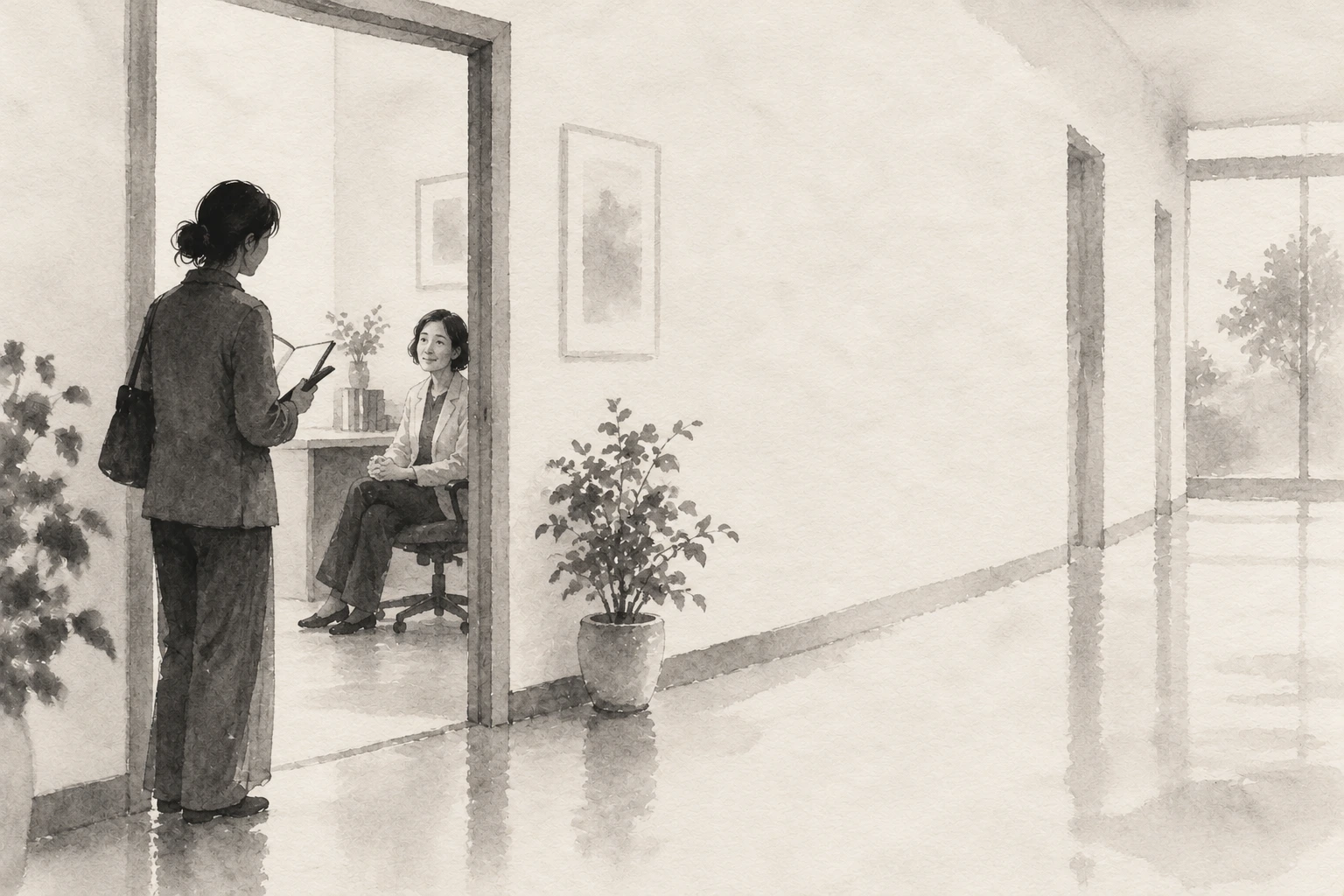
You can arrive at your first appointment with a question rather than a diagnosis: “I'm worried about what is happening with my substance use, medication, or betting. I want to understand the risks and what to do next.” You do not have to decide in advance what your entire recovery will look like or recall every episode without error. The purpose of the conversation is to share enough truthful information for the professional to assess the situation with you.
This article is for an adult preparing to seek help for the first time about alcohol, other substances, medication, or gambling. It helps organize the conversation; it does not establish a diagnosis or replace medical assessment. If you are seeking help about someone close to you, distinguish your observations from what they have told you: your account cannot provide a full assessment of a person who is absent.
When preparation can wait
If a person is difficult to awaken, their breathing is slow or irregular, or they develop seizures, marked confusion, or hallucinations, call the local emergency medical service immediately. Do not wait for a scheduled appointment or drive yourself. If you are with them, stay with the person while help is being called if you can do so without putting yourself in danger. An immediate risk of suicide or violence also requires urgent help; an ordinary appointment cannot replace help in a dangerous situation. Signs of serious poisoning and a possible opioid overdose are described by the NHS and CDC.
Another important reason to start with a doctor is symptoms after reducing substance use or missing medication. Shaking, sweating, severe anxiety, and nausea after cutting back on alcohol may be related to withdrawal. After prolonged heavy drinking, abruptly stopping on your own can be dangerous; a medical plan is needed before such a change. Benzodiazepine withdrawal can also cause severe reactions, including seizures. Do not experiment with “I'll stop and see how bad I feel” to prepare for the conversation. Tell the doctor about symptoms and past events you already know about. These limits are supported by the NHS and FDA.
How to begin when speaking feels difficult
Your opening sentence only needs to explain why you are seeking help. For example: “I've promised myself several times that I'd stop, but I keep repeating the same thing”; “I feel unwell after missing my medication”; “Betting is taking money we need at home.” These are invented examples of how to begin a conversation, not signs readers should use to diagnose themselves.
You can name a fear straight away: “I'm afraid of being judged,” “I don't want people at work to find out,” or “I'm not sure I'm ready to stop completely.” This gives the professional a chance to explain how they work, discuss privacy, and clarify your goals. You do not need to hide doubts to look like a suitable patient. NIAAA guidance on brief intervention includes respectful conversation, the person's participation in the plan, and maintaining contact at different levels of readiness for change.
Seeking help before a final decision to stop does not mean every action is safe or every clinic will see someone who is intoxicated. If this applies on the day of your appointment, let the service know and ask how to seek help safely. If there are signs of acute danger, act as described above. The rules of a particular service cannot be inferred from a general promise that “help is available.”
What you use or take
It helps to name substances and medicines by the names you normally use. For alcohol, describe the drink, approximate volume, strength, frequency, and most recent episode you know about. If you do not know how many “standard drinks” this represents, do not guess a conversion: the size of a standard drink varies between countries. For other substances, give the known name, route of use, and combinations; if the contents are unknown, say so. A seller's name for a product does not verify its contents.
For medicines, you can bring the packaging, a photograph of the label, or a list: the name, prescribed schedule, how you actually take it, when you last took it, who prescribed it, and why. Also mention nonprescription products, medicines obtained from another person, and use alongside alcohol or other substances. This information is needed to assess interactions and guide further decisions, rather than to grade your “correctness.” NIAAA discusses potentially dangerous combinations of alcohol and medicines.
Long-term use alone does not prove addiction. Explain what benefits treatment brings, what unwanted effects you experience, whether you have changed how you take it without agreement, and what happens after a missed dose. Physical dependence, withdrawal, and loss of control are assessed separately. For example, in the CDC criteria for opioid use disorder, tolerance and withdrawal do not count as those diagnostic criteria when opioids are taken solely under appropriate medical supervision; this does not exclude assessment of the other criteria. Do not change a prescribed schedule to demonstrate independence from a medicine.
If the concern is betting
An account of the behavior is useful here: what you gamble on, how often, how much time it takes, where the money comes from, what happens after a loss, and how difficult it is to stop. Describe hidden payments, debts, attempts to win back losses, missed responsibilities, and effects on household expenses, if these have happened. Approximate amounts and ranges are better than invented precision. You do not need to place another bet to test yourself or collect missing information.
Distinguish gambling from video gaming: staking money or valuables and spending long periods playing games need different questions, even when both happen on the same phone. You can say: “I don't know what to call it, but this is what I do and what I'm losing.” Describing the problem is enough to seek help; the amount lost is not a diagnosis on its own. The WHO notes that gambling harm also occurs below the threshold for a disorder.
What happened before and what has changed now
Recall a few key events: when the behavior began to worry you, what has changed recently, what limits or attempts to stop you have tried, what helped, and what happened after returning to it. Previous seizures, severe confusion, overdoses, and medical help for withdrawal are especially important. Say whether attempts to stop were on your own or supervised, and which medicines were used then, if you remember.
You do not need an account accurate to every day. Distinguish “I remember,” “approximately,” and “I don't know.” If you are not ready to disclose a part of the story, you can say so and ask why it is needed. However, withheld medically important information limits risk assessment: the professional needs to know about possible dangerous combinations and previous severe reactions. Preparation should use what is already known, rather than new episodes of substance use or withdrawal.
What is happening in your life
Mention difficulties with sleep, mood, pain, memory, and physical health; previous diagnoses, treatment, and the possibility of pregnancy, if relevant. Tell the professional about thoughts of suicide or self-harm, even if you feel ashamed to speak about them. Also explain immediate risks: driving, hazardous work, caring for a child, violence at home, or a lack of safe housing. If there is immediate danger, return to urgent help rather than filling in your notes.
Everyday circumstances affect whether a next step is feasible. Say if you cannot take time off work, pay for frequent visits, speak safely at home, or store medicines safely. Also explain who supports you and what help is already in place. Questions about work and family may be part of assessing needs; you can ask about their purpose and what will be recorded. The NIAAA Navigator describes a comprehensive assessment that goes beyond questions about alcohol and may take more than one meeting.
What you want from this meeting
Set out an immediate aim: understand withdrawal risk, discuss a medicine, reduce harm, stop betting, check your health, or discuss stopping substance use. You can want change and fear it at the same time. A useful statement is: “I'm not ready to promise everything yet, but I want to discuss this particular step.”
Your preference is part of the decision, but it does not replace a safety assessment. The professional may explain why a different goal, medical monitoring, or another level of care is needed. If you disagree, ask to discuss the reasons and available alternatives. A vague promise that “I'll try” can become a question: what exactly are we agreeing on now, and how will we know whether the plan fits?
Privacy and a loved one's involvement
Before discussing sensitive information, you can ask what is recorded, who can access it, how the service contacts you, and when exceptions to confidentiality apply. Check the rules of the service and your country: this article does not promise absolute secrecy or freedom from legal consequences. If receiving calls or messages at home is unsafe, identify a safe way to contact you that is actually possible.
A trusted adult can attend with your consent, help recall events, or write down recommendations. Agree in advance what they may share and receive; their presence does not oblige you to disclose everything in front of them. If possible, ask to have part of the meeting alone. If someone close to you threatens or controls you, discuss their involvement separately with the professional. A child should not be assigned to act as a witness, interpret a difficult conversation, or monitor an adult's condition; ask the service about arranging interpretation instead.
Leaving with a clear next step
At the first meeting, the professional may clarify information, use a questionnaire, assess risks, and discuss an examination or referral. Not every conversation will end with a final diagnosis or a prescription. If you began with a nonmedical professional, ask whether you need a doctor: talking support does not replace assessment of dangerous withdrawal or physical illness. The NIAAA Navigator for therapists specifically discusses coordination with a doctor.
Before finishing, check that you understand the answers to a few questions:
- What is already understood, and what still needs assessment?
- What next step has been agreed, and who is responsible for it?
- What should I do if things worsen, and which signs cannot wait until the next visit?
- Where can I seek help between meetings, and what are the limits of that contact?
- When will we review the plan, what will the next steps cost, and what should I do if I cannot carry them out?
You can repeat the advice in your own words: “Have I understood correctly that I first need to…?” and ask for written recommendations. If you remember a forgotten medicine's name or an important episode afterwards, ask how to send an update. Not having complete clarity at the first appointment is acceptable; not knowing how to continue the conversation is a reason to ask another question.
A small aid before the appointment
If you have the energy, make a short note in four parts: what worries me; what I use, take, or do; which symptoms and past events matter; what I want to ask today. Add what you do not know and any difficulties with proposed treatment. A few lines or a voice recording that you can store safely are enough. This note is an aid suggested by the authors, not a medical questionnaire.
If you do not have the energy for it, begin with one sentence about why you are seeking help. Preparation helps the conversation; its absence does not make your concern less deserving of attention.
Sources and limits of application
- NIAAA Navigator. Ten Questions for Addiction Doctors and 10 Questions for Addiction Therapists. Comprehensive assessment, a shared plan, and coordination of care. No update date is given on the pages read; US qualifications and service arrangements are not applied to every country.
- NIAAA. Conduct a Brief Intervention. Revised May 8, 2025. Respectful discussion, readiness for change, and follow-up contact; a brief conversation does not replace necessary treatment.
- NHS. Alcohol-use disorder. NHS review dated April 24, 2026. Withdrawal and medical assessment; no home protocol or transfer of UK care pathways.
- FDA. Benzodiazepine boxed warning. September 23, 2020. Physical dependence, severe withdrawal, and the need for a medical plan; no individual schedule for changing medication use.
- NIAAA. Alcohol–Medication Interactions. Revised May 8, 2025. Why information about combinations matters; no “safe” doses or intervals.
- CDC. Opioid Use Disorder: Diagnosis. April 16, 2024. The qualification about tolerance and withdrawal with appropriate medical opioid use; not self-diagnosis.
- WHO. Gambling. December 2, 2024. Harm below the threshold for a disorder; not a diagnosis based on the amount lost.
- NHS. Alcohol poisoning. NHS review dated June 4, 2026. CDC. 5 Things to Know About Naloxone. May 2, 2024. Signs of acute danger; no foreign phone numbers, doses, or promises that supplies are available.
The example statements, note structure, and privacy questions are editorial preparation aids. They do not establish a medical protocol, patient rights in every country, or a guaranteed procedure for a particular appointment.
Tags
First contact, consultation, addiction assessment, alcohol, drugs, medication, gambling, withdrawal, confidentiality, shared decision, support from loved ones.
About the authors
Andrey Zarinsh is the author and founder of United Wisdom. He explores inner transformation, the unity of traditions, intercultural dialogue, and contemporary spiritual discipline. Instagram: @andrey.zarinsh.
Maria Evilkut is a co-author of United Wisdom. Alongside her research, she seeks to test these ideas in practice and observe how the principles of unity and mutual understanding work in real life between people and cultures. Instagram: @ilkutki.
Content reviewed: October 13, 2026. Language version: English. Catalog ID: DEP-12-N01. Profile: A.