
Life after reducing or stopping use
Rest and enjoyment beyond the old pattern
A celebration, a trip, sport or a free evening may bring back the way rest used to happen.
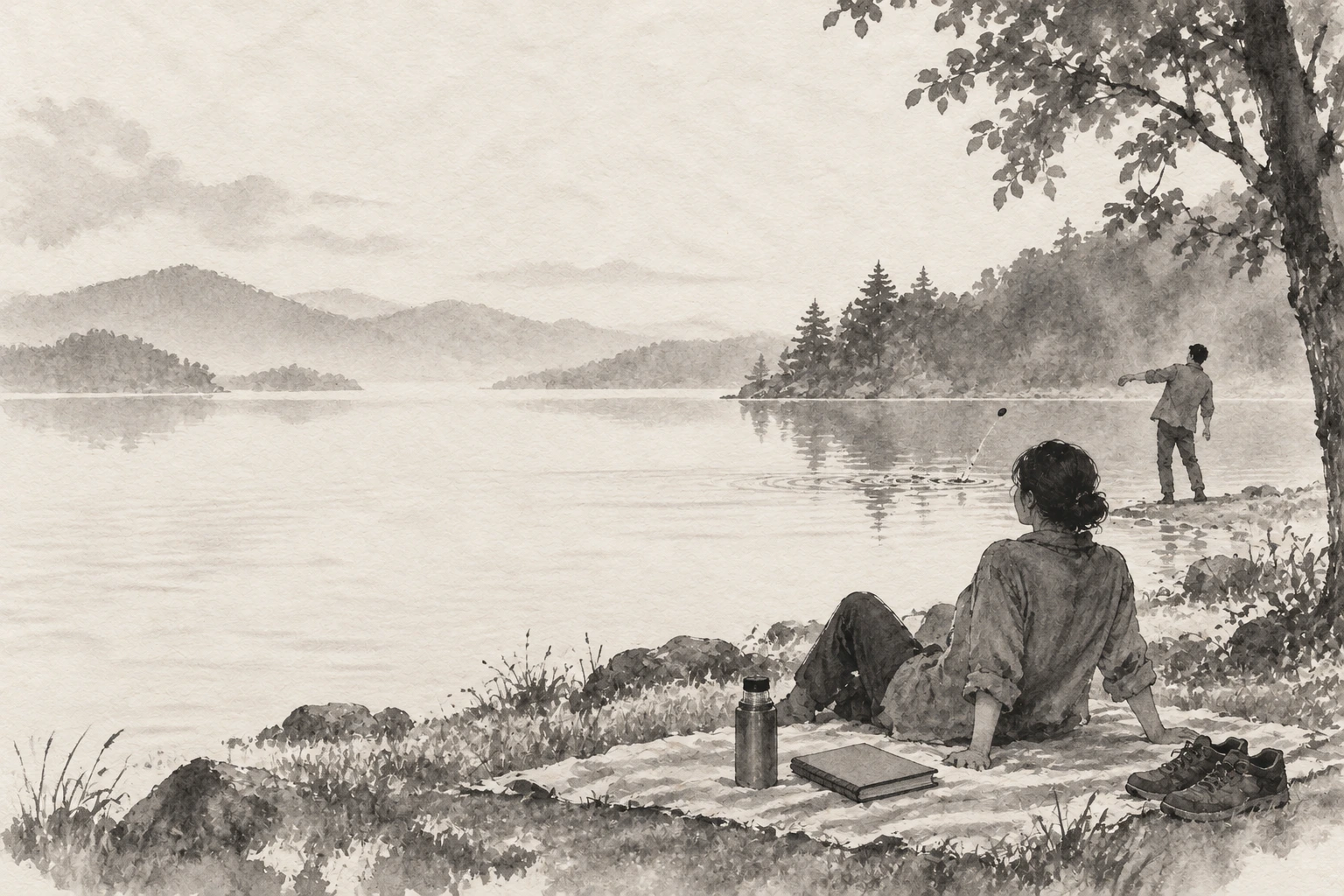
A celebration, a trip, sport or a free evening may bring back the way rest used to happen. After reducing or stopping substance use, you need not immediately love a new activity, prove that you “can have fun without a substance”, or turn every weekend into self-improvement work. It is more useful to ask what kind of rest you want now, what is accessible and which conditions make it acceptable. Ordinary life can contain pleasure, boredom, pauses and changed plans.
If there is an immediate health danger, leisure plans can wait. If poisoning may have occurred, get medical advice immediately; unconsciousness, seizures or severe breathing difficulty require local emergency help. If danger involves someone's condition or violence, seek appropriate urgent local help without postponing it for a celebration or the optional questions below.
I. Why a familiar place can feel different
Past leisure may have served several purposes. Meeting friends brought belonging, music offered a reason to leave home, a trip changed the setting, and substance use had its own place in that pattern. When use changes, the whole value of the meeting or place does not necessarily disappear. You may want to see people without wanting the old conditions.
The US NIAAA Navigator notes that after treatment for an alcohol problem, establishing a routine outside places and networks that previously supported drinking can be difficult. It does not say this happens to everyone after every substance, and it does not turn leisure into another treatment. It also distinguishes everyday support and mutual help from continuing contact with a treatment professional.
This does not require sorting celebrations into “good” and “bad”. Consider one actual evening: who is inviting you, what will happen there, whether you can leave, what attracts you and what does not fit. A person may welcome a quiet lunch and decline a late, noisy gathering. That is a choice of format, not a measure of willpower.
II. Begin with the need, then choose an activity
“Rest” can meet different needs. Sometimes you need sleep and freedom from demands. At other times, you want conversation, movement, a new setting or time to make something. If quiet is what you need, joining a sports team at once may miss the point; if you lack company, another solitary evening may not be enough. You need not know in advance which activity will “work” or which feeling it must produce.
General NHS loneliness guidance includes manageable contact and interest-based activities. These are everyday wellbeing options, not a study of hobbies as addiction treatment. Use them as possibilities, not obligations. A short walk with an acquaintance, a free local event, reading at home or an evening without plans may each have a different value on different days.
Cost, travel, physical access and health are real conditions of choice. Having little energy or money does not make your rest “wrong”. You need not make an activity more demanding because former leisure felt intense. Ordinary enjoyment need not look impressive to other people.
III. A celebration is not a test of control
You can discuss an invitation before the event. For example, someone wants to attend a family meal but not the late part of the evening. They might say when they will arrive and leave without making their treatment a public story. They could suggest meeting at another time. A host's agreement or refusal concerns that arrangement; it does not determine whether the person deserves to be included.
“Try a little to see whether you can handle it” is not needed to choose leisure. Neither past experience nor a good day establishes a universally safe dose or requires a new use episode as proof of control. You can refuse that test and still care about the people, food, music or conversation. If a condition is not accepted, changing the format or declining is possible.
Nor must you promise beforehand that the celebration will make you happy. You may leave early, feel tired or need a break from company. Flawless mood is not the measure of success. What matters more is whether the actual conditions were agreed and the choice could be made without pressure.
IV. Travel: a new setting and continuity of care
Travel is not a required sign of recovery. If it appeals to you, separate several questions: what you want from the trip, its cost, accessible transport and lodging, how already prescribed care will continue, and where to seek help if health worsens. A lodging or appointment booking alone does not establish that care will actually be available there; ask the service for a concrete answer about its conditions.
International travel with prescribed medicine containing a controlled substance needs particular advance checking. An INCB report describes how national rules and documents for such travel differ. It is not a list of current permissions for every route or a rule covering all medicines. Check current requirements for departure, transit, destination and return countries, as applicable to your route, with the competent authorities in time, and discuss continuity of treatment with the prescriber. Do not interrupt or replace prescribed treatment on your own for the trip.
A nearby place, a short trip or staying home are also choices. Crossing a border does not have to solve the question of enjoyment. If cost, health or access to care make travel unsuitable now, postponing it does not remove your right to rest.
V. Sport and movement without an achievement race
One person may rest through gentle movement outdoors, another through a team game and a third by watching a match. An activity need not test endurance after changing substance use. The right amount of activity depends on health, access and preference; discuss medical limits and safety questions with a professional instead of finding out through a risky trial.
Sport can offer enjoyment or company, but it does not replace indicated medical or psychological care. Nor does it make someone immune to substance-use problems. A person can stop an activity that has become too expensive, painful or disruptive to sleep, work and relationships. Taking a break is not defeat.
If sport holds no interest, there is no need to find a “correct” replacement. Quiet observation, music, caring for plants or an unscheduled day can also be rest. The goal is not constant productivity without the former substance.
VI. Creative and ordinary activities may stay ordinary
Drawing, cooking, playing an instrument or making things by hand may add interest and structure to a day. They need not become therapy, a career or proof of personal transformation. You can leave something unfinished and show it to no one. You may once have loved an activity and have no wish to return to it now.
Recovery can acquire a new demand: every evening must be “useful”, every interest must grow, and rest must deliver clear meaning. That turns free time into another examination. A right to ordinary life includes simple pleasures and days without a special result. Creativity, spiritual practice and travel are not entry requirements for care.
If someone close wants to help, agree on a contribution they can actually offer: companionship, checking the time of an event or simply accepting a refusal. Do not make them a judge of your mood. You also need not report how much you enjoyed every new experience.
VII. If enjoyment has not returned yet
Losing interest in one trip or party does not by itself mean depression, a “broken brain” or failed treatment. There may be many reasons: fatigue, an unsuitable format, anxiety or other health and life circumstances. One episode cannot establish the cause. There is no shared deadline by which joy must return or a promised “dopamine reset” through leisure.
In its general low-mood guidance, NHS describes loss of enjoyment as one possible sign of depression, while considering a broader picture. If reduced interest, low mood, anxiety or other symptoms persist and disrupt life, seek a qualified assessment without waiting for perfect motivation or a new hobby. A clinician can discuss your condition, current treatment and possible changes; do not change prescribed medicines yourself to bring pleasure back.
A close person can ask what participation is possible now instead of promising that a particular outing will “cheer you up”. Professional care and quiet company can coexist; neither has to replace the other.
VIII. Other people's boundaries and safety
Another adult may agree to spend time together, suggest a different format or decline. Their time, money and safety matter too. An agreement about a celebration does not grant access to a phone, control over messages or the right to appoint someone a round-the-clock substance-use monitor. If you need help contacting a service, ask for one concrete action and respect the answer.
Children are not tasked with monitoring adults, deciding whether a party is allowed or sending reports to professionals. If an invitation involves threats or coercion, safety matters more than preserving the plan. NHS guidance on abuse includes close and trusted relationships: protection may require a separate local contact rather than a joint family conversation. You need not tolerate danger for “normal leisure”.
You can state personal boundaries without sharing all your substance-use history with acquaintances. In medical care, discuss information relevant to assessment with the professional and ask the service about storage and sharing rules. A private evening and professional care serve different purposes.
IX. One manageable next step
Choose an actual possibility rather than an ideal scenario: ask about one local activity, suggest a quiet meeting to an acquaintance, or discuss a trip with your treating professional if it is already planned. An evening without obligations is also a choice. You need not do everything at once or test yourself with a new use episode.
For a meeting or service, check its actual age conditions, language, cost, physical access, waiting time and rules for personal information. A real answer matters more than publicity. Booking an appointment is a step toward help, not care already received; if the first contact fails, another accessible route can be sought. You can ask for support before you have joy, a goal or ideal surroundings.
If one weekend was dull or a meeting did not fit, that is neither a diagnosis nor proof that a return to use is inevitable. Keep what helped and change the remaining conditions. The right to enjoy life includes the right not to turn enjoyment into a test.
Optional prompts for a conversation
These five original questions name conditions you already know. They are not a diagnostic scale, a home-treatment plan or a requirement before seeking care. Any question can be skipped.
- What do I need? Would quiet, company, movement, creativity or a different setting suit me now?
- What is already known? Which invitation or activity is actually available, and which conditions fit me?
- What is my boundary? What am I willing to agree with others, and what do I prefer not to disclose to acquaintances?
- What needs a professional? Is there an existing prescription or condition to discuss before a trip or activity?
- Who can answer? Which local contact can I check, and how will I know its actual response?
Sources and limits
Content checked 14 October 2026. Examples and questions are original; they are not a clinical scale. General wellbeing advice does not prove addiction treatment, and travel rules depend on the country and current conditions.
- NIAAA, Long-term Recovery Support, US public alcohol guidance, no explicit date shown. Changes in routine and connection with care; not a leisure study.
- NHS, Feeling lonely, UK general guidance, reviewed 22 July 2026. Manageable contact and activities; not addiction-efficacy evidence.
- NHS, Low mood, sadness and depression, UK general guidance, reviewed 29 July 2026. Possible loss of enjoyment and seeking assessment; not a diagnosis from one episode.
- International Narcotics Control Board, Report for 2025, UN report for 2025: © January 2026, with a cover embargo until 26 February 2026; its exact publication date is not established here. Differences in travel rules for internationally controlled medicines; not current permission for a particular route.
- NHS, Domestic violence and abuse, UK public guidance, reviewed 23 June 2026. Separate protection from abuse; local services vary.
- NHS, Poisoning, UK patient guidance, reviewed 12 June 2025. Immediate medical advice for suspected poisoning and emergency help for severe signs.
Tags
addiction, recovery, rest, enjoyment, celebrations, travel, sport, creativity, everyday life, personal boundaries, access, safety
About the authors
Andrey Zarinsh is the author and founder of United Wisdom. He explores inner transformation, the unity of traditions, intercultural dialogue and contemporary spiritual discipline. Instagram: @andrey.zarinsh.
Maria Evilkut is a co-author of United Wisdom. Alongside her research, she seeks to test these ideas in practice and observe how unity and mutual understanding work in real life between people and cultures. Instagram: @ilkutki.