
Religions, spiritual traditions and communities
Sikhism and other traditions of abstinence: a rule, a community, and care without humiliation
A Sikh code of conduct explicitly prohibits intoxicants. A person may nevertheless be using a substance, questioning their place in the community, or afraid that admitting a problem will expose them to shame.
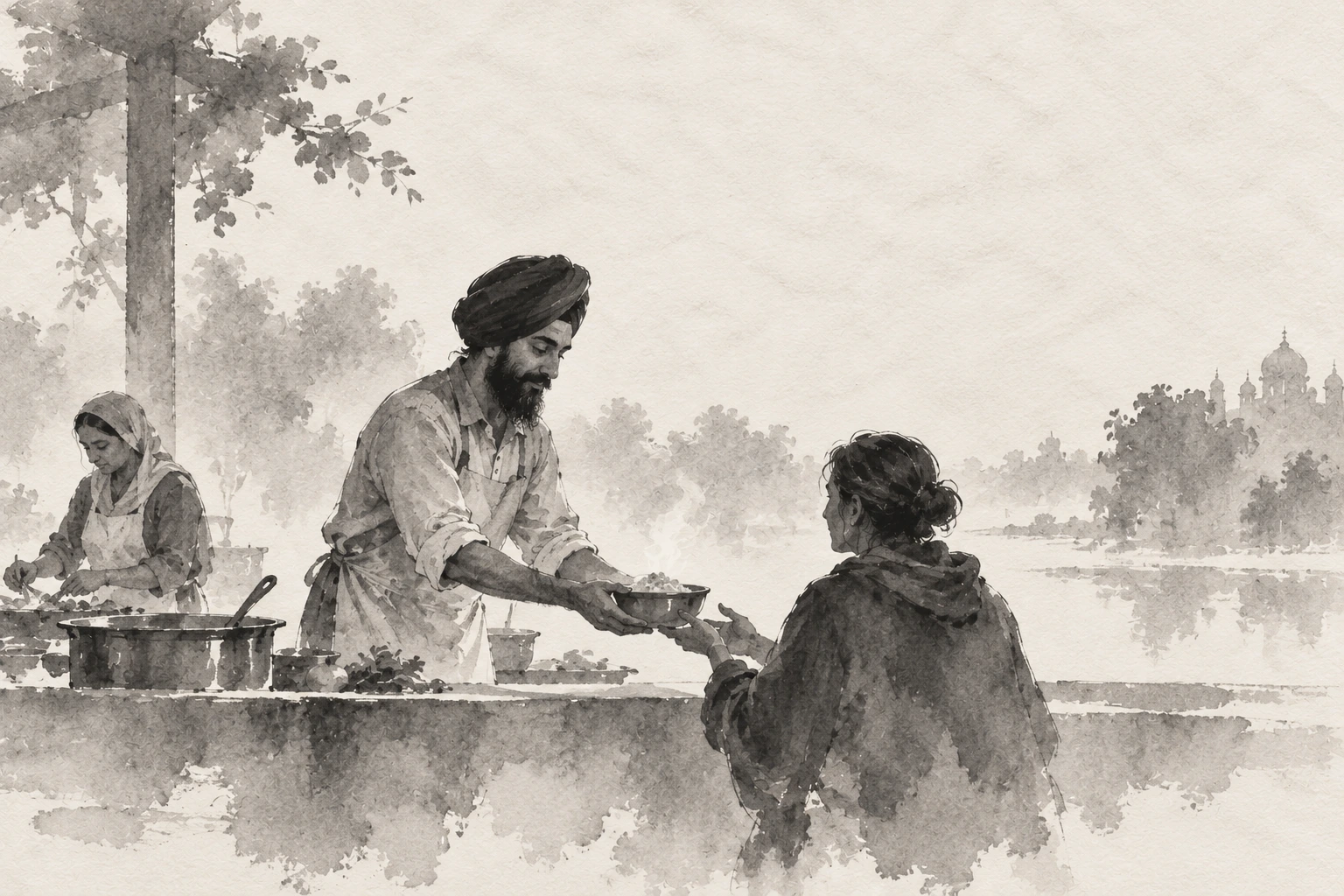
“should not give in to a feeling of guilt” Sikh Rehat Maryada, Article VIII(c), on being unable to complete a daily reading because of travel or another obstacle; English text republished by Milpitas Gurdwara Sahib. This is a context-specific line, not a judgment about every kind of guilt.
What this article is about
A Sikh code of conduct explicitly prohibits intoxicants. A person may nevertheless be using a substance, questioning their place in the community, or afraid that admitting a problem will expose them to shame. How can one speak truthfully about the religious rule while keeping a route to help open? This article reads specified articles of Sikh Rehat Maryada, one example of SGPC's public position, and two other texts about abstinence. It addresses the meaning of a rule and the treatment of a person; it is neither a description of all Sikhs nor a clinical method. If poisoning is suspected, contact a local emergency medical service immediately, even before symptoms appear. New sudden confusion itself calls for the same immediate contact, without a severity threshold (NHS: poisoning; NHS: sudden confusion).
I. Which text are we reading?
“Sikhism says” can be much too broad without a named source. The main text here is Sikh Rehat Maryada, a code of conduct and conventions published by the Shiromani Gurdwara Parbandhak Committee, or SGPC. The English PDF is on SGPC's official site; the specified articles were also read in a republication by Milpitas Gurdwara Sahib. The PDF folder date does not establish when the code was adopted. An SGPC archive links a different English presentation to a July 1997 book edition. That is an edition date, not the birth date of every norm in it.
The code speaks about personal life, worship, communal discipline, and service. It has authority within the described institutional setting; particular people and communities may live with it in different ways. One sentence cannot establish what every Sikh everywhere does. Articles XVI(j) on intoxicants, XXI on service, XXIV–XXV on initiation and discipline, and VIII(c) on an impediment to practice are pertinent here. None was written as a modern clinical classification of substance use disorders.
Naming the source protects both the integrity of the rule and the person who needs care. A reader can see what this code prescribes without hearing an invented claim that Sikhs always behave alike. A health professional can discuss an individual's use, medicines, and risks without first grading how closely that patient follows a religious ideal.
II. Abstinence is a prescription of conduct, not a diagnosis
Article XVI(j) names cannabis, opium, alcohol, and tobacco, then prohibits intoxicants more broadly. This is a strict ethical rule in the named code. It is not an invitation to calculate a “safe Sikh amount.” We should not hide the rule to sound gentle. Yet breaking a rule cannot establish a medical diagnosis, its severity, a person's motive or readiness to talk, or a relative's authority to prescribe treatment (Sikh Rehat Maryada, Article XVI).
One person abstains from conviction; another participates in community life while having a substance problem; a third does not consider themselves observant of the code. Appearance, name, or a family's religion cannot tell us their participation, shame, or wishes about help. For someone, the rule may support a chosen abstinence. For someone else, it may mark a painful distance between belief and action. That may warrant a careful conversation, not a public test of fidelity.
A clinical assessment asks different questions: which substances and prescribed medicines are involved, how use has changed, what harms or overlapping difficulties exist, and what help is feasible now. NIMH's public account describes substance use disorders on a spectrum and calls for experienced assessment when symptoms overlap (NIMH: coordinated care). A religious rule cannot answer those questions about one particular person.
III. The disciplinary passages exist; they cannot be a ticket required for care
The Rehat Maryada contains more than a ban on substances. Article XXIV connects Khalsa initiation with a willing commitment to discipline and describes strict consequences for certain breaches. Article XXV describes acknowledging a lapse before a congregation and service as a form of correction. These passages concern internal religious life, particularly that of initiated Sikhs. Leaving them out would give a falsely easy account of the code (Sikh Rehat Maryada, Articles XXIV–XXV).
Religious discipline is not a clinical intake process. A person must not have to confess publicly, be punished, or lose contact with others before obtaining medical assessment. If they want to discuss their religious position, they need a knowledgeable person of their choosing who can explain a local process and listen without pressure. If they do not want that discussion, medical care remains a legitimate goal. The possibility of restoration in a code does not prove that a particular conversation will be safe or that the person will rapidly recover.
There is a real tension between text and experience. Even a calm reference to punishment may hurt one reader, while another may find acknowledgment meaningful. Neither response licenses a third party to force disclosure of someone's substance use. Where there are threats or violence, put the disciplinary discussion aside and seek separate safe support and protection first.
IV. Service and a shared meal: a possibility to check
Article XXI describes seva, voluntary service, and langar, a shared kitchen and meal, as forms of participation and a challenge to social rank. Article V says people may enter a gurdwara regardless of country, religion, or caste, while setting a rule against bringing tobacco or other prohibited intoxicants. Both are part of the text. Together they do not promise every service at every gurdwara (Sikh Rehat Maryada, Articles V and XXI).
For someone who finds a community welcoming, help might be modest and concrete: a meal, time with a trusted person, a ride, or company at an appointment. Yet the code's description of langar does not turn a kitchen into a substance treatment centre. Voluntary service cannot stand in for a clinician, actual child care, or protection from violence. If a particular place cannot meet a person's needs safely, another route must be sought; nobody can promise access on behalf of all communities.
An official SGPC report on resolutions at a budget session records a call for action on drug problems in Punjab. It demonstrates public institutional concern in that setting. It does not provide verified patient intake locations, waiting times, admission criteria, or treatment outcomes. Presenting that resolution as an operating treatment programme would mislead the person needing help today.
V. When a person does not follow the rule
The hardest question appears where the rule is clear and life does not match it. “Just obey it” offers little to someone facing symptoms, fear of withdrawal, pain, danger at home, or a closed clinic. “There is no rule” fails to respect someone for whom it matters. A more honest invitation might be: “I know this text prohibits intoxicants. I won't turn your situation into a public test. What kind of help would you be willing to discuss, and what is safe now?” It is an invitation, not a technique to obtain a confession.
The person may not know how words shared within a community will travel. Where possible and safe, they can ask about confidentiality and data-sharing limits before telling the whole story. No one should guarantee absolute secrecy: local rules, age, and emergency obligations differ. A request for help can disclose what is necessary without circulating the person's story among congregants. A relative can seek support for themselves while respecting another adult's participation in non-emergency care and the local rules that apply.
The epigraph concerns a missed reading because of an obstacle, not substance use. It does not prove “nothing was your responsibility” or erase consequences. It shows only that the code itself can recognise an obstacle and does not treat every failure of practice as a reason to deepen guilt. That opens a careful question: can one speak clearly about the rule without making shame a barrier to care?
VI. A line about intoxicants does not decide prescribed medication
The broad religious word “intoxicants” is not a home checklist for stopping a prescription. Medicines differ, as do the risks of continuing or changing them. The reason for a prescription and possible side effects belong in a discussion with the prescriber. A general statement cannot make every prescription forbidden, every medicine safe, or all medicines equivalent. Do not change a dose, stop prescribed medication, or attempt withdrawal at home on the basis of this article.
Physical adaptation and symptoms following a change to medication do not automatically equal a substance use disorder. RCPsych explains this distinction using antidepressants: stopping them may cause withdrawal symptoms without necessarily being addiction. That is a useful example of different concepts, not a text-based diagnosis or a universal rule for every drug (RCPsych: antidepressants).
If a religious concern matters to a patient, they may discuss its meaning with a chosen spiritual adviser and separately tell the prescriber how that concern affects taking the medicine. Treatment decisions require medical knowledge and a plan worked out with a professional; spiritual meaning remains voluntary. Neither a ritual nor guilt can assess symptoms for a person.
VII. Other traditions of abstinence: textual resemblance, distinct grounds
In Buddhist AN 8.39, refraining from intoxicants is one of five gifts associated with reducing danger to others. This is a particular canonical passage in Thanissaro Bhikkhu's translation, not an outcome study or one contemporary practice shared by all Buddhists (AN 8.39). Quran 5:90 speaks of intoxicants among things believers are instructed to avoid. Its authority and theological frame differ from both the Sikh code and the Buddhist discourse (Quran 5:90).
A comparison helps when it clarifies boundaries rather than merging religions. The three named passages speak of abstinence, but their addressees, sources of authority, and explanations differ. None supplies a medication regimen, proves that every member of a community receives therapy, or licenses violence or a denial of care. Modern schools and interpretations within each tradition also vary; the passages do not authorize us to speak for all of them.
A person need not choose between accepting a single invented “religion of sobriety” and being left without help. If a tradition offers support that they want, they may keep it. If it currently feels unsafe, a medical contact remains a reasonable goal. Whether a particular service is accessible has to be checked locally, not deduced from a sacred text.
VIII. Children, violence, and actual care
Children should not bear the cost of adults' conflict with a religious rule. They should not be asked to watch a parent's use, keep medicines, interpret a conversation with a service, carry a confession to a congregation, or provide obligatory emotional care. If an adult cannot currently care for a child, a capable adult must actually be present or appropriate local help must be arranged. A service answering the phone is not, by itself, someone looking after the child.
Threats, coercion, or violence call for a separate safe route to support and protection. A joint discussion with an abusive person about “proper discipline” can increase danger. The British NHS page on domestic abuse describes controlling behaviour, threats, and ways to seek support; its phone numbers and legal procedures cannot simply be exported worldwide. The safe channel and applicable duties need to be established in the person's location.
No one should be required to love a community or be ready to repent before a child is protected. Nor must a willing helper manage another person's withdrawal, monitor them around the clock, or stage a dangerous family confrontation. A responsible boundary is to identify the known risk, arrange actual capable adult care for children, and make contact with competent local help.
IX. When the discussion of tradition must wait
Suspected poisoning calls for immediate contact with a local emergency medical service, even before symptoms appear. The NHS notes that symptoms can start hours or days later; waiting for them can be dangerous (NHS: poisoning). New sudden confusion itself calls for the same immediate contact. Do not wait for severe confusion, loss of orientation, or another sign (NHS: sudden confusion).
These decisions do not depend on faith, a promise to stop using a substance, a discussion of breaking a rule, or approval from a community. Where life, safety from violence, or a child is in immediate danger, seek local urgent help and protection. This article provides no home protocol, dose, or withdrawal plan. Local numbers, language access, and laws must be checked locally, but a search for the ideal service should not delay an emergency contact.
Later, there may be time to explore the event's spiritual meaning or repair relationships. An emergency service addresses medical risk; a spiritual adviser is not a medical dispatcher. Keeping these conversations distinct does not diminish a tradition. It gives each its appropriate subject and does not burden an ill person with explaining their faith first.
X. A next step that exists in practice
Outside an emergency, identify one feasible contact. Who locally can assess substance use, prescribed medicines, and overlapping symptoms? What are the age rules, language, cost, wait, travel needs, data practices, and real admission arrangements? Where it is possible and safe, ask a service what it records and what exceptions to confidentiality apply before sharing detailed information. No article can promise a service or secrecy on behalf of an unknown organisation (NIMH: coordinated care).
If community help is wanted, contacting a specific gurdwara can be a separate voluntary step. Is there a trusted person able to listen without public discussion, help with food, or offer a ride? Who is actually available, and what can they do? This tests a real option, not a person's compliance with the code. If no safe contact is there, a clinician known outside the community or another local route may be preferable.
An opening sentence could be: “I need an assessment of substance use and medicines. I want to know the admission and data rules first. I will decide separately whether to have a religious conversation.” A relative might say: “I need advice on arranging care and finding help without taking on a clinician's role.” An appointment that actually happens matters more than a solemn promise of lifelong change.
What this means in practice
The Sikh code states abstinence plainly. It also describes service, community boundaries, and a strict disciplinary process. None of these parts should be concealed for convenience. The practical point is to distinguish religious discussion, voluntary support, and medical risk. A person who is not following the rule can still seek help; community approval need not come first.
When the situation is urgent, contact local emergency medical services immediately for suspected poisoning, even before symptoms, and for new sudden confusion on its own. With violence, seek a separate safe protective route; when child care is compromised, arrange an actually present capable adult. Otherwise check one real point of help and its conditions. If trusted believers can safely provide food, travel, or accompaniment, that may sit alongside a clinical assessment, not replace it.
A person may decline to answer public questions about faith or substance use. They may also seek a spiritual conversation of their choosing. Both choices can coexist with protecting health and children. The boundary is concrete: a religious tradition may shape meaning and community, but it cannot guarantee a clinical outcome or become an obstacle to emergency care.
Key quotation
“A Sikh shall regard a poor person’s mouth as the Guru’s cash offerings box.” Sikh Rehat Maryada, Article XVI(n), English text republished by Milpitas Gurdwara Sahib.
This sentence sits among rules of conduct, not in a medical chapter. It redirects attention from policing someone else's perfection toward noticing another person's need. It does not establish a particular treatment programme, promise unrestricted access to every congregation, or cancel the disciplinary rules. Where someone needs food, safety, or medical contact, goodwill needs to become a checkable act rather than an elegant quotation.
Connections among traditions
- Sikh discipline and the Buddhist fifth gift. Article XVI(j) of Sikh Rehat Maryada places abstinence within a prescribed way of life; AN 8.39 frames avoiding intoxicants as one gift of safety. The resemblance is limited to the named abstinence. The genre, audience, and rationale differ; neither text measures treatment outcomes (Sikh Rehat Maryada).
- The Sikh code and a Quranic instruction. The Sikh article prohibits intoxicants within an institutional code; Quran 5:90 addresses believers in a different theological frame. A shared prohibition does not make Islam and Sikhism one tradition, establish a worldwide legal rule, or provide identical help to every person (Sikh Rehat Maryada).
The map compares exactly three named passages in two substantive relationships; no extra rows have been invented for a quota. The modern Buddhist and Quranic translations are briefly and originally paraphrased, not copied. The map asks no one to adopt a religion or stop medication.
Sources and limits
- SGPC, English Sikh Rehat Maryada: institutional code PDF; too large for a complete web read, so narrow official extracts and a readable community republication were cross-checked. The /2025/06 path marks file placement, not adoption. An SGPC archive associates another English version with a July 1997 book edition.
- Milpitas Gurdwara Sahib, Sikh Rehat Maryada: community republication, page publication date not established. Specified portions of Articles V, VIII(c), XVI(j,n), XXI–XXV, and XXVII were read. This is neither every version of the code nor evidence of actual service access. The two short English quotations are from this page; commercial reuse rights to the translation are not presumed.
- SGPC, budget-session resolutions report: official news item bearing “March 29”; no year is visible on the page. The call for measures in Punjab was read; this is not a treatment directory or an evaluation of outcomes.
- AN 8.39, Thanissaro Bhikkhu translation: Buddhist canonical passage in a ©1997 translation; page revised 30 November 2013, CC BY-NC 4.0. Only the fifth gift is briefly paraphrased; it does not represent all Buddhist practice or clinical evidence.
- Quran 5:90, Quran.com: Arabic verse and Dr Mustafa Khattab's translation; page date not established. The instruction is paraphrased, not copied; this one verse is not the totality of contemporary Islamic jurisprudence.
- NIMH, co-occurring substance use and mental disorders: US public overview, reviewed March 2025. The portions on assessment, coordinated care, and seeking contact were read; no individual diagnosis or promise of service elsewhere.
- RCPsych, Antidepressants: UK professional public overview, published March 2025. Used narrowly for physical adaptation versus addiction; not a self-directed stopping guide.
- NHS, Poisoning: UK public page, reviewed 12 June 2025. Urgency even before symptoms; no export of UK phone numbers or home protocol.
- NHS, Sudden confusion: UK public page, reviewed 28 May 2024. Immediate medical contact for new sudden confusion itself, with no home diagnosis of the cause.
- NHS, Domestic violence and abuse: UK public page, reviewed 23 June 2026. Separate protection when threatened; other countries' laws, phone numbers, and services need local verification.
Religious and community prescriptions are not evidence of treatment efficacy; clinical pages do not decide religious status. Full pages, forms, scales, tables, and abstracts were not copied. Protected modern translations are handled through short original paraphrase. Service, cost, wait, language, age, privacy, consent, and legal duties must be checked locally. Expert Sikh-studies, clinical, native-Thai, local legal, and human review have not yet been performed.
Tags
Sikhism, Sikh Rehat Maryada, abstinence, intoxicants, seva, langar, community, dignity, substance use, medical care, child safety, freedom of choice
About the authors
Andrey Zarinsh — author and founder of United Wisdom. He explores inner transformation, the unity of traditions, intercultural dialogue, and contemporary spiritual discipline. Instagram: @andrey.zarinsh.
Maria Evilkut — co-author of United Wisdom. Alongside her research, she seeks to test these ideas in practice and observe how principles of unity and mutual understanding work in real life between people and cultures. Instagram: @ilkutki.
Content date
15 October 2026. English version.