
Acute situations and safety
A family emergency plan
A plan helps before a crisis, but an emergency is no time to look for or complete one.
When danger is already here
A plan helps before a crisis, but an emergency is no time to look for or complete one. If someone is unresponsive, struggling to breathe, or not breathing, contact a local emergency medical service immediately: a UK ambulance service identifies these as emergencies. NHS guidance on sudden confusion calls for immediate medical help when new sudden confusion appears on its own; do not wait for marked disorientation or another sign. If poisoning is suspected, contact the local emergency medical service at once, even before symptoms appear. Those UK pages establish urgency; find the actual number and route where you are.
For an immediate suicide threat, seek local emergency help now. NIMH also advises not leaving the person alone when it is safe for an adult helper to stay. If violence is occurring, first get yourself and the children to a safer place if possible, and call for help from there. A missing plan, an incomplete medicine list, no agreement to hold a family meeting, or unanswered questions below must not delay the call.
I. What a plan does, and what it cannot promise
A family emergency plan is a brief agreement among adults about their first actions when someone cannot safely care for themselves or others. It neither predicts a crisis nor guarantees rescue. CDC advises tailoring a plan to actual needs, agreeing with supporters in advance, and updating it. That is general preparedness advice, not evidence that a particular plan works for a substance-use crisis.
Keep three states distinct: “we wrote down a contact,” “that person answered and agreed to help,” and “help actually arrived or accepted the person.” Waiting, distance, lack of space, or a language barrier can separate them. The plan should still allow local emergency contact if the agreed helper does not answer. Help for substance use or another cause of crisis does not depend on an admission of addiction, perfect abstinence, family reconciliation, or faith.
II. Adult roles: who will do what
Agree on simple roles with the adults involved: who can call the local emergency service, who can meet responders or give them the address, who can take over care of a child or another person needing supervision, and who will confirm that clinical care was actually received. Oxford Health NHS suggests that carers identify a backup contact and essential needs in advance. That is a useful starting point, but a name on a list does not make someone available on the day.
Check whether the chosen adult knows and accepts the role, how to reach them if the first channel fails, and whether they can physically come. If they cannot, another real option is needed. Do not make a child the dispatcher, the adult's symptom monitor, an interpreter for medical staff, the keeper of medicines, or the messenger during threats. A child's need is to be with a safe, capable adult according to age and circumstances, not to do an emergency service's work.
III. What to share and how to protect information
With the adult's agreement, keep only useful information somewhere protected but accessible to the right helper: where the person is and how responders can enter, communication needs, known illnesses, prescribed medicines and allergies if known, the treating clinician's contact, and facts about recent changes. Mark when the information was last checked; do not fill gaps with guesses. What matters varies with age and condition. NHS advice for carers on medicines emphasizes an adult's confidentiality and their say in how much health information a carer receives.
Do not post a shared sheet of addresses, passwords, diagnoses, and medical details in an open chat. During an emergency call, give changes you personally observed and known facts needed for care; local rules govern consent and data sharing. If a medicine name or allergy is unknown, say so and call anyway. The plan does not authorize relatives to alter a prescription, give someone else's medicines, or arrange withdrawal at home.
IV. Care has to be handed over in fact
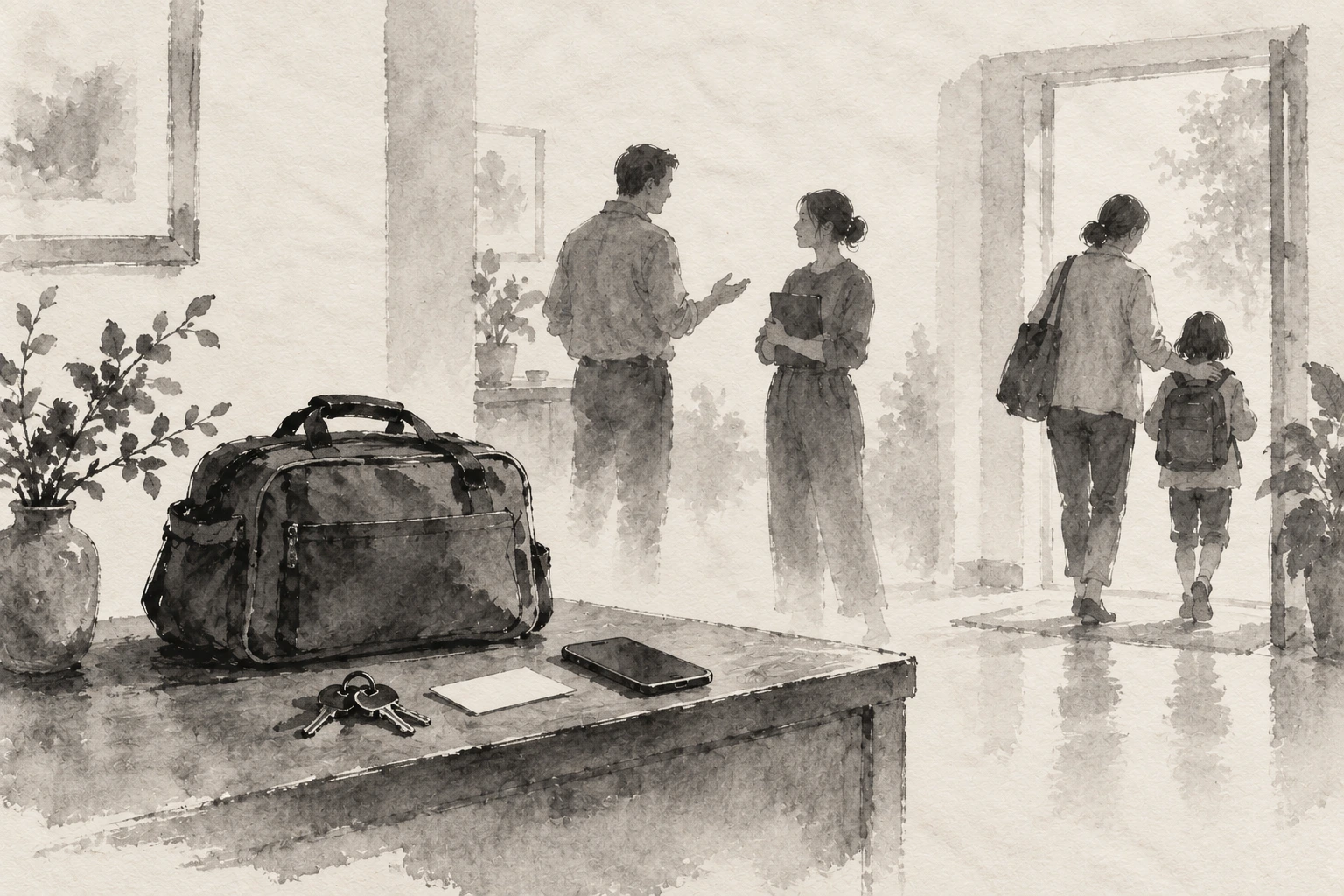
If the usual adult cannot now provide a child with food, supervision, sleep, and safety, an actually present or arriving capable adult must take those responsibilities. Age and real needs matter: a teenager and an infant need different care, but neither becomes an adult rescuer. The same principle applies to an older person or anyone else who needs essential supervision. Confirm who has taken over and whether they can provide that care.
If no known adult is available, tell the local emergency, medical, or social service and seek arrangements for safe care. A call, referral, or appointment alone does not mean care has materialized. Do not delay emergency medical contact while searching for the ideal relative. Duties of care and service powers vary locally; the plan promises neither automatic removal of a child nor that intervention cannot occur.
V. The sequence during a real crisis
For urgent medical danger, the first step is local emergency contact. Give the address, what changed, when if known, and that help is needed now. With suspected poisoning, do not wait for an admission of use, symptoms, or packaging; additional details can follow after the call. With new sudden confusion, there is no need first to decide whether alcohol, a medicine, or another illness caused it.
Then, as far as it is safe and feasible, one adult meets responders and passes on known facts; another arranges actual care for children or anyone else needing it. Without a life threat, worsening health or possible withdrawal still warrants professional assessment rather than a home regimen. NHS guidance on alcohol-use disorder warns that suddenly stopping alcohol without medical help can be dangerous when there is physical dependence. That condition does not establish dependence in every person who drinks. Prescribed medicines should not be stopped under a family plan either; discuss concerns with the treating professional.
VI. If the first contact fails
A number may change, an adult may not answer, or a service may refer onward or have no space. Identify another workable channel, but do not let the search for a better route delay an emergency call. When handing someone over, check who actually accepted the request, where the person is, and what happens next. A calendar entry and a sent message do not show that a clinician saw the person or that a child is supervised.
For non-emergency follow-up, check local age rules, language, cost, hours, waiting time, data handling, and whether an appointment can actually be received. If transport, connectivity, or money is a barrier, tell the service and seek an accessible alternative. A number written in a plan does not promise a response time or an available bed.
VII. When a family discussion is unsafe
If someone threatens others, controls communication, or uses violence, a joint meeting to “agree the plan” may increase risk. NHS domestic abuse guidance emphasizes separate safe help and not blaming the person harmed; UK contacts and legal rules are not transferable worldwide. Choose a safe local protective contact and a usable way to reach it, without disclosing a route to a threatening person if that creates danger. Seek local emergency help for immediate danger.
When there is an immediate suicide threat, put family debts and arguments over whether the threat is “serious” aside. Local emergency help is needed. An adult can stay nearby and offer calm support if safe for them and others, without physical struggle or a promise of absolute secrecy. A child is not asked to watch the person; arrange an actual capable adult for the child. The plan does not replace professional assessment or turn a relative into medical staff.
VIII. Five optional questions before a crisis
These questions can help adults agree in advance. They are not a questionnaire, a risk score, or a condition for help. If danger is present, call instead of working through them.
- Which local emergency medical contact serves our address in a usable language, and how can we give our location?
- Which adults agree to a specific role, and who can actually arrive to care for a child or another person in need?
- What minimum verified information about health, medicines, and allergies is known, where is it stored safely, and who may share it?
- What will we do if the first adult or service does not answer, and how will we confirm an actual appointment or handover of care?
- Is violence or unsafe disclosure of the plan a concern, and which separate safe channel for help is already reachable?
“I don't know” marks a preparation gap, not a bar to help. Do not demand a public admission of substance use or a promise of abstinence before discussing possible contact. If the conversation itself is unsafe, prepare your own part of a protective plan with a safe professional or service.
IX. A first step, then an update
Today, choose one achievable step: learn the real local emergency route, discuss a role with one willing adult, or check who can take over care of a child. Then recheck the address, availability of contacts, and medicine information after changes in the family or treatment. CDC advises reviewing an individual plan when needs change; a fixed review date cannot replace that check.
Keep the note where the right adult can use it without exposing unnecessary data to others. Questions for a local service—language, price, waiting time, consent, data handling, and whether someone can actually be seen—need a real answer from that service, not an assumption from its website. A useful plan gives adults a clear next step without shifting responsibility onto a child. Act at once if danger appears, even if the plan is incomplete.
Sources and limits
- CDC, What is an Emergency Plan? Why is it Important?: U.S. public preparedness page dated 18 September 2024, attentive to individual needs; not an addiction trial or a guarantee that a plan will work.
- Oxford Health NHS Foundation Trust, Emergency Plan: UK carers' handbook page reviewed 16 September 2025; backup contacts and care needs, not evidence that a carer is locally available.
- NHS, Medicines: tips for carers: UK public advice reviewed 25 April 2024; adult confidentiality and involvement, not worldwide law or a dosing guide.
- NIMH, Frequently Asked Questions About Suicide: U.S. educational brochure revised 2023; immediate danger and help, without exporting U.S. numbers or guaranteeing outcomes.
- NHS, Sudden confusion (delirium): UK public page reviewed 28 May 2024; new sudden confusion alone calls for immediate medical contact.
- NHS, Poisoning: UK public page reviewed 12 June 2025; suspected poisoning requires immediate contact, even before symptoms.
- North East Ambulance Service NHS Foundation Trust, When to call 999: UK accessible emergency explainer; no date displayed on the read page, and the local number must be checked separately.
- NHS, Domestic violence and abuse: UK public page reviewed 23 June 2026; separate safe help, without exporting UK services or law.
- NHS, Alcohol-use disorder: UK public page reviewed 24 April 2026; abrupt self-stopping can be dangerous with physical dependence, without diagnosing anyone or giving a home protocol.
Tags
emergency plan, family, addiction, medical help, poisoning, sudden confusion, child safety, care, consent, medicines, violence, access to help
About the authors
Andrey Zarinsh — author and founder of United Wisdom. He explores inner transformation, the unity of traditions, intercultural dialogue, and contemporary spiritual discipline. Instagram: @andrey.zarinsh.
Maria Evilkut — co-author of United Wisdom. Alongside her research, she seeks to test these ideas in practice and observe how principles of unity and mutual understanding work in real life between people and cultures. Instagram: @ilkutki.
Content date
15 October 2026. English version.