
Relationships and Intimacy
A child’s right to make mistakes within safe limits
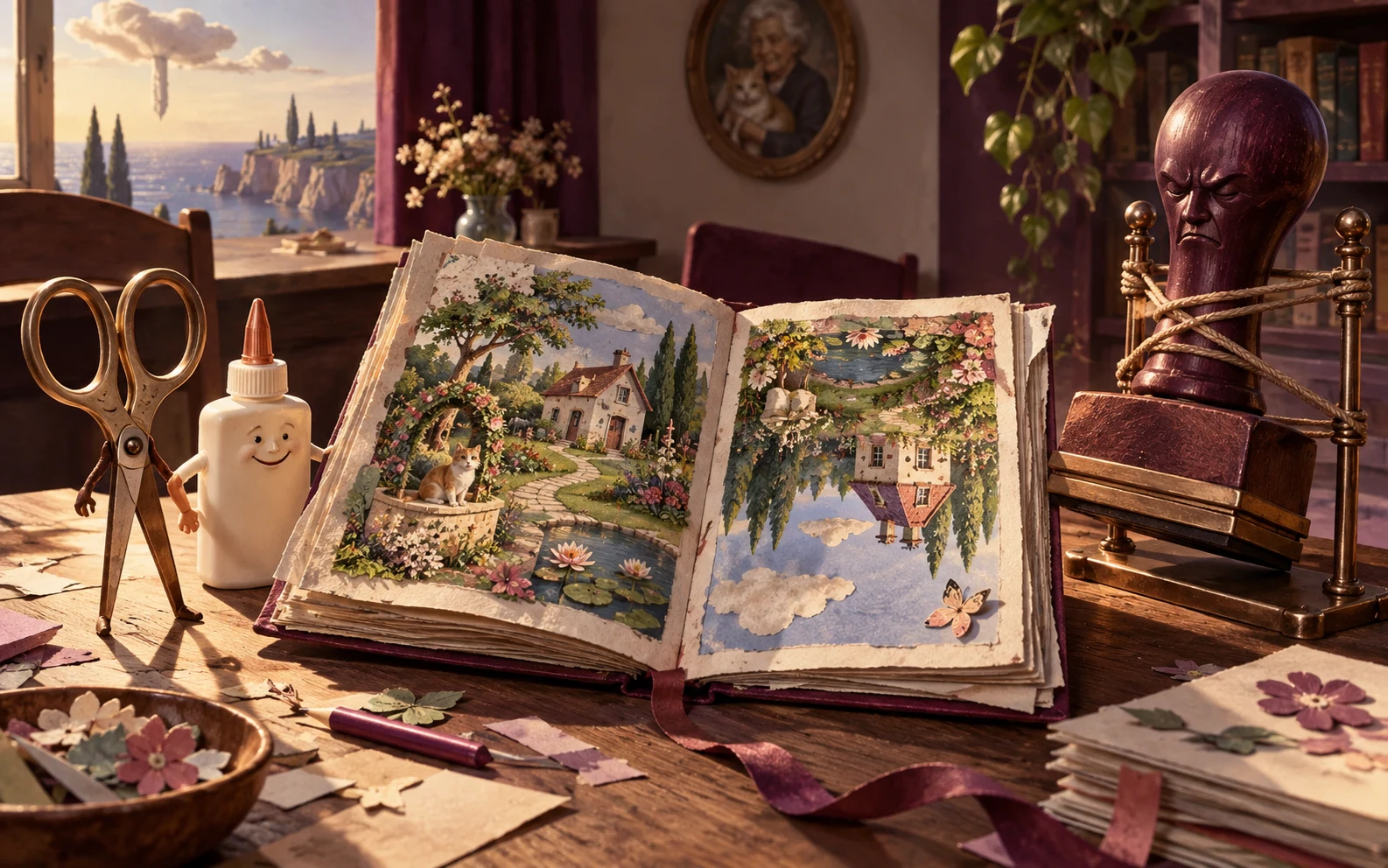
Dasha is crafting a homemade paper book as a gift for her grandmother: painting an enchanted garden, drawing a house, and penning her own little stories. Enter her father, Oleg, materializing in the doorway.
Epigraph
You cannot anticipate him.
Alice Meynell, The Children, “Fellow Travellers with a Bird, I”, a separate sentence in her own authorial voice. English original. A literary observation does not prove every child’s capacities.
What This Article Is About
Dasha is crafting a homemade paper book as a gift for her grandmother: painting an enchanted garden, drawing a house, and penning her own little stories. Enter her father, Oleg, materializing in the doorway. Spotting that one of the pages has been glued completely upside down, he immediately experiences the irresistible itch of an obsessive quality control inspector: rip it out, scrape the glue off, redo it personally, and deliver gold-standard perfection! In his worldview, an ideal gift must look like it rolled straight off a German printing press with bespoke gold foil embossing.
Dasha, for the record, never filed a requisition for crisis management. In fact, she hasn’t even decided yet whether this is an unmitigated disaster or a stroke of avant-garde genius. The scissors and glue were vetted beforehand as safe, the child's exact age is unspecified, so this isn't an emergency on a construction site—it’s just an everyday domestic scene. And the right to make a mistake here is a straightforward thing: a child is under no obligation to churn out adult industrial standards 24/7 just to safeguard domestic tranquility. It’s not an excuse to stage an extreme survival bootcamp, nor is it a free pass to wreck someone else's property, but a crooked piece of paper is certainly no reason for cosmic melodrama.
I. A Mistake Is Defined by the Intent, Not by the Observer's Nervous Tic
The second a parent spots an inverted page, an aesthetic reflex triggers instantly: "Everything is ruined, scrap the batch!" But let’s take a breath and separate Dad's personal perfectionism from the child’s original objective. Dasha set out to make a book her grandmother could flip through with her. If the intent was to spin a dynamic fairytale, an upside-down page might well be a deliberate narrative twist. If this were a rigorous set of assembly schematics for a four-legged stool, where inverting top and bottom causes collapse, then sure—the objection would hold water. But clashing with Dad’s preconceived notions of beauty is merely Dad’s mild irritation, not a crime against human reason.
This doesn’t mean every accidental jam smudge must be hailed as a triumph of the juvenile avant-garde. If Dasha was aiming for a straight edge and it simply slipped, one can calmly state the fact: "Yep, that came out crooked," without stamping the child with a lifelong label of clumsiness or delivering a sermon on chronic laziness. Manufactured ecstasy like "Oh, what a delightfully charming slant!" is equally unnecessary. It’s enough to acknowledge reality in its true proportions: one thing was intended, another occurred, and the Earth has not spun off its axis.
A father can, of course, ask how this contraption is supposed to be read. The trick is not turning a simple inquiry into an interrogation where the "correct" confession has been scripted in advance. A child is fully entitled not to know the solution yet, or to have zero interest in dissecting their slip-up right this second. The absence of instant repentance isn't anarchy; it just means there's no need to extinguish someone else’s minor blunder under a deluge of adult anxiety.
II. A Safe Limit Isn’t Established by Flowery Speeches on Freedom
Grandiose monologues about "raising an independent, self-determined individual" do not make electrical sockets safer or scissors blunter. In our story, Oleg inspected the workspace, the glue, and the paper beforehand. Transferring this cozy tinker session at a desk to a bustling highway, deep water, or experiments with the home medicine cabinet would be, to put it mildly, disastrous.
When a genuine hazard looms, a responsible adult steps in to protect; they don't strike the pose of an enlightened guru, sitting back to watch the child "absorb a life lesson." Fabricating traps and artificial risks for "pedagogical impact" isn’t parenting—it’s domestic sabotage.
At the same time, don't confuse an existential danger with the sheer horror of: "Good grief, what will Auntie Lyuba say when she sees this lopsided scrapbook?!" Family embarrassment before the relatives is entirely Dad's own self-esteem issue, not grounds to declare a state of emergency. A child is not contracted to maintain parental peace of mind around the clock, nor is a parent absolved of basic duty of care simply because they decided to play at liberal non-intervention.
III. Acceptable Damage Doesn’t Have to Pay Dividends in Moral Growth
The paper is crumpled, the glue dried in lumpy mounds, and the page is irreversibly fused upside down. Oleg realizes that the pristine sheen of fine Swedish paper is gone for good. But this doesn't mean Dad should have lunged across the desk to wrench the project away and execute it himself just to preserve resources. Losses are sometimes permanent, but the price tag here amounts to pennies and half an hour of scrap paper time.
Furthermore, there is no need to demand that ruined paper immediately yield explosive spiritual elevation. Sometimes a ruined sheet is just a ruined sheet, not a sacred crucible forged to temper an iron will. A child might get frustrated, abandon the whole craft, or start from scratch—and none of these outcomes needs to conclude with a triumphant executive summary: "Father, thanks to this mishap, I have attained unshakeable self-reliance!"
Naturally, patience and raw materials are not infinite. If this happened to be the final sheet of drafting paper purchased for an urgent household blueprint, the permissible boundaries would contract sharply. But honest adults declare such hard limits up front; they don't slap down a bill retroactively with theatrical hand-wringing: "You have squandered our ancestral legacy!"
IV. Holding Down a Page Doesn’t Mean Rewriting the Book for Them
Offering a helping hand is a healthy human instinct. Dasha asks: "Dad, hold this corner while I line it up." A clear, simple task. Assistance does not undermine autonomy so long as it remains assistance rather than a hostile corporate takeover of the project.
Yet many parents feel their hands twitch, gradually nudging the child aside: glue this seam, trim that margin, rewrite the little rhyme to scan more gracefully… And suddenly, sitting on the desk is an exquisite adult masterpiece, while the bewildered child stares at it like an unfamiliar piece of mail. To add insult to injury, the child is then expected to radiate heartfelt gratitude for having their authorship quietly stolen.
If Dasha herself gets tired and says, "Dad, you finish it, I’m done," then by all means, let’s call things by their real names. That’s an honest joint gift, not "look at what little Dasha created entirely by herself." There is no quota on mandatory childhood sweat, but there’s no need to invent phony heroic narratives either.
V. Your Own Blunder Is Not the Same as Trashing Someone Else’s Property
As long as Dasha is handling her own sketchbook, that’s her private laboratory. But if, in the name of a striking collage, she quietly snips a chunk out of her older brother’s favorite poster, the game changes entirely. Writing off someone else’s ruined possessions as "the necessary cost of Dasha’s creative development" is the fastest way to nurture a domestic tyrant.
Here, an actual victim exists, and their feelings matter. Naturally, this doesn’t call for a public tribunal or humiliating demands for groveling apologies. Parental roaring and punitive retaliation are not natural laws that automatically precipitate from cut paper.
The goal is to calmly assess the damage, find a way to make restitution, and remember: the brother is under zero obligation to break into a sunny smile and forgive his sister on cue just because Dad wants domestic harmony restored by dinnertime. The right to make mistakes protects against cruelty, but it offers no license to compel immediate, joyful forgiveness from the injured party.
VI. A Flop Doesn’t Have to Double as Stand-Up Comedy for Relatives
Grandmother arrives at the door. Oleg’s eyes light up: what juicy material for the dinner table! He's already rehearsing how he'll vividly recount the granddaughter getting tangled in basic craft supplies, pasting everything upside down, while the wise father swooped in to rescue the day.
Hold the brakes. Dasha never auditioned to be the unpaid jester at this family banquet. A gift can be presented without turning every production hazard inside out for public viewing. The fact that Dad was present in the room does not make him the exclusive producer of his child’s bloopers.
If Dasha herself chooses to laughingly tell the guests how she wrestled with that stubborn page, fantastic—let her take center stage. If she wants to admit she felt upset, that's her prerogative too. But her right to tell her own story doesn't grant her license to air other people's dirty laundry over the festive roast; privacy is a two-way street, not a VIP pass for a single author. And if she prefers to clam up and never enter that ill-fated glue bottle into the official family annals, that is neither rebellion nor conspiracy. It’s simply the normal right to let a page stay just a page. If real protection or help were required, no archives would be withheld, but no one is required to convert a quiet domestic frustration into a public roast for the sake of parental PR.
VII. A Debrief Shouldn’t Demand an Immediate Moral Lesson
"So, what lesson did we learn from this?" the parent intones, looming over the table in anticipation of a philosophical lecture on the virtues of focus and diligence. Dasha scowls and mutters: "The paper is stupid." Curtain down. The teachable moment, in Dad's eyes, has crashed and burned.
In reality, a child is not obliged to extract Seneca-level epiphanies from every crooked brushstroke. The page is upside down—that’s an empirical fact. Why it happened and what comes next is everyday life, and there may not be an eternal takeaway available on demand.
That said, if an awkward detail suddenly comes to light—such as Dad secretly expecting the masterpiece wrapped and ready by 5:00 sharp, while brilliantly forgetting to mention this deadline to his daughter—the balance shifts. When a schedule existed solely inside the father's head, blaming the entire mishap on "childish lack of foresight" is pure parental deflection. A grown-up timing failure doesn’t erase the child’s role, but it takes the wind out of self-righteous lectures. Just don’t let the conversation degenerate into a game of tug-of-war where Dad's discovered slip grants automatic immunity to run wild with the project thereafter.
VIII. Alice Meynell Offers Attentiveness, Not a Bureaucratic Manual
When the poet and essayist Alice Meynell wrote that a child cannot be forecasted, she was offering a nuanced literary observation from the late Victorian era, not drafting standard operating procedures for a PTA conference. She was pinpointing the odd adult habit of viewing children solely as "unfinished prototypes of future successful citizens."
It’s an excellent reason to pause and ask: does every single craft sheet Dasha touches today really need to look like an application portfolio for the Royal Academy of Arts? But poetry and essays do not replace real risk assessments and common sense. A poetic turn of phrase will not insulate fingers from burns or turn sharp blades blunt.
The UN Convention on the Rights of the Child, with its articles on the child's views, privacy, and protection from harm, outlines binding, serious standards. Yet it too offers no step-by-step instructions for an inverted cardboard dollhouse. Literature teaches us to recognize the child as an independent human being; the law safeguards their boundaries; but doing the actual thinking in the living room remains the job of the parents.
IX. Love and Support Are Not Bonuses for Flawless Execution
Dasha sits over her botch of a craft, on the verge of tears. The gift went wrong. A grounded father stays close not because his daughter is about to heroically correct the mistake and delight him with her grit. Baseline parental support is not a performance bonus paid out upon successful project delivery. Dasha might ask for a hand, or she might snap: "Go away, I want to be alone," which isn't malicious ingratitude, but ordinary childish grief.
For adults, watching another person fail can be excruciatingly uncomfortable: an ancient dread of relative judgment might stir, or the memory of their own disastrous birdhouse project from thirty years ago might resurface. But these internal anxieties and personal baggage are the adult's own homework, not grounds to draft a little girl as an on-call therapist. A child never signed a contract to validate parental confidence or patch up adult nerves with neatly ironed paper crafts.
And above all: if screaming, threats, and emotional withdrawal replace open communication, no theoretical framework on the "right to fail" will function. A child should not be forced into high-stakes diplomacy under fire to defuse a toxic environment single-handedly. That calls for entirely different interventions and protective measures, not home-brewed exercises in mindfulness.
X. Next Time Will Be a Completely Different Story
By evening, Dasha inspects her work and makes an executive decision: the book stays as is. To view the enchanted garden, you simply have to flip the book 180 degrees! Grandmother might be enchanted by such high-concept artistry, or she might be mildly bewildered—time will tell, as guaranteed happy endings aren't written into the contract.
Oleg bit his tongue in time, didn't confiscate the scissors, and assisted precisely where requested. Dasha made her choice. Does this mean the household has attained permanent Zen, the daughter has instantly matured, and Dad has passed the masterclass in parenting? Absolutely not. Tomorrow Dasha might grab watercolors, spill an entire jar over the carpet, and the whole sequence will have to be calibrated from scratch: what the actual damage is, who owns which responsibility, and why nobody needs to panic.
This entire story is not an argument for abandoning parenting and letting chaos run wild. It is about soberly marking boundaries: knowing where an adult must step in and protect, and where they can simply take a step back, draw a deep breath, and let another person turn their own page.
What This Means in Practice
Before throwing yourself onto the barricades over a crooked strip of paper, evaluate the scale of the crisis. Is this the child’s private enterprise, a shared strategic supply, or someone else's personal belonging? If it affects only their craft, keep your internal quality standards to yourself. Shut down genuine physical danger without hesitation, but don't fabricate mortal perils where only your personal aesthetic sensibilities have taken a hit.
If you offer help, keep your hands in check and do strictly what was requested: steady a corner, hand over the glue stick, but don't grab the steering wheel. Has someone else’s notebook been ruined? Address the restitution without public executions or degradation, but don't compel the injured party to rejoice in someone else’s "creative breakthrough."
Finally, exhale and stop shaking down an upset child for philosophical treatises on the value of failure. Allow the outcome to remain imperfect, stop demanding thank-you notes for rescuing scrap cardboard, and resist the urge to broadcast the latest blunder to the family group chat. This calm, measured approach offers no ironclad guarantees of eternal nirvana, unbreakable trust, or a meltdown-free evening, but it gives you a fighting chance not to stage a Shakespearean tragedy over nothing.
Key quotation
something else than a defect.
Alice Meynell, The Children, “That Pretty Person”, the final fragment of her own authorial sentence about perceiving childhood. English original. The fragment establishes neither a particular experience’s safety nor its benefits.
Connections between traditions
| Basis | Distinct question | Limit |
|---|---|---|
| Meynell, first two essays | Adult expectations do not exhaust child expression | Literary observations are not research into every child |
| Meynell, That Pretty Person | Childhood is not merely an imperfect future | Historical assessment is not age-related instruction |
| Convention, articles 5 and 12 | Participation remains alongside guidance | No local law or conversational effectiveness verified |
| Convention, articles 16 and 19 | Privacy and protection limit the ordinary scene | No dangerous-person disclosure or dangerous lesson prescribed |
| United Wisdom, a mistake’s subject | Personal loss differs from harm to another | Others are not assigned to tolerate consequences |
| United Wisdom, R14, R34, R-12-N01 | Autonomy, personhood, and rule understanding are neighbouring subjects | A safe mistake is not the whole parenting canon |
Sources
- Alice Meynell. The Children, Project Gutenberg no. 2012, English original; transcription of the John Lane 1911 printed edition, digital release 16 March 2005. Identification and the first two “Fellow Travellers with a Bird” essays, and “That Pretty Person”, were read with neighbouring context before theses. The sole directly quoted work; her own voice differs from nested remarks, diaries, and poems. Short Russian fragments were translated by the article author.
- United Nations. Convention on the Rights of the Child, official text hosted by UNICEF; identification and selected articles 5, 12, 16, and 19 with neighbouring context were actually read in this author group before theses. Normative grounding, rather than local legal instruction or proof of effective practice.
The scene is fictional. Historical age-related, cultural, gender, and medical generalisations in the literary text are not accepted as contemporary information. Particular safety and medical, educational, and legal assistance need separate specialist verification.
Tags
child, mistake, parents, safe limit, personal work, intention, result, assistance, care, consequences, reversibility, shared resource, harm to another, responsibility, protection, unknowns, disappointment, participation, privacy, public story, independence, imperfection, adult expectation, Alice Meynell, The Children, historical essay, Convention on the Rights of the Child, UNICEF, United Nations, moral consideration, United Wisdom, open outcome
About the authors
Andrey Zarinsh is the author and founder of United Wisdom. He explores inner transformation, the unity of traditions, intercultural dialogue, and contemporary spiritual discipline. Instagram: @andrey.zarinsh.
Maria Evilkut is a co-author of United Wisdom. Alongside her research, she seeks to test these ideas in practice and observe how principles of unity and mutual understanding work in real relationships between people and cultures. Instagram: @ilkutki.