
Relationships and Intimacy
A family secret and the right to know one's history
Family secrets and the search for your history: name the gap, examine sources and distinguish silence from evidence while respecting privacy and safety.
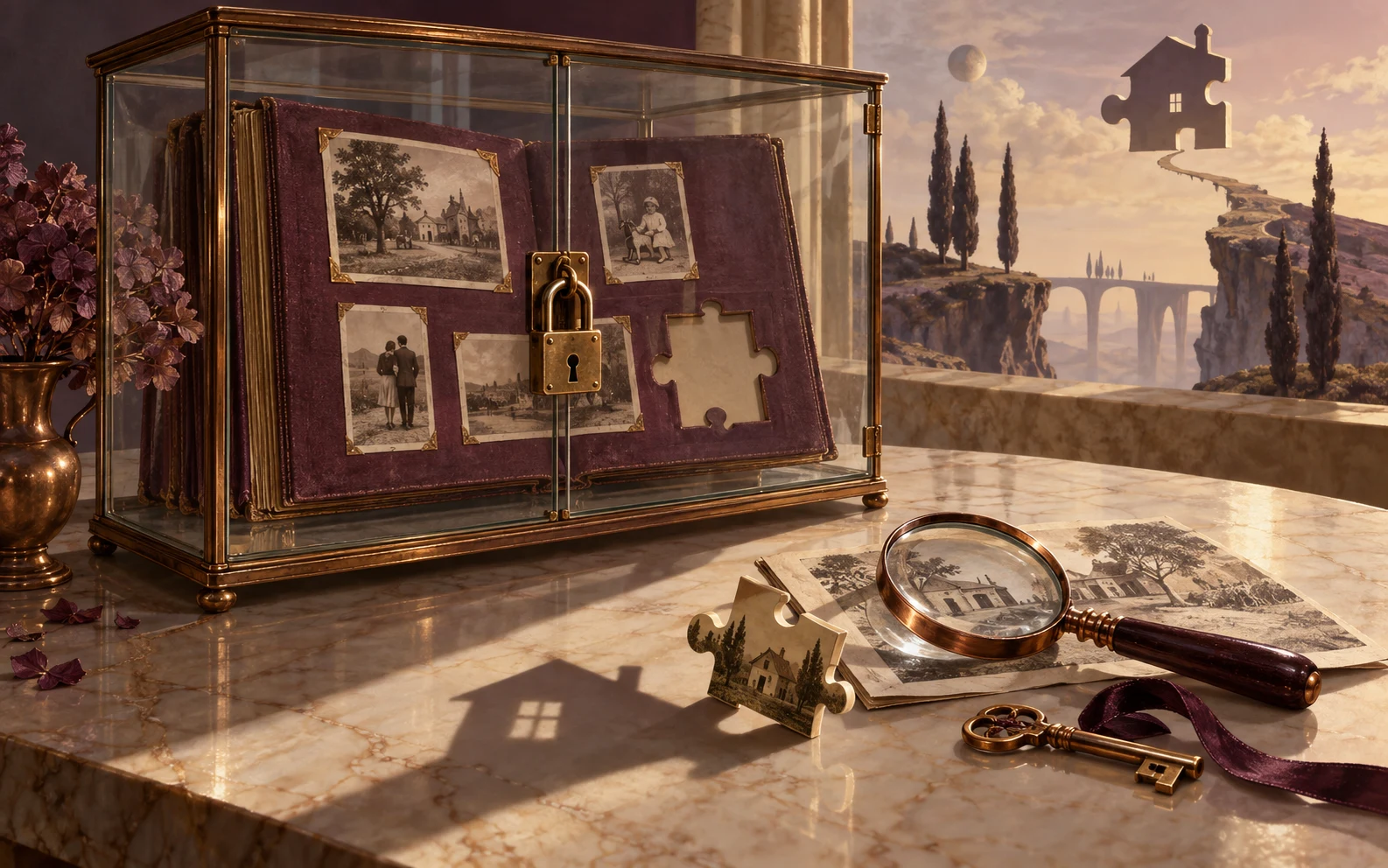
Epigraph
“…where are your proofs?”
Wilkie Collins, The Woman in White, third epoch, Walter Hartright's narrative, section IV: Mr Kyrle's question at the end of his examination of the information presented. A short fragment. The fictional lawyer's opinion establishes no modern rules of proof.
What This Article Is About
Sometimes you stumble onto the realization that literally every relative is clued in on your true backstory except you. Who is that stern, mustachioed man on the yellowed snapshot, why is your last name whited-out on the birth certificate, and what city were you actually picked up in? To you, this is an existential missing puzzle piece; to an aunt at the dinner table, it’s an outrageous intrusion into everyone else’s dirty laundry. Mantras like "family comes first" and "honesty is the best policy" shatter immediately under that kind of pressure.
This piece is about voluntary digging into your own lineage. By "the right to know," we mean the purely human impulse to figure out who on earth you are—not a search warrant for Aunt Vera’s credenza or a legal entitlement to beat a full confession out of your elders. Legal arcana regarding adoption, state archives, DNA test registries, and safety concerns are intentionally left out of frame. No one is promising instant enlightenment, cosmic peace, or pre-packaged answers either. If things start smelling of coercion, extortion, or threats, drop the tea and biscuits and find proper independent support. A family thriller is best navigated from a safe distance.
I. Pinpoint the Gap Before Putting the Whole Family on Trial
Picture a fictional Irina. She is sitting with Aunt Vera, leafing through dusty photo albums, and runs into a picture of a chubby infant stamped with an unfamiliar name—yet bearing Irina's exact birth year. Aunt Vera snatches the photo away with the reflexes of a secret agent, declaring: "Stirring up the past only kicks up dust". A siren immediately goes off in Irina’s head: "My whole life is a lie! I’m either the lost heir to a throne or a kidnapping victim!"
Hit pause on the paranoia. First, ask concrete questions: who is in the photo, whose handwriting is that scrawl on the back, and how did it end up sandwiched between preschool pageant snapshots? That is vastly more constructive than screeching, "You’ve been lying to me for thirty years!" There might actually be a skeleton in the closet. Or it could just be a second cousin, captioned a decade after the fact, using an affectionate pet name. Neither Irina’s panic nor Vera’s poker face establishes the truth. Asking a reasonable question shouldn't require the sky to fall first.
Defining the specific gap keeps you grounded: are you missing a name, a date, or the reason behind an alteration? If you're simply curious about a face on cardstock, you don't need to subpoena the bedroom chronicles of the entire clan from 1984. Don't scramble distinct issues into one big mess. Reconstructing your origins is entirely distinct from settling decades-old grudges or relitigating who stole whose porcelain tea set.
II. Silence Is Not Evidence of a Criminal Conspiracy
Aunt Vera clams up like a captured partisan under interrogation. Irina’s immediate urge is to conclude: "Aha! If she won't talk, my worst suspicions must be true!" But someone else refusing to speak means precisely one thing: a productive chat isn't happening today. That silence could conceal anything: maybe she genuinely barely remembers, maybe she's shielding someone else, or maybe she just can't stomach the emotional toll right now. Don't fill another person's silence with a script lifted from a true-crime docuseries.
Obviously, that isn’t an excuse to ignore unhinged behavior. If asking a simple question triggers threats of disinheritance or full-blown histrionics, that's an unmistakable red flag. Even so, an overt threat still doesn't tell you what specific fact was hidden in the past. You don't need to decipher the full genealogical archive just to recognize that the tea party has turned toxic: walking out of the room doesn't require a Ph.D. in family history.
Irina can simply log the observable facts: Vera declined to clarify, named no third parties, and offered no source for the records. Note that down along with your own anxiety, but avoid turning your personal notebook into a tribunal's indictment. If a relative drops an "I don't know," probe gently: did they forget, did they never hear it, or are they just parroting the neighbor’s gossip? Don't push past that by force. A blank spot remains a blank spot, and a closed door doesn't automatically mean your family is running a covert lodge.
III. The Quality of the Source Trumps the Confidence of the Storyteller
Enter Uncle Kolya, booming with full-chested authority: "I’m telling you straight, that’s you in the photo!" He wasn't present when the shutter clicked, mind you, but he’s heard the yarn retold at every wedding banquet for forty years. Kolya’s absolute conviction demonstrates the staying power of family folklore, not eyewitness credibility. In dynastic family sagas, wild fabrications, rumors, and hard facts are all dispensed in the exact same stentorian, matter-of-fact tone.
Focus on the information carrier, not the sheer volume of the raconteur. A photo tells you an approximate era and what style of onesie was in vogue. An inscription tells you what the person holding the pen chose to call the child. It provides zero guarantee of who that baby actually was or whether the note was scribbled years down the road.
If Uncle Kolya swears one thing, Aunt Vera whispers another, and the ink on the reverse side contradicts both, don't try to force the pieces together. Document the discrepancies. If five relatives chime in with the exact same tale tracing back to one late great-grandmother, you don't have five corroborating witnesses—you still have exactly one questionable original source.
IV. Your Origin Story Overlaps With Other People's Private Lives
Irina insists this is strictly her business: after all, it's her own heritage! Aunt Vera hisses back that it involves the private lives of third parties. Uncomfortable as it is to admit, both have a point. Family history is like a communal apartment: everyone's laundry ends up drying on the same communal line. Your legitimate need to know your origins does not grant an open license to pick the lock on old love letters or rifle through Grandma’s diaries.
Separate dry facts from salacious details. An aunt could conceivably provide a real legal name without detailing who slept with whom back in that fateful September, or point toward a folder in an attic without handing over an entire trunk of correspondence. A partial answer can offer a crucial lead without unnecessary soap opera drama, though it may also fall frustratingly short—at which point you simply have to articulate what gap remains unaddressed. There are no skeleton keys here, and the conversation must stay within the boundaries of what is realistically on the table rather than demanding total emotional closure. At the same time, don't confuse privacy protection with a license for tall tales: cleanly stating "I will not speak about this" is a coherent boundary; swearing to someone's face that an event never occurred is outright fabrication.
Even after the gentlest, most diplomatic conversation, a bitter aftertaste may linger. That doesn't make you an ungrateful monster, nor does it make your aunt a cartoon villain. It simply means legitimate interests collided. The crucial rule is not to demolish someone else's boundaries just to feed your own genealogical ego.
V. Agreeing to Talk Is Not Consent to Record and Broadcast
Aunt Vera abruptly relents, agreeing to talk one-on-one in the kitchen. Irina’s hand instinctively drifts toward her phone to discreetly hit record under the table. Hold it right there. A willingness to whisper over tea is not consent to create an audio recording, save a permanent file, and certainly not to blast it to the extended family group chat. The technical convenience of a smartphone does not make you an undercover operative.
In professional oral history, practitioners strictly delineate between the interview itself, archiving it, and publishing it—and around a kitchen table, those phases should not blur into a single wholesale free pass either. If an aunt confides something over tea, that is not a green light to run to your cousins with a verbatim transcript. You can certainly jot down a few bullet points in your notes app for personal memory, but bear in mind that your cheat sheet might now hold someone else's sensitive secrets. The ability to record a fact for your own records doesn't grant public reading rights, and an elder's initial consent doesn't automatically clear entry for an expanded audience.
Conspiracy, however, shouldn't morph into omertà. If a secret conceals genuine abuse or ongoing harm, family loyalty pledges go out the window—that calls for professional intervention. But if you can't agree on basic ground rules upfront, it's better to postpone the conversation entirely rather than make impossible promises of taking it to the grave.
VI. You Can Investigate Without a Family Committee Meeting
If your relatives decide to play deaf and mute, your inquiry isn't dead in the water. You can pursue facts via standard, lawful avenues: public archives, civil registries, and open databases. No phishing personal emails, no fake investigator badges—stick strictly to legal channels. A relative’s refusal to chat places no hex on your research, but it doesn't exempt you from the law either.
Keep your sights on specifics: if you need a birth date, comb through registry entries instead of harvesting century-old town gossip. And please, spare yourself the agony of convening a "family council" to vote on the most flattering version of events. A witness reports what they know, a support system keeps you sane, but turning Thanksgiving into a congressional hearing is an exercise in futility.
Be prepared to run headfirst into a brick wall: the registry book burned down, access is legally restricted, or the key witness has passed on. That is an ordinary dead end in the real world—not a secret victory, and certainly not a flaw in your sleuthing chops. Relentless stubbornness does not guarantee the truth will inevitably surface. Not every quest ends in a tidy triumph, but you can always label an unknown an unknown, take a breather, dig again later, or walk away entirely, keeping a firm boundary between what has been proven and what remains mere speculation.
VII. A Major Breakthrough Doesn't Crack the Whole Case
Eureka: an archival record surfaces, linking the mysterious earlier name directly to you! The adrenaline surge is real, but rein it in: that yellowed sheet resolves exactly one data point; it does not hand over the entire emotional subtext of the drama. It doesn't explain why a cover story was spun for decades, who stood lookout, who knew what, or whether there was malicious intent to deceive. The urge to instantly script a Hollywood thriller in your head is overwhelming, but the weight of one solid fact is not equivalent to proof of an entire biography.
Sort your findings into three distinct piles: verified facts, your working hypotheses, and unanswered questions. That way, you avoid turning a fresh discovery into the next sacred, unchallengeable family dogma. Candidly acknowledging "I know the name, but I have no idea why it happened" is infinitely sharper than inventing a novel out of thin air.
Remember: the unvarnished truth can sting. If a fact cuts deep, you are under no obligation to fling yourself into your relatives' arms weeping tears of universal forgiveness. Uncovering the facts, emotionally processing them, and deciding whether to keep these people in your life are three entirely distinct tasks—nobody says you have to tackle them in a bundle.
VIII. The Motive for Concealment Doesn't Erase Its Impact
Aunt Vera sighs: "We only wanted what was best! We feared the gossip; we were protecting you!" If she genuinely understands the background, that confession sheds light on the motives and climate of that era. But even the purest intentions and heartfelt elder care do not magically erase the disorienting cost of living years in the dark. Conversely, your present hurt doesn't turn your elders into comic-book villains, nor does it make every choice they ever made a calculated lie: the world is messier than a binary choice between a choir of angels and a syndicate of pathological liars.
The key is not falling for the guilt-trip: "We did it all for you, you should be thanking us". You can understand someone's reasons without endorsing their cover-up. Instead of launching into an epic showdown, demand practical outcomes: correct the photo caption, stop reciting the bogus legend at anniversaries, or name the source of the claim.
However, if "family protection" was code for physical abuse, property fraud, or genuine health concerns, drop the heart-to-hearts immediately. Consult attorneys, doctors, or specialized services. Nobody has to tolerate toxic dynamics just to earn the right to protect themselves.
IX. Staying Connected Doesn't Require Forgetting What You Found
Having vented her side, Aunt Vera magnanimously offers: "Well, we’ve talked, now let’s forget all about it and drink our tea like before". But you cannot unsee what you have seen. Remaining in touch with family doesn't mean submitting to a voluntary lobotomy and nodding along to the old fable. At the same time, turning every Sunday dinner into a hostile deposition gets old fast.
Establish boundaries: what topics are open, what doors are closed, and what narrative about yourself you intend to present to the world going forward. You don't have to burn every bridge if you can simply dial up the distance or restrict holiday small talk strictly to the weather and gardening. Personal safety and peace of mind trump maintaining the pristine facade of a harmonious clan.
And if relatives, having caught wind of the revelation, are already packing to broadcast it across town, draw the line. Confirming an event happened does not convert your personal life into public reality TV. You are fully entitled to ask family not to speak on your behalf while you calibrate your own words, though this remains an everyday human boundary rather than a legal gag order. By the same token, it's silly for relatives to promise absolute confidentiality if they can't keep it or the rumor has already slipped into the wild: it is far more honest to acknowledge a leak outright than to dole out bogus platitudes or dictate when your inquiries ought to end.
X. It Is Okay to Leave Your Story Unfinished
At the end of our hypothetical investigation, Irina holds an old name and a city, while the deeper motives and a pile of specifics remain shrouded in fog. And that is completely fine. You don't need to force a glossy Hollywood resolution onto the narrative. An authentic adult life story can have missing pages, giant question marks, and asterisks reading "source unreliable".
Sometimes inquiries hit an absolute wall: the archives have nothing, the family has locked the gates, and the conversation simply doesn't happen. There's no point in dressing that up as a spiritual triumph or an integrity test for the family—the desired answer simply wasn't attained. What you do possess is clarity on the questions you raised and the compromises you refused to accept. The search itself doesn't lose meaning because of that: you can shelf the research, try another angle later, or call an indefinite recess without swearing oaths to drag every shred of history into the light.
Leave your personal history open for revisions. Record what you found, cite your footnotes, and keep living. Your life is happening right now, and it is entirely real—even with a few pages missing from chapter one.
What This Means in Practice: Step 1 (Before the Talk)
- Pinpoint exactly one concrete gap. If a safe conversation is plausible, address one targeted question at a time rather than demanding the entire hidden history of the twentieth century.
- Sort your baggage. Separate tangible physical clues and identified sources from personal assumptions so you don't confuse hard documents with speculation.
- Seek out the right witness. Approach someone who could plausibly possess the information, not just the relative who tells the most colorful stories at the kitchen table.
- Agree on terms upfront. Before tapping record or sharing details, clarify the intended purpose, who will hear it, and the scope of consent—keeping in mind that a partial answer is completely acceptable and doesn't need to resolve everything instantly.
What This Means in Practice: Step 2 (After the Talk)
- Sort your findings into three piles. Categorize everything into "established facts," "working theories," and "still completely unknown".
- Don't jump to conclusions. Someone's refusal to speak does not prove your suspicions, hearing the same family legend repeated five times doesn't equal independent witnesses, and one yellowed certificate isn't an entire life story.
- Stick strictly to lawful avenues. Ditch any fantasies about breaking into sealed archives: research the actual rules and access procedures of specific institutions, starting with records already legally in your hands.
- Remember the pause button. The search is voluntary: you are fully entitled to pause, return to it later, or seek outside qualified help. An inconclusive lead doesn't invalidate your question, but digging up old skeletons doesn't automatically guarantee healing or reconciliation either.
Key quotation
“That date may yet be recovered…”
Wilkie Collins, The Woman in White, third epoch, section IV, Walter Hartright's reply to Mr Kyrle. A fragment with the address omitted. This is the character's hope, rather than confirmation of a discovered date or a guarantee of successful inquiry.
Connections between traditions
| Comparison | Common question | Essential difference | Limit |
|---|---|---|---|
| Collins and grounds for an answer | Which information is missing? | A fictional legal dispute differs from a present voluntary family search. | Historical assessment of proof and forced confession do not become instructions. |
| Oral history and family accounts | What does consent cover? | A professional interview involving preservation and access differs from private conversation. | It creates neither a duty to disclose nor a universal legal regime. |
| Proverbs 18 and examining an account | Is the first convincing version enough? | Biblical wisdom has its own religious foundation. | Neither expert assessment of memory nor permission to interrogate relatives. |
| Personal significance and another's privacy | Whose lives are affected by an answer? | Information about personal origins can intersect with others' private experience. | It establishes no access to all documents and does not justify a false answer. |
Sources
- Wilkie Collins, The Woman in White, PG583, English original. The selected continuous context at 5154–5348, third epoch, Walter's narrative, transition to IV and continuation, was actually read. Questions of grounds and a missing date are used; threats and the intention to force confession are not adopted as a model. Two short fragments appear in the reader roles. Whole-book reading and an exact underlying print edition are not claimed; PG availability in the US is not declared global permission.
- Oral History Association, Oral History Best Practices. The entire substantive page was read: preparation, interviewing, preservation, access, and notes at web lines 94–178. Limited distinctions of consent and use in professional oral history are used; legal applicability to family conversation is not established. The linked newer 2025 suite was not read and is not presented as the article's foundation. No direct quotations.
- Proverbs, chapter 18, King James Version. The entire chapter, verses 1–24 at web lines 49–91, was read; verses 13 and 17 are used narrowly with the religious foundation retained. Reading the whole biblical corpus is not claimed; no direct quotations.
Tags
family, secret, history, origins, information, name, photograph, document, memory, source, testimony, certainty, uncertainty, question, privacy, consent, recording, access, distribution, oral history, inquiry, limit, care, trust, conversation, safety, Collins, Proverbs, biography, kinship
About the authors
Andrey Zarinsh is the author and founder of United Wisdom. He explores inner transformation, unity of traditions, intercultural dialogue, and contemporary spiritual discipline. Continue the conversation: @andrey.zarinsh.
Maria Evilkut is a coauthor of United Wisdom. She researches and practically tests approaches to unity and mutual understanding among people and cultures. Continue the conversation: @ilkutki.