
Criminal environments and informal power
Yakuza: organisation, personal dependence and differences from popular images
Examines historical organisational levels and separately senior/junior status, patronage and obligations. Distinguishes promised support from fulfilment, loyalty from consent and representations from observation.
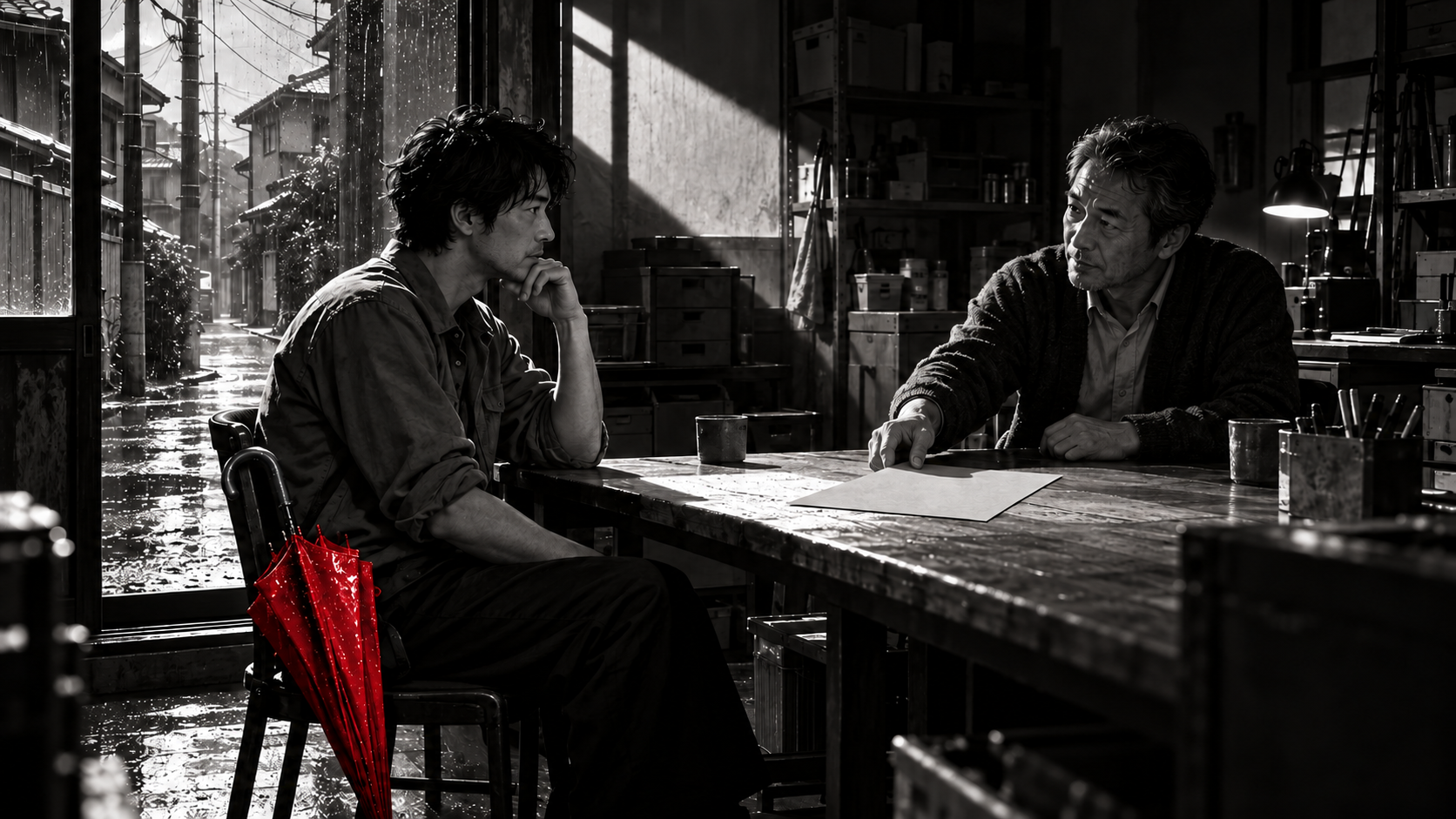
“We are as we are, of ourselves!” Laozi 17.2, seven words from James Legge’s translation. An idealised account of government, rather than evidence about yakuza or a duty to face pressure alone. Selected chapter
What this article is about
Imagine a fictional reader responding to a criminal organisation’s story: “At least it works like a family: the senior looks after the junior, and the junior stays loyal.” Someone else hears “family” and treats every relationship as identical. Both accounts lose questions about decisions, obligations actually fulfilled and a person’s freedom to define participation. A family name does not explain a relationship’s content. A recognisable image can make a story easier to follow while leaving the individual’s actual position outside it.
This article examines yakuza organisation, personal oyabun–kobun relationships, patronage and obligations, alongside differences between descriptions and cinema. A 2000 historical source, Japanese police material and film documents have different purposes. This is no current control map, private guilt ruling or contact, refusal or exit route. Assistance access, recipient authority and communication confidentiality have not been separately verified. Urgent needs do not have to wait until reading is complete. Someone need not independently establish every surrounding connection for their position to matter, and understanding the text requires no approach to a group or investigation of acquaintances.
I. A collective term establishes no single organisation or destiny
“Yakuza” should not be understood as one structure where everyone occupies a predetermined place. Japan’s National Police Agency, NPA, links the common term with boryokudan in its selected description, addressing organisational power for economic benefit, unjust activity and violence. This is an institutional account of an environment, rather than every named person’s biography. It makes neither Japan nor its population or an ordinary institution’s hierarchy a criminal organisation. A country and the selected subject remain different scales.
An organisational account, a particular relationship and a legal decision differ. A word heard in conversation establishes no conduct, knowledge or available choice. Conversely, lacking a familiar name makes no pressure unreal. A resident needs no complete hidden-command map before a threat or need can be recognised. The article supplies no universal membership test or private applicable-law determination. Institutional material helps define a subject; individual consideration needs its own grounds and competent procedure. Its limits should remain explicit rather than being filled by a familiar reputation or an outsider’s certainty.
Visibility and permission are particularly easy to confuse. Public recognition, familiar terminology and a described structure establish no lawfulness of every act. The reverse shortcut also fails: disputed or unestablished affiliation cannot automatically explain someone’s every action or all their relatives. This article verifies no popular formula about a wholly legal mafia. It neither surveys all Japanese law nor derives an absence of rights from a criminal label. Conduct remains a separate question even where a name sounds familiar. The label supplies no complete answer about what happened, who knew or who decided.
For readers, this concerns scale first. “The organisation is described this way,” “this person has a connection” and “they committed this act” are different assertions. Grounds must connect them; confidence alone cannot. The distinction requires neither checking acquaintances nor finding a boss or collecting relationship information. It can be retained when reading an existing account. If a source does not establish a private role, readers need not do so through tattoos, surnames, addresses or imagined national character.
II. Several structural levels form no fixed diagram
Peter Hill’s thesis, submitted in May 2000, examines overlapping formal ranks, fictive kinship and internal groups. Selected pages belong to a historical discussion, including the late Shōwa period, and also draw on earlier studies. They supply no present diagram of all organisations. The distinction among levels matters: office, personal ties and position within a smaller group answer different questions. Their intersection cannot reveal someone’s circumstances through one rank name or place on a chart.
Formal hierarchy distributes authority and expected duties while leaving personal relationships incompletely described. One person can occupy different positions across connections. Leadership within one unit need not exclude subordination in a larger affiliation. For dependence, this matters more than a long title list. Visible power need not mean controlling every condition; a lower position reveals no complete knowledge or conduct either. An organisational diagram cannot replace consideration of whom someone actually answers to, in what matters and where information is incomplete.
Hill’s account also concerns flexibility. An old diagram cannot be presented as a photograph of permanent order today. Yet changeability establishes neither absent authority nor complete independence. Particular relationships lie between a single all-powerful centre and entirely autonomous parts; their conditions can change with time and purpose. The article establishes no current leaders, territorial boundaries, membership totals or revenue distribution. Such claims need dated evidence of their own. They are not supplied here to prove that everyone is equally free or equally without choice, and old figures are not silently made current.
Comparing structure with an institution or business has limits too. Shared offices establish neither lawful activity nor equivalent subordination. The comparison selects one organisational feature. Making every hierarchical job equivalent to criminal participation would exceed it. Using similar titles to prove ordinary harmless employment would exceed it differently. A narrower question about decision distribution is more useful, followed separately by conduct, pressure and actual options. Similarities should not carry conclusions they cannot support merely because a comparison feels clear or because a chart resembles one used in familiar workplaces.
III. Oyabun and kobun: personal roles, rather than age certificates
The selected historical source describes oyabun as fictive father, patron or boss, and kobun as fictive son, protégé or follower. These are social roles, rather than proof of blood relationship. “Son” also establishes no legal childhood. Senior and junior positions cannot automatically be reduced to birth dates. The terms identify a researched relationship here, rather than disclose anyone’s legal age, character or options merely because someone uses them. A relational description needs that limit before family language becomes an unsupported explanation of everyone occupying the named role.
Hill emphasises personal ties linking individuals, rather than merely linking someone to an impersonal organisation. Formal placement therefore leaves obligations unexplained. Attachment to a particular senior, received support and internal position may overlap. A personal connection guarantees neither care nor complete deception. Genuine gratitude can exist within an unequal relationship. Recognising pressure requires neither calling every feeling false nor making every feeling evidence of free agreement to everything occurring. A person’s emotional experience and a relationship’s actual conditions deserve separate attention, even when the account presents them through one family term.
Calling a relationship familial establishes no reciprocity of its terms. “Family” evokes closeness, care and belonging; organisational usage can evoke similar expectations. The name says little about promises, fulfilment or demanded costs. A particular criminal setting’s account cannot be transferred to every Japanese mentoring relationship or every senior helping a junior. Nor does shared vocabulary turn criminal dependence into a natural family duty. The subject remains a specified relationship and its conditions, rather than national essence. Neither idealisation nor collective suspicion supplies the missing evidence about an individual’s circumstances.
Senior and junior are consequently no two moral types. A subordinate need not have weak character, a leader need not know every detail, and age alone establishes neither guilt nor wisdom. These limits do not erase responsibility for actual conduct; they prevent deciding before circumstances are examined. Historical terms can clarify language without becoming a ready diagnosis. Readers need not verify roles around them or discover who calls whom a relative to understand the text. A concept can remain useful without becoming a personal classification tool or a demand to investigate.
IV. Patronage and obligations guarantee no reciprocity
In selected internal-control pages, Hill discusses expected obedience, rewards and sanctions. He also relates an account of support obligations left unfulfilled. This is a historical description and particular attributed report, rather than a current frequency estimate or case independently investigated here. It separates promised patronage from results. A vocabulary of loyalty establishes no senior’s inevitable fulfilment. One episode also cannot make every helpful act imaginary or predict any present relationship. Its bounded value lies in questioning whether stated reciprocity has actually been demonstrated, rather than assuming either universal reliability or universal deception.
Receiving resources differs from agreeing to unlimited control. Help may matter profoundly where alternatives are restricted, without establishing that every later demand was understood and accepted in advance. Gratitude, hoped-for continuing support, fear of lost position and genuine attachment can coexist. Complexity excuses no harm, but prevents one word such as “choice” from describing every condition. Historical patronage accounts frame questions without establishing the reader’s actual terms. Neither an understandable need nor a significant benefit should have to explain the entire relationship, every subsequent act and every possible consequence for others.
The cost of disagreement matters in unequal relationships, but no universal experiment can establish it. This article proposes neither refusal tests nor debt arguments or demonstrations of independence before a boss. An ethical distinction supplies no safe action script. A well-phrased statement cannot cancel actual power; asserted power does not prove every claim either. Serious pressure can be recognised while its alleged source and extent remain unverified. That requires no independent reconstruction of every command level or meeting with a presumed patron. Missing information remains a knowledge limit, rather than an assignment to take a risk.
Group norms, personal expectations and actual fulfilment therefore need separation. A norm can sound solemn, an expectation can be sincere, and fulfilment can remain unknown or fall short. These levels do not confirm one another automatically. No particular contract, legal debt or payment entitlement is determined here, and no preferable criminal protector is selected. Its familiarity may organise an account while leaving conditions unresolved. Keeping that gap visible avoids converting an ideal relationship into a guarantee about what another person will actually do.
V. Loyalty in an account differs from individual consent
A historical demand for obedience establishes no uniform inward agreement. Hill describes strain alongside outward loyalty. Demonstrations cannot be treated as direct records of feelings or intentions. Presumed disagreement also erases no actual participation in harm. Conduct, knowledge, choice and experience require different grounds. The article establishes neither every participant’s psychological state nor one mechanism explaining the whole setting. It preserves distinctions among what someone displays, does, knows and can choose at a particular moment. A description of a code should not silently become evidence that everyone accepts it identically.
Personal relationships change over time. Agreement to one role reveals little automatically about a later demand; later knowledge cannot silently be moved to the beginning. Conversely, initial ignorance does not settle every subsequent act. An observer’s current understanding should not be substituted for another person’s biography. No investigation to obtain missing details is proposed. An unknown transition can remain unknown, rather than being filled with romantic loyalty or an unsupported assumption of complete knowledge from the start. Time matters without becoming a universal defence or a shortcut to accusation.
Resources, work, dependants and available support affect ordinary life. They help explain a decision’s cost without supplying automatic legal exemption or making others’ harm disappear. Someone can experience pressure while harming another person. Both matters need consideration together. This article determines no private legal status and makes no dependent adult an object without agency. Age, conditions and autonomy remain distinct even where choices are constrained. Acknowledging limits is not a complete verdict on responsibility, just as recognising harm is not grounds for denying that those limits existed or affected the person’s position.
Readers need no single exhaustive image: honourable loyal subordinate, wholly free offender or entirely helpless figure. Each can close questions prematurely. Particularity can be retained without an obligation to deliver a final judgment. Compassion excuses no activity automatically; condemnation of actual harm requires no denial of pressure. Human worth needs no simple story convenient to a viewer. Incompleteness belongs to available knowledge, rather than granting permission to invent motives from nationality, position or familiar plots.
VI. Popular images are not all identical either
Saying cinema always makes yakuza noble heroes would be inaccurate. The official synopsis of Takeshi Kitano’s Outrage, a 2010 film, describes power struggles, betrayal and survival, explicitly without heroes. The synopsis and selected production materials were read; the whole film was not watched. This example shows variation within representation itself. It establishes neither all genre works nor every viewer’s beliefs or real organisations’ structure. A harsh, critical image remains a constructed work, rather than complete observation. Its critical tone should no more become factual authority over individual cases than a flattering image would.
In the press kit, Kitano discusses dialogue, characters, ensemble balance and chosen historical setting. This is evidence of decisions in making an image. His stated intention to make viewers feel pain is no measured audience result. Remarks about what he has heard of criminal business are not adopted as independently verified facts. The level matters: a filmmaker explains what he chose to show. That choice verifies neither viewers’ private experiences nor anyone’s present authority merely because their appearance resembles a character.
Narrative can make faces, expectations and consequences visible where a general model cannot. It also selects who speaks, what receives time and where a scene ends. This is a feature of storytelling, rather than an accusation that every work deceives. Readers need not abandon an artistic impression to acknowledge its limits. Intention and experience can be discussed without assigning a character’s role to an acquaintance. Sympathy for a character proves no endorsement of actual violence; aversion to a scene establishes no actual case’s complete circumstances. Neither feeling has to become a substitute for missing facts.
The distinction between image and life is therefore more than attractive lies versus one simple truth. Life is also known through incomplete accounts, dates and viewpoints. That makes no version equally well-founded by default. Film material supports selected representational features; research supports its dated account and argument; institutional material supplies an agency assessment. They cannot be added into independent confirmation of someone’s role. Respecting sources means preserving purposes even where “family,” “obligation” and “loyalty” recur.
VII. Other people remain outside the internal story
An account of relationships within organisations is incomplete without people outside them. NPA’s selected text explicitly mentions violence against business operators who rejected demands. This is an institutional account, rather than attribution of every business difficulty to yakuza. It restores those absent from an internal-family story. Organisational order can mean imposed conditions, lost options or threats for them. Such harm can be discussed without technical pressure methods, a current territorial chart or instructions to verify anyone’s affiliation. The affected person need not be a participant for their experience to matter to the topic.
“Protection” and “order” therefore need a specified beneficiary. Something helpful within a relationship can disregard another person’s position. This makes no received help imaginary; it prevents help becoming an evaluation of all activity. One resource does not explain who bears its costs. The article calculates no national balance of benefit and harm and proposes no exchange of someone else’s safety for one’s own. Private relief and consequences for others remain distinct. Both may matter without either becoming a complete justification or a reason to erase the other’s existence from the account.
Relatives are also more than extensions of a participant’s role. Kinship, shared homes and dependence establish no agreement to every act. Family care supplies no blanket justification for harm either. Connections, age, participation and options need separate consideration. Children are not equal adult agreement parties; dependent adults are not objects without agency. The article determines no Japanese legal consequences of kinship and appoints nobody as an entire family’s representative responsible for explaining others’ conduct. A relationship may matter while still failing to establish shared intention, shared knowledge or responsibility for everything another person does.
Treatment, stable living conditions and significant relationships should not disappear behind disputed labels. Specific help may be needed while an organisational account remains incomplete. Yet “assistance” guarantees no service access, communication safety or every channel’s confidentiality. Those matters need separate consideration. This article selects no intermediary, assigns no negotiations and requires no public story as a condition of recognising need. An institutional task differs from an individual possibility. Even a useful limited result does not necessarily mean all difficulties have ended. Its significance can remain real without being inflated into total resolution or a promise of protection.
VIII. Historical knowledge is no current control map
A source’s date belongs to its content. Hill’s thesis was submitted in 2000 and discusses earlier periods; the film was made in 2010. Accessing a page today does not make its subject today’s observation. NPA’s text was read as a selected institutional explanation, rather than a complete review of latest statistics and amendments. No current member total, leadership list or influence map is supplied. Old diagrams do not conceal that absence. Historical sources retain explanatory value without answering every present question, especially where a claim would need new evidence about a specified place, relationship or period.
Neither total disappearance nor complete permanence can simply be assumed. A current trend needs suitable data and a defined indicator. Even a verified national indicator would supply no automatic private forecast. Reduced visibility alone establishes no absence of all local ties; a prominent conflict report does not describe every district. No such measurement is undertaken here. Caution marks a boundary rather than filling it with rumours or requiring residents to verify who still exercises influence around home or work. An unknown present relationship remains unknown despite how recognisable a historical organisation’s name may be.
A romantic past can rest on clear language: familiar titles, recognisable forms of address and a code a viewer understands. Narrative clarity is not equal freedom. This does not make every memory wrong or every old relationship identical. Actual help may have mattered without its memory justifying an entire order. Conversely, descriptions of cruelty need not erase every human connection. Both levels can remain without requiring one final judgment on a whole past, every participant and one’s own biography. Specific memories do not have to prove the general system good before retaining personal significance.
The future remains open, rather than a reward for correct understanding. History guarantees neither easy exit, ended dependence nor identical outcomes. It also justifies no permanent equation of everyone with their current role. Serious consequences and possible change can coexist. The article supplies no personal transformation script; it retains human time beyond a definition or a film. Dignity requires no immediate heroic act, and urgent needs await no complete forecast for an organisation. Keeping a future open is not claiming that any particular improvement has already happened or is certain to happen.
IX. Two ethical frames establish no actual patronage
Laozi 17 depicts government where people regard achievement as their own. This is ancient political writing, rather than a measured sequence for every authority. Here it prompts a question about space for autonomy. It proves no quiet leader safe and makes dependence no failure to cope alone. A Chinese text also supplies no evidence of yakuza origins or Japanese character. Its comparison concerns government, rather than criminal organisational history. An ethical ideal can illuminate a question without becoming proof that any group invoking care has achieved it or that someone constrained has failed it.
Matthew 20:20–28 addresses privileged positions and contrasts domination with service. The brief fragment concerns seniority’s content, rather than requiring subordinates to serve violence. Its religious account of sacrifice becomes no victim’s duty to suffer, abandon protection or prove worth through dangerous loyalty. Using care language does not verify that an organisation fulfils an ethical ideal. Stated service, actual action and its result remain distinct; a quotation cannot close that gap. The text raises a question about those seeking precedence without transferring the burden of making them virtuous to people under their authority.
Both frames ask questions of power without answering for modern research. Ethics establishes no legal status, membership or psychological motive. An institutional definition verifies no spiritual maturity; a research model replaces no personal account. Comparison helps when it preserves boundaries and reveals missing levels. It misleads when sources become a chorus supporting a ready verdict. They are no independent witnesses of a reader’s role or guaranteed reliability of a significant senior. A shared concern with authority should leave their different methods, purposes and limits intact rather than make one source carry another’s unanswered questions.
Related article E02 was used to compare coverage. Brief analogies replace neither a dedicated yakuza account nor separate senior/junior research. Unverified cultural, numerical and historical generalisations are not inherited as facts. Hill’s reading also remains bounded: selected pages, rather than the whole work or every original study cited. A confident retelling cannot remove that limit. Date and subject should remain attached instead of a familiar image becoming complete knowledge of present organisations or every associated person’s conditions. The account’s partial scope can be stated without treating partial evidence as proof of any preferred universal conclusion.
X. A person exceeds their place in a structure
Return to the fictional family comparison. Several questions now separate: which relationship is called familial, what a senior promises, what a junior is expected to do and what is known about fulfilment. This supplies no answer about a particular life or instructions for speaking to a boss. It restores content where an attractive image had taken its place. Family language, attachment and rank can overlap without a complete picture of freedom, knowledge, responsibility or options. The distinction matters even if no further information is available and the reader cannot resolve the particular case.
Conduct, knowledge, resources, pressure and time offer more precise subjects, rather than an investigation questionnaire. Explaining constraints erases no harm; recognising harm requires no denial of constraints. A known organisation’s name grants no permission to fill gaps through nationality, appearance or a film role. Questions can remain open without indifference. Incompleteness belongs to available knowledge. Someone need not provide an exhaustive chart of circumstances before dignity and needs are acknowledged.
Organisational language and life remain distinct. Oyabun–kobun identifies a researched relationship, rather than blood kinship, age or a moral verdict. Patronage can be a significant promise without verified reliability. A powerful film image remains different from observation; a historical account explains a model without settling the present. These boundaries refine knowledge. They help locate where a story relies on sources and where familiar words substitute for missing details. An analytical term should be allowed to explain only what its evidence supports, leaving individual circumstances open where the investigation has not established them.
Japanese society and individual lives exceed this selected criminal subject. Nobody must represent a nation or organisation, or become a hero of overcoming, to remain a person. Current position supplies no complete future; private relief erases no consequences for others. Respectful understanding retains both without promising one story resolves everything. It begins with accurate scale and stops where grounds stop. Actual needs can remain visible before every historical, legal and organisational question has been answered. A limited account can contribute to understanding without claiming the authority or completeness of a private judgment or an individual support decision.
Optional practice: a name and a relationship’s content
Mentally take an innocuous fictional sentence: “They call him father, so he always cares for them.” This involves no actual surrounding relationships. Collect no names or correspondence and investigate nobody. Skip the exercise if unpleasant or unsuitable; reading requires no completed assignment. The statement can remain wholly invented without being applied to a person the reader knows.
Separate a role’s name, a promise and a known act. Is an event stated, or added through the word’s familiar meaning? This question concerns the text. It determines neither criminality nor individual role and requires no loyalty, care or authority test. A clearer distinction in a sentence establishes no person’s actual conditions or another person’s right to decide for them.
Notice time and source: historical research, a filmmaker’s account or a specified event. One level need not become every other. Uncertainty can remain without contact, argument, refusal, payment or public declarations supposedly verifying the claim. The exercise provides no safer patron or suitable intermediary, and an unanswered question creates no obligation to approach a group to settle it.
If useful, finish with a more precise thought: a relationship’s name guarantees no fulfilled obligations. This replaces neither protection, medical attention nor qualified consideration when needed. Urgent needs do not have to wait for the exercise. Completion promises no safety, changed relationships or ready future ruling. The result is a limited clarification of an inference, rather than practical resolution of someone’s circumstances or permission to test another person’s power.
Key quotation
“let him be your servant” Matthew 20:27, five words from the KJV. Addressed to someone seeking precedence, rather than requiring a harmed person to endure violence. Context, 20:20–28
The words return seniority to a question of service. They verify no actual patronage and require no dangerous sacrifice from someone dependent.
Comparison map: roles, sources and limits
| Source | What it helps distinguish | Limit |
|---|---|---|
| Laozi 17, Legge | Autonomy and an ideal of government | No yakuza origins, safe quiet leader or blame for dependence |
| Matthew 20:20–28, KJV | Precedence, domination and service | No victim’s suffering duty or organisation’s ethical licence |
| NPA selected institutional text | Organisational force and effects on others | No private role, complete law survey or present control map |
| Peter Hill, May 2000, selected pages | Formal ranks, personal ties, patronage and control | Historical account, rather than every present group or original cited study |
| Outrage 2010, synopsis and creator’s words | A specified film image and its construction | No whole-film viewing, complete popular culture or audience-effect research |
Ethical frames, research, institutional assessment and representation are not interchangeable evidence of a private role.
Matthew 20:20–28 ↔ personal patronage in the selected Hill pages. The Gospel discussion of seniority contrasts domination with service; the historical study describes senior–junior ties, support, obligations and internal control. The common subject is how unequal standing connects people: rank alone cannot answer who expects or does what for another. A common question nevertheless creates no shared moral system. The Gospel supplies a religious measure; Hill explains a particular historical arrangement without certifying its virtue. Service creates no victim’s endurance duty, while patronage establishes neither that this ethic originated yakuza relations, a universal group code nor present safety.
Hill’s personal ties ↔ the constructed Outrage 2010 image. The research account considers personal subordination and patronage alongside formal ranks; the read synopsis organises power struggles, betrayal and survival, while Kitano explains choices of characters, dialogue and ensemble. The resemblance is that particular relationships reveal matters a position diagram leaves out. But historical argument and deliberate artistic construction have different evidential grounds. Creator statements establish his choices, not measured audience effects or independently verified facts he heard about. Neither Hill nor the film verifies an acquaintance’s private role; a critical film image also remains distinct from complete observation of a real environment.
Sources
- Laozi, The Tao Teh King 17, James Legge, Project Gutenberg 216. Both selected chapter parts read completely; not the whole work or Chinese original. Own RU/TH fragment renderings derive from this English translation, without promising solitary recovery from every dependence.
- Matthew 20:20–28, King James Version. Complete selected passage read, rather than the whole work or website commentary. Service becomes no victim’s duty to sacrifice safety.
- National Police Agency, Organized Crime Department. Entire selected Fight against Organized Crimes section and note read. Not all linked reports, cases, current amendments or statistics; no private classification or communication safety established.
- Peter B.E. Hill, Botaiho: Japanese organised crime under the Boryokudan countermeasures law, University of Stirling, May 2000. Selected printed pages 129–134 and 139–141 read with page continuations; key pages visually inspected. The last unfinished paragraph on a bodily custom is unused. Not the whole 527-page thesis, both complete sections or every cited study. Historical diagrams, counts and methods are neither made current nor reproduced.
- Festival de Cannes, Outrage 2010 and original English press kit. Selected synopsis and Kitano’s complete statement sections on PDF pages 3–5 read. Not the whole film, trailer, all thirteen kit pages or audience research. The 2023 archive path is not the film date; a stated intention verifies no viewer outcome.
Tags
yakuza, Japan, boryokudan, organisation, hierarchy, personal dependence, oyabun, kobun, senior and junior, fictive kinship, patronage, status, obligations, loyalty, obedience, pressure, choice, responsibility, family, outside victims, history, film images, Outrage, Takeshi Kitano, Peter Hill, NPA, service, dignity
About the authors
Andrey Zarinsh is the author and founder of United Wisdom. He explores inner transformation, unity across traditions, intercultural dialogue and contemporary spiritual discipline. Instagram: @andrey.zarinsh.
Maria Evilkut is a co-author of United Wisdom. Alongside research, she seeks to test these ideas in practice and observe how principles of unity and mutual understanding work in real life between people and cultures. Instagram: @ilkutki.