
G
Living alone while continuing to need assistance
Someone may want to live alone while needing help every day. Someone else may prefer shared living while retaining their own voice. These choices form no ladder of human dignity. Difficulty begins when housing, having no housemates and performing every action unaided become one test of independence. This article asks different questions: what life does the person want, which support does it need and what is actually provided? We compare the international independent-living framework, Aristotle on self-sufficiency, Christian mutual assistance and Seneca on accepting a benefit freely. They do no
Epigraph
“Bear ye one another's burdens, and so fulfil the law of Christ.”
Galatians6:2, a complete sentence from the King James Version. The selected passage6:1–5 was read, placing mutual assistance beside personal responsibility. This Christian instruction neither appoints a relative nor demands unpaid work.
What this article is about
Someone may want to live alone while needing help every day. Someone else may prefer shared living while retaining their own voice. These choices form no ladder of human dignity. Difficulty begins when housing, having no housemates and performing every action unaided become one test of independence. This article asks different questions: what life does the person want, which support does it need and what is actually provided? We compare the international independent-living framework, Aristotle on self-sufficiency, Christian mutual assistance and Seneca on accepting a benefit freely. They do not speak with one voice or establish local services. There is no household test of fitness to live alone, clinical plan or promise of safely managing without necessary assistance. A smaller result is possible: one unmet need receives a precise name, while wanting a life of one's own stops meaning an obligation to do everything without others.
I. A door of one's own is not an examination
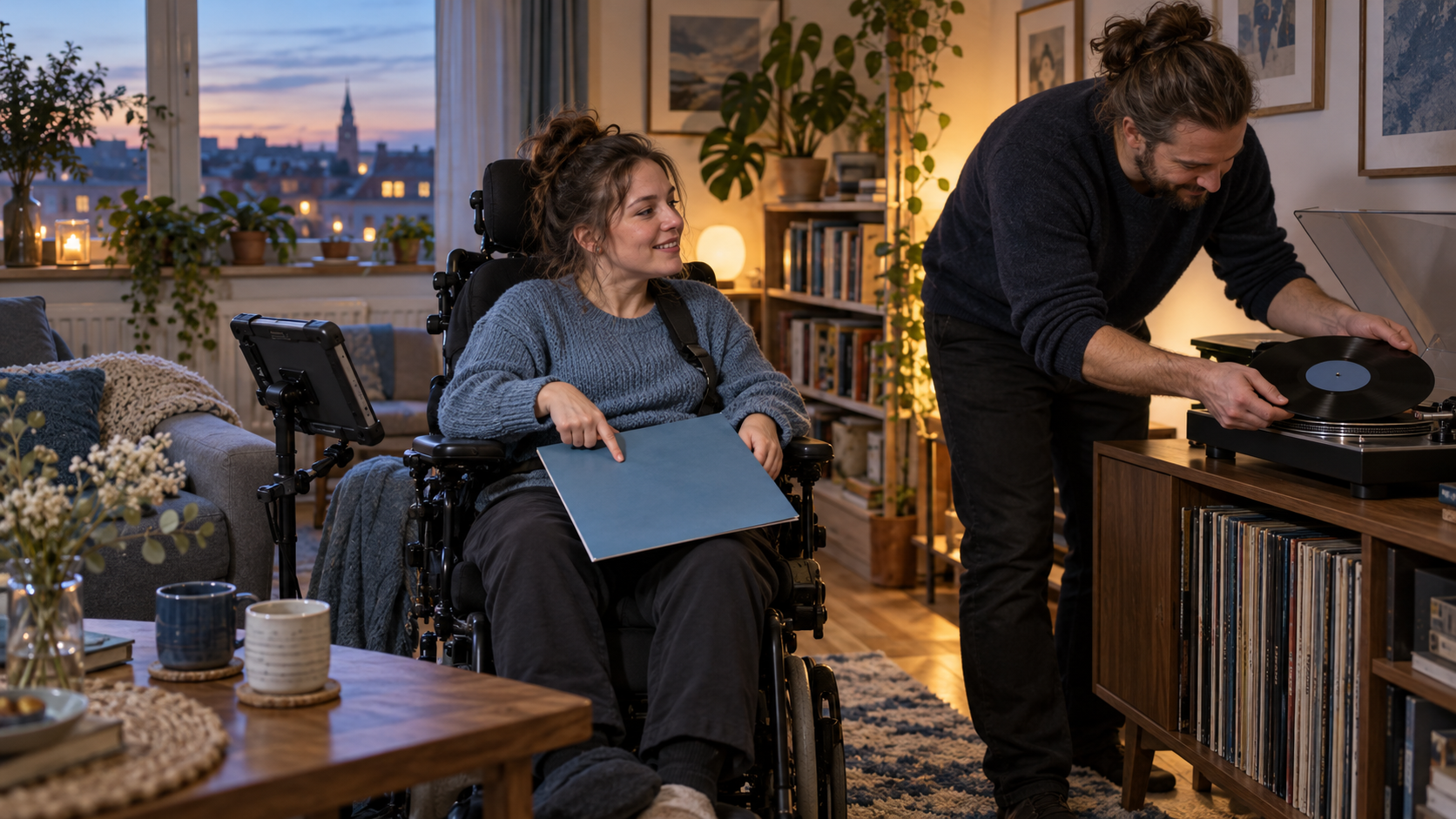
Alina is twenty-nine. She has used support since childhood, communicates in her chosen way without speech and wants a separate flat. Inviting a friend, playing music in the evening and not negotiating every cup of tea around a family timetable matter to her. She continues to need substantial daily assistance. A relative asks why she still needs a helper if she wants to live separately. The question assumes a bargain Alina never proposed: a door of her own in exchange for having no needs. This fictional scene determines no particular support arrangement's adequacy.
Oleg's history differs. He is forty-eight; acquired disability means some previously ordinary tasks now need support. He wants to remain at home but does not know how to arrange help after a service changes its timetable. Someone tells him real independence would at least mean no longer asking friends. His previous life becomes a debt to restore at any cost. These experiences differ, but both replace a question about conditions with a judgment about worthy character.
Begin with what living separately matters for: quiet, a personal routine, being near work or no longer being the permanent subject of a family council. An answer helps examine alternatives without promising all are available. Something important might be possible in another arrangement; an offered alternative might remove precisely what the person wanted. Others' convenience cannot answer for them. Yet wanting an arrangement does not establish that its conditions exist. Both questions can remain visible without requiring heroic independence as an entrance examination.
II. Independent living does not mean performing every action alone
CRPD Article19 places choice of residence and housemates alongside support and inclusion in community life. General commentNo.5, paragraph16, distinguishes independent living, living alone and doing daily activities oneself. These are an international framework and its Committee interpretation. They establish neither a particular service for Alina nor domestic approval for a particular housing arrangement.
For discussion, one ordinary day is more useful than describing the whole person as able or unable. What do they want to do themselves, where do they prefer help and which needs remain unmet without it? Choosing dinner differs from buying groceries and from physically performing an action. Different participants may be needed. This distinction is no capacity assessment or care technique. Necessary clinical tasks require competent professionals rather than an editorial checklist deciding what is appropriate for an individual.
A need may be continuing, variable or unclear. Unknown does not mean zero. Oleg need not first endure a difficult day unaided to prove assistance necessary. Alina need not personally perform every part of an action for its choice to be hers. Yet saying “I decide” does not establish who performs the work. Respecting a voice and organising an action need different confirmation. Good consideration retains both matters without pretending an elegant distinction will itself remove a shortage of help or create resources where none have been established.
III. A named helper has not necessarily accepted the task
Oleg's plan may name a friend who has only said to call if anything comes up. The task, time, ability to come and actual agreement remain unestablished. That does not empty a friendly statement of meaning: it may express real care. The mistake is subtracting all necessary work as though someone accepted it completely. A name written down, discussion of possibilities, an agreement and assistance actually delivered are different results. Keeping them separate protects both the friendship and the practical task from assumptions.
Clarification can be small: what is needed, which period is being discussed, what someone agrees to do and what they cannot. Do not shrink a substantial need into a symbolic request to obtain easy agreement. If more is needed than a friend can offer, a gap remains rather than one participant's moral failure. Limited involvement does not promise the entire future. Reporting an unmet remainder is not ingratitude. Such words identify work that otherwise disappears between people whose goodwill is real but whose resources differ.
The Christian appeal in Galatians6:1–5 connects attention to another with personal responsibility. It is not a shift allocation or instruction for the nearest woman to provide care. Agreement with its faith is unnecessary for needs to deserve attention. In this bounded authorial application, mutuality permits honest discussion without inventing a contract: closeness matters but does not replace an available worker, appropriate competence and confirmed conditions. A relationship need not lose value because it cannot provide everything.
IV. A reserve plan cannot be made from imaginary people
If an accepted participant cannot come, what happens to the particular necessary task? This is a question for appropriate support planning, not a request to calculate a safe period without assistance. A service may have replacement procedures; someone else may accept a limited reserve role. But phones, neighbours and relatives do not establish anyone's availability, suitability or agreement. Saying that things will be worked out in an emergency describes hope rather than a completed part of the arrangement. The difference matters before the missing visit occurs.
Alina may have no second paid assistant, and Oleg no money for another visit. They should not have to invent a person to make discussion look finished. State the missing reserve and address the question to whoever actually holds the relevant organisational responsibility, where that participant is established. An enquiry differs from an accepted task. If nobody accepts it, the problem is not solved “through services”. A systemic shortage does not become a private planning mistake because the person needing help was first to notice it or failed to find a hidden alternative.
Immediate danger needs actual urgent local assistance without waiting for a finished plan or every relative's agreement. This article supplies no symptom assessment, universal number, waiting period or safe care substitute. Do not test a reserve by deliberately cancelling necessary help. Less urgent changes require competent discussion of continuity and handover. A visible unmet need is preferable to fictitious reassurance, but acknowledging it does not provide assistance. That limit still matters after a productive conversation, a sympathetic response or a name added to a contact list.
V. Having a voice is not a duty to manage an entire service
Alina can choose her routine while needing help comparing offers or communicating with an organisation. Communication without speech does not make a faster speaker the author of her answer. Pauses and difficulty expressing a position permit no convenient invented agreement. Extensive needs require suitable ways of establishing a position; no household examination is offered. Perfect wording need not be achieved before a housing question counts as real. Assistance with forming the question can itself belong to support rather than disqualify participation.
Participation should not become impossible work as dispatcher, bookkeeper and auditor of every institution. Someone can want control over their life without personally administering recruitment and paperwork. Available assistance for that work and its grounds need examination in actual conditions. Naming the person manager on paper while leaving precisely the tasks they needed help with is insufficient. Removing a duty also does not establish another participant accepted it. Actual handover matters, including where help with organising support remains absent despite everyone agreeing it ought to exist.
In On BenefitsII.18–19, Seneca examines a recipient's freedom and imposed benefits. Roman moral reasoning establishes neither modern legal capacity nor cancellation of clinical duties. It gives a helper a question about their conduct: am I calling complete control of another life a gift? The bounded authorial consequence is that support should assist actual participation rather than demand either total submission or proof that help is no longer needed. Neither side of that false bargain describes the full range of supported life.
VI. Living alone and loneliness need different questions
Oleg may enjoy quiet at home while missing conversation with a friend. Alina may receive frequent visitors and still prefer no permanent housemate. These possibilities coexist. The number of people under one roof does not establish whether chosen relationships are sufficient. Visitors also do not show that necessary practical assistance is provided. Friendship need not become a duty shift; a helper's visit need not prove the need for company has been met. Treating each relationship according to its subject permits both needs to remain understandable.
Ask which connection the person wants: conversation, a shared activity, access to somewhere outside, intimacy or less company. The answer may differ from family ideas of useful recreation. No preferred social circle is promised, and messaging is no replacement for necessary accompaniment. Scarce resources may leave a question open without making isolation the result of an incorrect attitude. Support for community participation may need a separate participant and suitable conditions. Wanting company does not by itself recruit that participant, just as wanting solitude does not erase assistance needs.
Privacy still matters. An organisational contact does not entitle every participant to know who visited in the evening or what was discussed. Permissible information and actual access grounds require task-specific consideration. Safety is not identical to permanent family surveillance; privacy does not prohibit telling an appropriate service about a real threat. If discussing arrangements with a helper is unsafe, personal confrontation cannot become the recipient's obligation. A suitable local route needs examination. No secret channel or particular outcome is guaranteed merely by calling a conversation independent or supportive.
VII. Money and other people's work cannot hide inside “myself”
Separate housing may depend on payment, accessible transport, a worker's time and the premises. Much of this work is invisible. Oleg may appear independent because a friend provides missing unpaid assistance; Alina may appear dependent because hers is recorded in a timetable. Visibility measures no human worth. Nor does it establish which arrangement can continue. See the work and its conditions rather than judging people by how unobtrusively others help them. A neatly presented independent life can still contain an exhausted participant or a task nobody agreed to perform.
Distinguish agreed payment, available resources and what is absent. Unpaid work is not automatically costless or unlimited: the helper has a life and limits. Kinship, friendship and gratitude do not create competence. Workers' rights, contracts, funding and professional powers require current applicable rules. This article calculates no benefit or price, appoints no employer and promises no housing supply. Honest uncertainty is better than invented financial confidence. A meaningful question about support should not make a worker's conditions disappear as though only one person's needs could count.
When money is insufficient, manageable help phrasing one question may be a beginning: which action is not provided, and who can actually consider its organisation? An enquiry is not funding or service delivery. Nobody must master an application, produce a full dossier and call every agency for their need to exist. Support for making an enquiry may also be necessary. A child is not a reserve coordinator of adult life. Name the missing resource while preserving relevant participants' responsibilities where actually established, rather than assigning everything back to the person with the least capacity to chase an answer.
VIII. Traditional self-sufficiency is not a housing certificate
In Nicomachean EthicsI.7, Aristotle discusses the good and self-sufficiency while considering relationships. This is no modern accessible-housing manual. His language of function and virtue must not measure dignity through cognitive or physical productivity. The comparison is limited: a worthwhile life need not mean existence without connections. It establishes no obligation to live with relatives or accept everything they offer. A shared word such as independence does not make an ancient account identical to a contemporary disability-rights framework.
Paul addresses Christian community and assistance; Seneca moral benefits and freedom in receiving them. CRPD addresses rights and states' obligations. These foundations differ. An appeal for mutual care does not replace an arranged service; a voluntary gift does not replace a right; a right does not confirm work already done. Comparison raises questions about living arrangements rather than declaring all sources one doctrine of a correct home. Their differences matter when a person is asked to accept a burden as though its moral description already resolved its practical and legal conditions.
Someone living separately need justify themselves neither to total self-sufficiency nor compulsory family closeness. Relationships can continue without cohabitation; shared living can be chosen without surrendering participation. Moral language helps when it makes care and limits visible, but should not become another entrance requirement for respect. Alina need not model exceptional resilience; Oleg need not earn help through perfect gratitude. Their ordinary lives are not illustrations of someone else's philosophical victory. Reflection should leave room for mundane preferences that do not need to sound wise before they are heard.
IX. Revising arrangements does not cancel an earlier choice
Conditions can change: a helper leaves, housing becomes inaccessible, someone joins or the person wants a different routine. Consider the particular change. One difficulty does not prove separate living was always a mistake. Earlier decisions do not demand enduring every shortage to appear consistent. A wish can remain while its means change; the wish itself can change too. Both require hearing the person now without erasing history. Acknowledging that support was once adequate also does not establish it remains so after a material change.
If new arrangements affect essential care, contracts or formal powers, ordinary discussion does not replace the relevant process. Do not abruptly remove help to demonstrate a boundary or sign in someone else's name because of urgency. Distinguish current need, permissible handover and what remains unconfirmed. This article sets no safe trial period. Alina's example supplies no family method for choosing for her; Oleg's gives no grounds to turn every concern into a final prohibition. A change deserves appropriate consideration rather than a verdict derived from the emotional tone of the conversation.
A result can remain partial: one shift covered, the longer question open; an enquiry channel found, no worker appointed; someone willing to explain a document without organising everything. Retain that exact result. Otherwise the next change can look like unexpected personal failure when the gap was already known. A written record is not compulsory for someone without the energy; an appropriate participant can help preserve meaning. Spoken clarification has value but does not automatically become a contract or assistance delivered. Precision should support practical understanding rather than create another inaccessible paperwork task.
X. Useful examination concerns life rather than appearances
At a conversation's end, ask which action is actually provided and what remains unknown. A separate flat's photograph, completed table or confident family conclusion is insufficient. Has a suitable worker accepted the task, is communication accessible, was the person's position considered and are the agreement's limits understood? These authorial organisational questions are no test of legal capacity or housing safety. One reader cannot confirm every part; complex work needs appropriate participants and competence. A useful account acknowledges where that support for examining the arrangement is itself missing.
Alina may obtain help with discussion while still awaiting a resource decision. Oleg may learn that a friend accepts one action and discover a larger unmet part. Both results help if described honestly. Neither shows that necessary assistance can safely be omitted. They prevent recognised needs becoming confused with completed work, and a system's shortage becoming an accusation against someone who wanted a door of their own. Partial progress can be valuable without being promoted into a completed arrangement for everyday life.
Living alone need not mean living without mutual obligations; receiving help need not transfer the whole routine to others. One person can have a life of their own with continuing support; another chosen shared living with their voice intact. There is no single correct adult image between them. The practical question remains specific: which conditions support the chosen life, who actually participates and where is necessary work still unaccepted? A worthwhile answer demands neither heroic solitude nor an invented family that is always available. It keeps both the person and the work in view.
What this means in practice
If calm and manageable, choose one everyday task. State accessibly what the person wants, which assistance the action needs and what is confirmed. There is no need to describe an entire life or undergo a trial without support. Communication itself may need help; absence of speech does not permit attributing a convenient answer.
Distinguish need, a discussed possibility and an accepted task. If a plan names someone, clarify actual agreement, subject and limits. An absent reserve should be called absent rather than assigned to a relative, neighbour or child by default. Necessary work goes to an appropriate participant under actual conditions; naming a service does not establish acceptance.
Preserve necessary current help while examining changes. Clinical actions, safe organisation, contracts, funding and authority require appropriate competence and current local rules. The exercise sets no waiting period, replaces no treatment and permits no dangerous independence test. Immediate danger needs actual urgent assistance without waiting for family discussion.
One clarification can finish the exercise: which action remains unmet, and to whom can this particular question be conveyed accessibly? Money, an application, a large network and energy for records are not prerequisites. Making the enquiry may itself need support. An unanswered question leaves both a preferred way of life and an unmet need real at the same time.
Key quotation
“Independent living is an essential part of the individual’s autonomy and freedom and does not necessarily mean living alone.”
UN Committee on the Rights of Persons with Disabilities, General commentNo.5(2017), paragraph16(a), a complete sentence. This defines a rights framework rather than confirming particular housing readiness or a service's availability.
Connections between traditions and approaches
| Comparison | Connection, difference and limit |
|---|---|
| AristotleI.7 — CRPD19/GC5 | Life extends beyond isolated performance. Good and virtue differ from equal rights; the ancient framework determines neither dignity nor local access. |
| Galatians6:1–5 — SenecaII.18–19 | Assistance concerns giver and receiver. Christian community differs from Roman benefits; neither appoints endless family shifts. |
| SenecaII.18–19 — supported participation | A recipient's freedom helps reveal an imposed routine. Moral gifts establish neither modern capacity or contract nor permission abruptly to stop care. |
| Galatians6 — CRPD19 | Attention to another's need can be compared with support. Religious appeal differs from legal obligations; voluntary care does not replace a provided service. |
| AristotleI.7 — chosen separate living | Connections can belong to life without a shared address. Philosophy prescribes no cohabitation or certificate of fitness to live alone. |
Primary sources
- CRPD Article19, official OAS copy. Whole selected article read earlier in this assignment; Articles12/22 also read for participation/privacy boundaries. Not the whole Convention or a domestic implementation review.
- UN Committee. General commentNo.5(2017), CRPD/C/GC/5, 27October2017. Complete selected paragraphs16–26 read with adjacent context and heading information; not all18pages. Interpretation confirms no particular local service.
- Aristotle. Nicomachean EthicsI.7, W.D.Ross. Selected sectionI.7 read completely; author/translator metadata on page. Not the whole book or Greek text; print basis of electronic version not established. Limited paraphrase rather than direct quotation.
- Galatians6:1–5, KJV. Whole selected passage read, version marked Public Domain; not the whole chapter. Epigraph is a complete sentence, not a legal care arrangement.
- Seneca. On Benefits, Aubrey Stewart, II.18–19. Complete selected chapters read earlier in this assignment, with II.7–11 and adjacent context; not the whole book. Historical reasoning, not modern clinical or contractual procedure. Gutenberg territorial conditions not checked worldwide.
Tags
disability, illness, living alone, independent living, lifelong support, acquired disability, assistance, choice, housing, accessibility, participation, communication without speech, reserve, resources, privacy, relationships, family, work, dignity, Aristotle, Seneca, Galatians, United Wisdom
About the authors
Andrey Zarinsh is the author and founder of United Wisdom. He explores inner transformation, the unity of traditions, intercultural dialogue and contemporary spiritual discipline. Instagram: @andrey.zarinsh.
Maria Evilkut is a co-author of United Wisdom. Alongside her research, she seeks to test these ideas in practice and observe how principles of unity and mutual understanding work in real life between people and cultures. Instagram: @ilkutki.