
Criminal environments and informal power
Mexican cartels: different organisations, local conditions and an ordinary person's position
Compares historical context, Sinaloa/CJNG descriptions, local relationship scales, ENVIPE indicators and humanitarian consequences. Distinguishes country names, organisational models and an individual’s actual position.
“shows a cautious reserve” Confucius, Analects XIII.3.4, James Legge translation; four-word fragment. Chapter and context
What this article is about
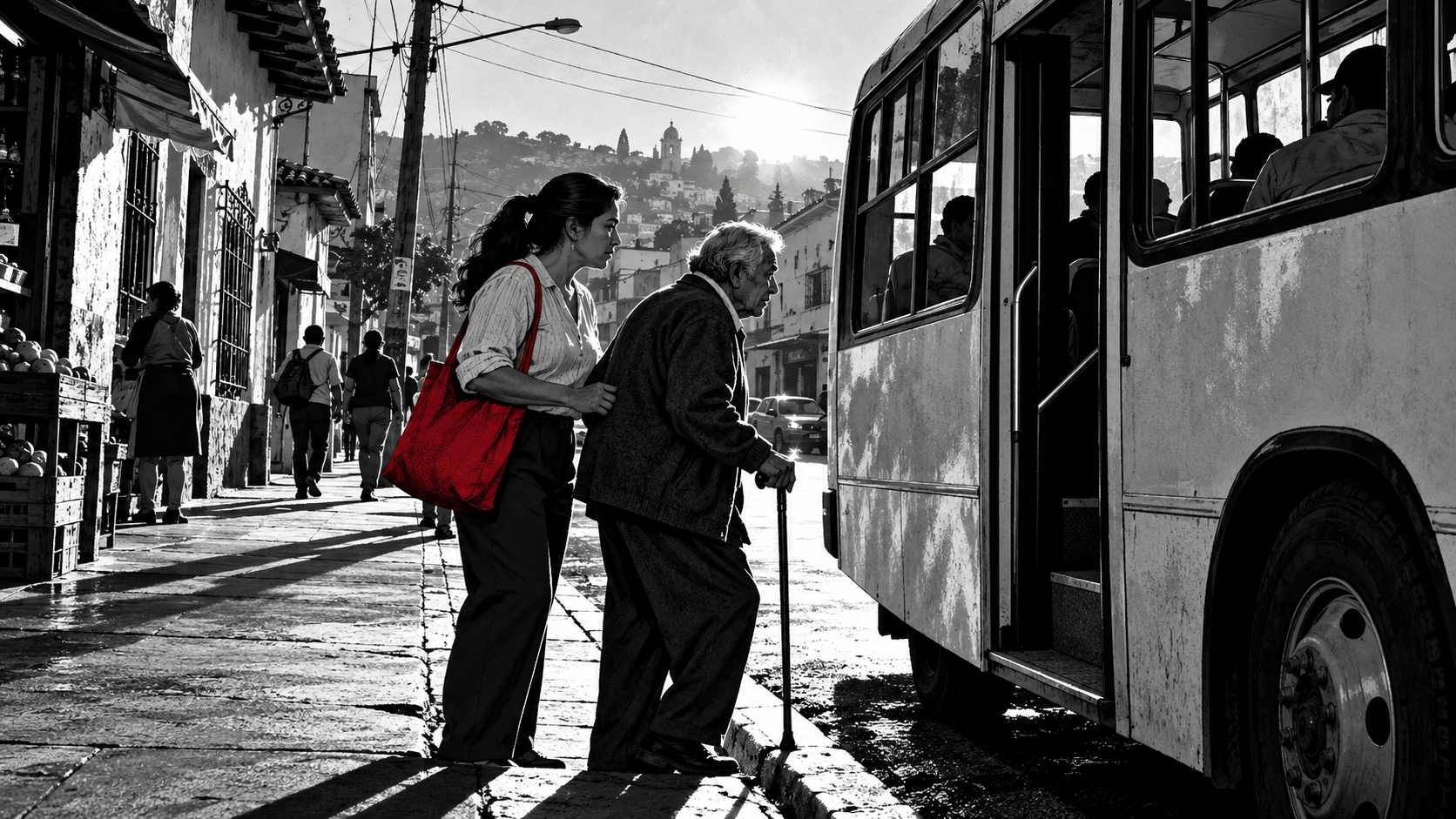
Imagine a Mexican city resident working, caring for someone close and hearing several criminal-group names. One report concerns international drug trafficking, another extortion, another a missing person. Her daily questions may differ: why is reaching work difficult, who stands behind a demand, and what is known about a relative? This invented account describes no particular city. It distinguishes a large organisation's name from someone's life. Understanding an entire criminal market is no prerequisite for having needs that matter or receiving attention to what has actually happened.
We examine Mexican cartels as different, changing organisations, their historical context and local consequences. This is no current control map, safe-area ranking or individual participation finding. It provides no instructions about contacts, refusing demands, payments or independently testing armed settings. Country, state and organisational names determine no resident's biography. General entry, exit and support belong elsewhere. Reading should not delay urgent assistance. Appropriate recipients and reporting conditions need consideration within actual circumstances; this overview does not supply that verification or promise an outcome for a private case.
I. One expression does not mean one organisation
“Mexican cartels” is a collective expression, not one structure with unified leadership. A plural must not become one character deciding everything nationwide. The selected DEA account separately discusses Sinaloa and the Jalisco New Generation Cartel, CJNG. Its angle prioritises drug threats to the United States, rather than listing every Mexican criminal group. Two prominent names support bounded comparison; they do not establish that every other connection, conflict and local condition follows from those two organisations.
Names sometimes overlap with geography, but geography establishes no membership. Sinaloa state and the cartel are different subjects; the same distinction matters for Jalisco. Birthplace, residence and employment establish no participation in a particular act. Someone can experience consequences without belonging to a group. This promises no resident's innocence in every possible matter. It prevents an address supplying an invented biography instead of relevant grounds. Even established influence somewhere does not tell us what each person there knew or chose, or whether they were involved in any specified decision.
Names can outlast changed relationships. A shared label guarantees no identical authority distribution everywhere or throughout time. Separate what a report establishes: someone's claim, a specified group connection, known conduct or an assumed common order. Repeating a name does not merge those levels. Suppose an invented local extortionist invokes a powerful organisation. The reference alone confirms no entire command chain. It also makes neither the actual demand safe nor its significance dependent on completing that chain's investigation. A particular threat and a wider organisational claim can remain distinct without either being dismissed.
Precision requires no resident's intelligence map. Sometimes a bounded statement suffices: an episode is known, a name is given, further connections remain unestablished. Unknowns need become neither complete certainty nor one hidden centre everywhere. An overview supplies distinctions, not a duty to investigate. Nobody's life exists to prove an outside observer's description accurate. Organisational questions can stay open while attention remains with employment, accommodation, health and family.
II. The history exceeds today's names
Congressional Research Service's historical report, updated July 2020, describes over a century of Mexican drug trafficking and how Mexican networks shifted from carrying Colombian cocaine towards a wholesale role in US markets during the 1980s and early 1990s. Today's organisations therefore should be represented as neither an unchanged ancient custom nor one suddenly emerging exception. Markets and relationships changed. We use historical analysis, not outdated assessments as today's report. Its date limits present-day inference.
This context makes crime no national character trait. Explaining market relationships historically is more precise than “these are the country's people.” History also supplies no single cause of every local episode. Economic opportunities, policy, coercion and conduct occupy different explanatory levels. An invented worker does not become a deliberate participant in a longstanding system through residence alone. Background can explain some restrictions without determining knowledge, will and role instead of facts.
CRS examines changing state–criminal relationships, leadership targeting after 2006 and fragmentation. Retain the explanation's complexity. Political decentralisation does not make democracy itself a cause of crime. A documented corrupt relationship makes neither every official connected nor every institution equivalent. One historical mechanism also establishes no motive behind every government decision. The subject is changing combinations of conditions, not a formula cancelling differences between people, periods and institutions.
For someone living nearby, history also limits inference. Earlier change means no name guarantees eternal order. Change nevertheless promises neither relief nor inevitable deterioration. This overview calculates no specific arrest's or conflict's consequences. It prevents one period becoming an entire country's predetermined fate. Dates and subjects matter: a historical text can illuminate origins without identifying today's street-level control or safe conduct for a resident. Recognising that limitation neither dismisses history nor asks people to obtain the missing current information personally, particularly where doing so could itself create danger.
III. Sinaloa and CJNG: distinctions without rigid boxes
DEA's selected description presents Sinaloa as decentralised networks under an umbrella. It describes CJNG through franchise-based command and dates its emergence around 2011 from remnants of the Sinaloa-affiliated Milenio group. These are attributed characteristics, not complete diagrams. “Cartel” need not imply one identical authority ladder. This comparison concerns structure, not a current leadership list, military capabilities or guilt through location.
An umbrella name proves no equality between parts; “franchise” makes no criminal relationship an ordinary safe business contract. These limit everyday analogies. Network structure does not automatically establish freedom; command does not establish identical knowledge among everyone carrying out tasks. Suppose someone receives a demand described as “from above.” A model validates neither the entire asserted chain nor absence of local discretion. Each inference retains its subject and grounds.
Different organisations do not establish one name as always more honourable or easier to negotiate with. That would create another unsupported moral comparison. No criminal patron selection or brand-based safety assessment is offered. Actual situations concern specified demands, terms, choices and known consequences. Even a correct general structure cannot promise one conversation's result or transfer someone's experience to another under a shared name. Differences matter without becoming complete predictions.
The two descriptions do not exhaust local relationships. CRS separately considers fragmentation, competition and diversification, with disagreement over their significance. Neither “every arrest increases violence” nor “every split frees residents” follows as a universal law. Organisational news differs from a personal future claim. News can matter while the connection needs additional circumstances. Those circumstances do not become known through a name's frequent appearance in headlines. Retaining that gap prevents a general report being treated as either a personal guarantee or a complete prediction of what someone must now experience.
IV. National scale and local relationships
Country, state, city, street and particular relationship are different scales. Reported presence establishes no identical terms everywhere or at every time. Someone may know one part of a setting and remain unaware of another. No personal investigation is proposed. This limits an overview and prevents national images replacing every encounter while actual threats remain serious. Local knowledge also has boundaries: proximity makes no observer fully informed about a country.
Imagine two people: one works in an ordinary workshop; another depends on transporting a relative to medical care. The same group name reaches both, but tasks and constraints differ. Shared geography establishes no identical option to stop travelling or working. Nor is every local difficulty attributed to a cartel here. A service, demand, violation and suspected pressure source need separate grounds. Precision explains neither everything through criminal power nor known harm away through incomplete structural understanding.
A recurring condition differs from one event. One peaceful journey guarantees no permanent safety; another's dangerous episode makes no future moment an already established catastrophe. We calculate neither routes nor individual risk. Testimony retains time, place, conduct and scope. Respecting someone's experience requires no law for everyone. Insufficient information permits a bounded conclusion without a duty to prove the opposite by entering danger. The distinction limits inference rather than denying what a person experienced or turning their account into an examination of their courage, judgement or ability to act independently.
An old influence map is therefore no practical household guide. It has a date, method and scale and may answer a different question. No map here recommends actions or identifies safe districts. Even a newly added organisational name establishes no particular local relationship by itself. Needs remain specific while organisational descriptions can stay approximate. Recipients need not master every group to discuss lost employment access, fear for someone close or required health care. Expertise about the larger structure and attention to these needs remain different tasks rather than qualifications for one another.
V. What crime data measure
INEGI published ENVIPE 2026 press release 50/26 on 10 September 2026. Crime experiences concern 2025; safety perceptions February–April 2026; the adult scope of 18 and over is specified. Subjects and periods differ. People, offences and household shares are no interchangeable counts. Publication year does not date every event. A general indicator should become neither today's description of a cartel nor a family's ready-made forecast. Keeping the reference period explicit preserves what the evidence says instead of silently moving it to another time or assigning it another purpose.
The release places 93.4% of estimated 2025 offences among those unreported or without an investigation opened. This defines the hidden figure, not a named organisation's offenders or people guaranteed no assistance. It supplies no private case's current conviction probability. Retain “or” and the denominator. Otherwise an actual recording problem becomes a different unmeasured proposition, such as every resident's already-known outcome from any contact. A national description can identify a serious problem without determining whether an individual procedure is available, appropriate or safe under circumstances not examined here.
A crime survey does not by itself attribute every event to a named cartel. Such attribution needs grounds. Perceived insecurity likewise supplies neither a guilt map nor identical danger for everyone. Separating indicators does not deny fear; it prevents one measured aspect replacing everything else. National figures assign no child, employee or relative a procedural role. The overview fills no gap with confidence and uses no statistic instead of facts about particular circumstances. A general result can remain informative while leaving the identity, conduct and knowledge of an alleged actor entirely unestablished.
We read the press release, not all technical materials, questionnaires or individual responses. No independent sampling analysis, district ranking or coverage of every age group's experiences is claimed. The useful result needs none of those additions: statistics retain a specified subject. A family's life exceeds one average; personal experience also cancels no correctly bounded general finding. These levels can be compared without requiring someone to fit a famous number before their situation matters.
VI. Ordinary life is no participation finding
Someone near criminal activity may work, study, raise children and care for older relatives. This describes possible positions, not measured Mexican frequencies. Residence establishes neither an act, knowledge nor its conditions. Dependence on income or services does not automatically establish approval of others' purposes. Conversely, an ordinary profession determines no legality of every additional task. Regional context cannot replace consideration of conduct with national or territorial labels. A person can have a particular role needing examination without their entire life becoming an explanation of a country's criminal history or an illustration of a collective stereotype.
Suppose a worker faces a demand differing from an accepted task. “They work there” supplies neither collective accusation nor complete justification. Time matters: earlier knowledge differs from later knowledge. Contract validity, applicable offences and refusal rights remain undetermined. Employment, particular acts and changed terms stay distinct. Nobody must dangerously prove previous ignorance or investigate every employer connection. Parts of a history can remain unknown while known needs receive attention. This supplies no automatic exemption; it simply declines to fill missing circumstances with a job title, reputation or a completed story imposed from outside.
Children cannot become equal parties to adult agreements through shared family or place alone. Kinship, suffered harm and participation in decisions require different grounds. We establish no age of legal responsibility under national law or procedure for an individual case. The author's distinction prevents another's role being inherited through address or surname. Dependent adults also retain opinions and desires rather than becoming empty instruments. Restricted options need not disappear entirely, and observers with different resources cannot predetermine their extent. Attention to unequal circumstances can coexist with a need to specify conduct without assigning either total freedom or complete powerlessness in advance.
Pressure matters even where someone harmed another. Hearing coercion need not erase that harm; identifying conduct need not predetermine free choice or responsibility equal to an initiator's. No exemption or trafficking classification is promised. SYS-143 examines those distinctions separately. Here the regional limit matters: a known cartel name does not complete a person's assessment. Writers still must distinguish knowledge, conduct, conditions and missing grounds. Neither an organisational label nor recognition of pressure should become a complete substitute for the particular consideration each different question may require.
VII. Missing people, displacement and everyday access
ICRC's Mexico page describes work with missing persons' families, internally displaced people, family links and health-care and essential-service access. This describes its humanitarian tasks, not national cartel-by-cartel harm totals. It extends attention beyond leadership news to people outside trafficking and command. It also attributes neither every disappearance nor every lost service to one named organisation. A humanitarian source can make certain consequences visible without establishing a complete causal account of every case, and without assigning the same experience or needs to everyone living in the country.
For someone with a missing relative, an organisation's structure may matter without exhausting the situation. Uncertainty, waiting, other care duties, employment and continuing daily life can coexist. These are possibilities, not universal psychological stages. Families need no finished event theory before a particular need can be noticed. Compassion nevertheless establishes no disputed fact. Humanitarian attention, factual determination and procedural outcomes remain different tasks; none should be presented as the others already achieved.
Displacement also exceeds “they left.” Suppose someone loses familiar work, neighbour support and established ways of caring for a relative, alongside access to a place. This invented example illustrates changing ties, not every displaced family's condition. Moving and rebuilding a life differ. “Why not just leave?” supplies no explanation. We recommend neither remaining nor moving: consequences depend on unexamined circumstances. Recognising those differences does not require assuming every barrier or declaring all choices impossible. It keeps practical conditions visible instead of replacing them with a simple demand that another person act as an observer imagines they could.
ICRC's work description guarantees no reader's access, protection or communications safety. Its confidential dialogue with different actors provides no instruction for residents' own negotiations with armed groups. Personal routes, recipient authority and information conditions remain unchecked. A humanitarian source also does not automatically classify an entire country legally as an armed conflict. Consequences deserve attention without that transfer, and without requiring residents to solve legal classification before naming needs. The source's institutional activity and someone's actual available assistance are separate matters, even when both concern the same broad kind of harm.
VIII. State institutions, criminal ties and particular recipients
Historical corruption findings need specified subjects. They make neither every official a cartel representative nor every official safe. Both exceed the evidence. An institution's name establishes no recipient's powers, confidentiality or access for a particular question. No investigation of staff connections is proposed. The overview leaves those circumstances open instead of supplying confident recommendations through institutional labels or historical corruption alone. Different institutions, roles and periods can matter, while their relevance to an actual case remains unverified. A broad account should not conceal that gap through either blanket suspicion or an equally broad promise.
General figures for unreported offences or cases without opened investigations prove no particular step useless. One good result likewise promises no universal repetition. Decisions require context and suitable competence absent here. Separate a systemic problem, a possible procedure and an achieved result. Human attention to harm needs no declaration that institutions are already repaired; source limitations also require no conclusion that assistance is impossible. Those states can remain different without an overview deciding a private case or attributing the same powers, responses and risks to every possible recipient in advance.
An invented relative hears “everyone here is bought” and “just disclose everything and they will certainly help.” Both claim more knowledge than her case supports. Retaining uncertainty means neither choosing a midpoint nor assuming personal risk. Neither extreme must become established fact. No sensitive disclosure, publicity choice or recipient test is advised. “State,” like “cartel,” must not compress a complex relationship into an answer for every practical question. Rejecting an unsupported guarantee can remain a limited judgement about the guarantee, rather than a comprehensive verdict on every institution or a demand to act alone.
Independence is not measured by solving institutional questions unaided. Someone may need support understanding conditions without losing their own position. Ethical recognition creates no already-available service and replaces no legal or humanitarian competence. This boundary is more honest than universal certainty. The regional article remains an overview. Its usefulness lies in distinct questions, not completed private cases or confirmed safety of a reader's next action. Assistance, understanding and decision-making can need different forms of support while the person remains more than a passive subject of someone else's explanation or plan.
IX. Cautious knowledge and peace without heroic duties
Analects XIII.3 discusses names, government, ritual and punishment; its caution about unknown matters belongs to that historical argument. It supplies neither modern Mexican policy nor citizens' duty to correct armed groups. The limited question concerns what known information supports. Fear is no knowledge defect, and incomplete mapping deserves no shame. Caution limits writers' and readers' conclusions rather than testing a harmed person's eligibility for recognition. The old text can contribute a thinking question while retaining the distance between its historical setting and an actual person's current options and needs.
Matthew 5:1–12 places peacemaking within the Beatitudes. It establishes neither uniform Mexican beliefs nor an organisation's legitimacy through religious symbols. We impose no duty on harmed people to reconcile rival groups, accept violence or approach threats. Wanting less harm can coexist with declining personal mediation. Peace's ethical meaning guarantees no safety in everyday life and makes no suffering deserved. Spiritual questions differ from powers to resolve conflict and verification of actual protection. A short religious fragment should not quietly acquire authority to prescribe dangerous conduct that neither this article nor its sources have assessed.
Related United Wisdom E02 compares internal codes. It replaces neither Mexican history nor evidence of a private role. Its historical analogies, numerical thresholds and cultural generalisations are not inherited as verified findings. Our sources also differ: historical analysis, agency description, statistics, humanitarian activity and ancient ethics. They cannot be added as independent votes for one verdict. Each serves a question while retaining what it cannot establish. An informative comparison need not become an additional factual claim about someone whose conduct and circumstances remain outside the material actually examined.
An ordinary person need not symbolise a whole country's resilience. They may want a calm journey, clear work terms, information about a relative and the ability to care for a child. This recognises possible needs, without diagnosis or promises of fulfilment. Outside fascination with prominent names should not make them secondary. Serious analysis includes noticing its explanatory limits. Where details are unknown, dignity can remain and roles need not be invented. Heroism is no required proof of difficulty; nor must someone offer a dramatic account before their ordinary disrupted life can deserve attention.
X. Country, organisation and person remain separate subjects
Return to the opening account. Group news explains no resident's entire position. Market history illuminates some origins; structure distinguishes connections; statistics show bounded general results; humanitarian sources name consequences. None predetermines her conduct or choices. The overview remains useful while formulating a specified question rather than constructing a biography from nationality, address or one national event. Different scales can inform one another without becoming identical, and an unanswered individual question need not invalidate every general source or make the person merely an example of someone else's already-finished theory.
Organisations can share activities and differ in relationships. One name may cover several ties; a local episode need not reveal the whole scale. A single army and wholly independent individuals are therefore no compulsory alternatives. Either can distort unknown circumstances. What does a source establish about structure, and what remains unsaid about this situation? Partial answers can retain known threats. Nobody must finish the investigation personally or test a description through their own or loved ones' safety. Bounded understanding can matter without supplying a practical guarantee or turning uncertainty into another obligation to take risks.
Retain conduct, knowledge, pressure, resources and time. Residence establishes no consent to everything nearby; particular help creates no unlimited debt. Victimisation and a particular act can need different kinds of consideration. No legal outcome is supplied. “They are all like that” can nevertheless be declined without denying actual harm or turning incomplete knowledge into universal exemption. Precision leaves open what lacks adequate grounds. It neither reduces a person to a collective label nor requires pretending that every factual question is already settled before the distinction can be useful.
Mexico is more than its cartels, and residents are more than their position near them. This is an ethical boundary, not a reduction of violence's seriousness. Understanding organisations and local conditions should sharpen attention to life rather than create another label. Urgent assistance should await neither a completed market map nor an ideal account of one's role. Source, date and knowledge limits remain part of honest explanation; dignity remains significant where explanation is unfinished. A person need not become proof of a country's image, or a successful analyst of its criminal structures, before particular needs can matter.
Practice: separate scale from personal inference
If a calm opportunity exists, choose one already available safe statement about Mexico: historical text, a general headline or this article. No investigation of local groups, naming of individuals or reading of threatening messages is needed. The exercise is optional and concerns a claim's scale rather than the setting. Stop if it increases pressure. Completion measures no courage and determines no entitlement to attention or support. The aim is one bounded distinction, without a written account, public declaration or obligation to explain every connection before acknowledging something that is already difficult.
Mentally name the level: country, organisation, local relationship or personal conduct. Then distinguish source date, event period and measurement period. A survey's publication year does not date every offence; history supplies no present control map. No sensitive record is required. Notice one change of scale needing additional grounds. Missing grounds establish no opposite proposition; they simply leave that inference open. Uncertainty need not be filled with assumptions to produce a complete story, and a general figure can retain its value without becoming an individual's personal forecast or assigned identity.
Separate known from attributed information. What does a report establish about structure? What can it establish about a person? Nationality and state names replace no conduct, knowledge or conditions; discussion of restricted options also decides no legal case in advance. No refusal test, dangerous conversation or demanded proof of connections is needed. A small result can suffice: this source supports a particular general question but supplies no complete private history. The distinction concerns the reach of a conclusion rather than a new responsibility to gather every missing fact personally.
Finally return to needs independent of analysis: health, accommodation, family information or support for a child. Recipients, competence, access and confidentiality require actual circumstances and remain unverified here. Nobody must publicly announce understanding or demonstrate it through bravery. Separating scale reduces unsupported labelling without guaranteeing safety. Urgent assistance must not become a prize reserved for people able to explain cartel structures and their own positions perfectly. Thought can become clearer while practical needs retain their separate place, and an unfinished explanation does not diminish anyone's dignity.
Key quotation
“Blessed are the peacemakers” Matthew 5:9, four-word King James Version fragment. Context 5:1–12
Peace does not assign harmed people duties to reconcile armed groups, accept violence or prove virtue through dangerous contact.
Comparison map: different scales of understanding
| Source | Helpful distinction | Boundary |
|---|---|---|
| Confucius XIII.3, Legge | Names, content and caution about unknowns | Historical government, no citizens' action programme |
| Matthew 5:1–12, KJV | Peace and attention to people | No mediation duty, required endurance or uniform national belief |
| CRS R41576, 28 July 2020 | Market history, relationships and fragmentation | No current map or single cause for every episode |
| DEA, Cartels | Different Sinaloa/CJNG descriptions | US agency angle, not every group or resident's role |
| INEGI, ENVIPE 2026 | 2025 experiences versus February–April 2026 perceptions | Distinct measures, no cartel-by-cartel crime count |
| ICRC, Mexico work | Consequences beyond leadership news | Institutional work, no national totals or guaranteed access |
Sources establish neither collective guilt nor six independent confirmations of a personal role.
Sinaloa ↔ CJNG in the selected DEA descriptions. DEA emphasises decentralised umbrella networks for Sinaloa and franchise-based command for CJNG. Both descriptions concern arrangements connecting multiple parts, rather than one person called a cartel. The difference is that a shared name and network ties are not identical to command, while neither model forms a pure, unchanging box. This is a specified US agency perspective, not every relationship in Mexico. Umbrella organisation proves no individual freedom; franchise means no ordinary safe contract, and command establishes no identical knowledge for everyone. The comparison ranks no patron by safety.
Analects XIII.3 ↔ names and substance in this article. The Confucian exchange connects correcting names with government and caution towards the unknown; the article separates an organisation’s name from particular decisions, connections and authority. The resemblance is that imprecise naming can hide which question still needs an answer. But historical administrative ethics supplies no programme for present Mexican residents or duty to correct armed groups. It limits our own assertion: a familiar name cannot verify an unknown decision chain or turn organisational news into a personal forecast or collective guilt.
ENVIPE 2026: experiences in 2025 ↔ perceptions in February–April 2026. Both concern people’s security, but one describes experienced events in a specified year and the other perceptions during another period. A shared subject makes them no single measure. Perceptions cannot be counted as offences, nor every recorded event attributed to a named cartel. This example explains retaining dates and measurement subjects alongside organisational history. It establishes no individual risk, every district’s conditions or inevitable assistance outcome.
Sources
- Confucius, Analects XIII.3, James Legge, Project Gutenberg 3330. Complete seven-part selected chapter and edition information read. Not the entire work or original Chinese.
- Matthew 5:1–12, King James Version. Complete selected verses read. RU/TH fragment rendered by the authors from this English edition.
- June S. Beittel, CRS, Mexico: Organized Crime and Drug Trafficking Organizations, R41576 version 45, 28 July 2020. Complete historical appendix and selected Fragmentation, Competition, and Diversification section read, including continuations. Not all 37 pages or underlying research. Historical maps and then-current assessments are not transferred to today.
- DEA, Cartels. Opening and selected main CJNG/Sinaloa descriptions read. Not the entire National Drug Threat Assessment or every case file; no reader-role finding.
- INEGI, ENVIPE 2026, Comunicado de prensa 50/26, 10 September 2026. Complete seven-page release text read, not all technical materials, questionnaire or microdata. Charts not reproduced.
- International Committee of the Red Cross, Mexico. Selected complete country-work section and related need descriptions read. No whole humanitarian report, individual case file or confirmed availability/safety of personal assistance claimed.
Tags
Mexico, cartels, Sinaloa, CJNG, Jalisco, criminal organisations, history, local conditions, structure, networks, fragmentation, competition, influence, residence, work, dependence, coercion, family, children, missing people, internal displacement, assistance access, statistics, ENVIPE, INEGI, DEA, CRS, ICRC, dignity
About the authors
Andrey Zarinsh is the author and founder of United Wisdom. He explores inner transformation, unity across traditions, intercultural dialogue and contemporary spiritual discipline. Instagram: @andrey.zarinsh.
Maria Evilkut is a co-author of United Wisdom. Alongside research, she seeks to test these ideas in practice and observe how unity and mutual understanding work in real life between people and cultures. Instagram: @ilkutki.