
Criminal environments and informal power
Colombian drug organisations: historical models and modern networks
Examines Medellín/Cali models, later network descriptions, local memory and humanitarian needs. Separates a historical plot, organisational relationships and an individual’s actual position.
“the former days were better than these” Ecclesiastes 7:10, a seven-word fragment of a question whose haste the verse challenges, rather than the writer’s own historical judgment. KJV context, 7:1–14
What this article is about
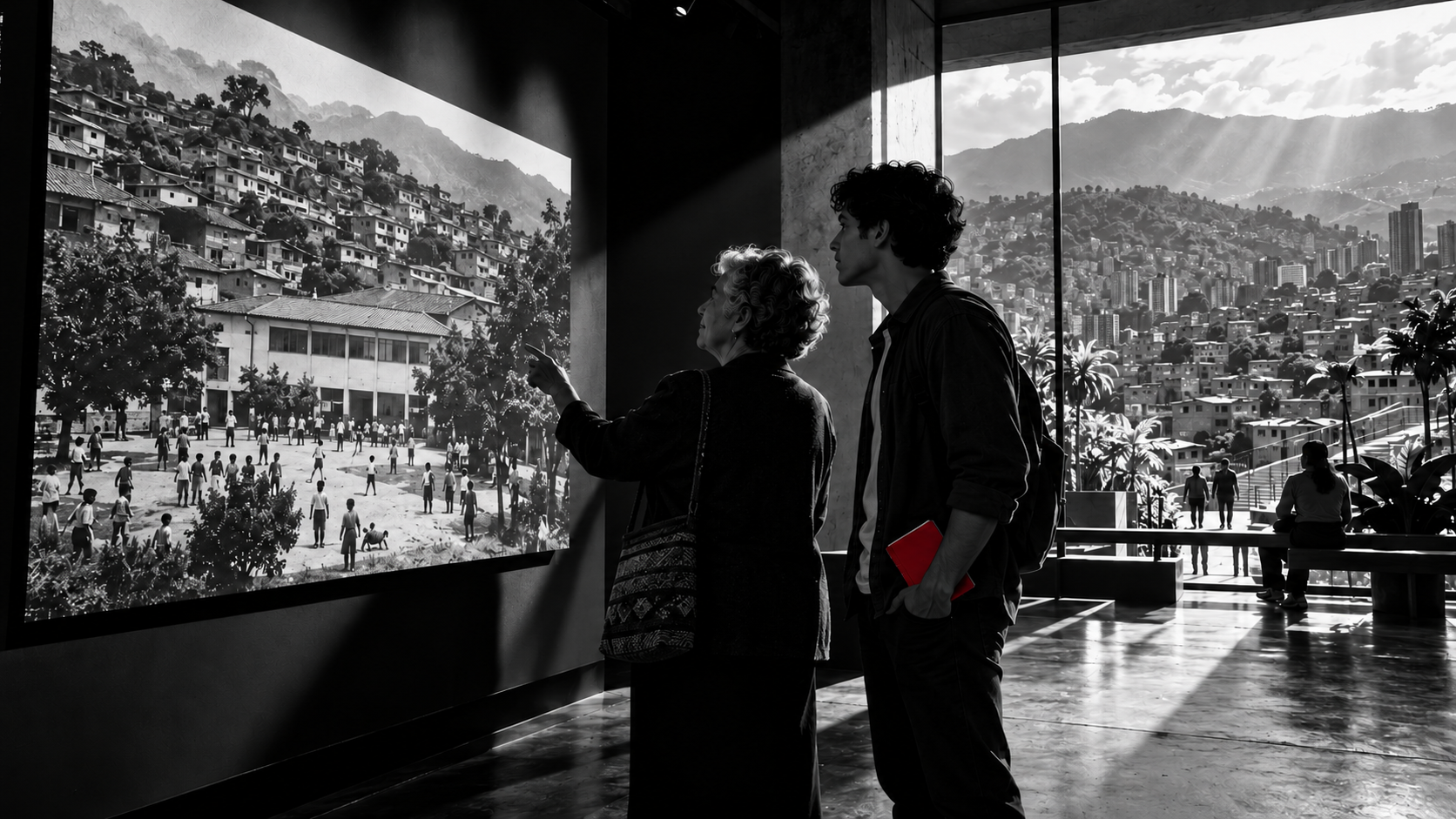
Imagine a fictional family conversation. An older person remembers when the news revolved around two famous names; a younger one says that understanding who is connected to whom now seems impossible. One remembers order, the other sees uncertainty. Their disagreement brings together several questions: how an organisation worked, what happened in a city, and which choices a particular resident had. Neither a recognisable name nor the absence of one answers all three questions by itself.
Colombia offers a setting for examining historical Medellín and Cali models, later network fragmentation and lives lived nearby. This article provides no present control map, safe-district ranking, personal guilt finding or route for negotiation, departure or refusal. Sources have different dates and purposes. Urgent needs await no completed reading. Access to assistance, a particular recipient’s authority and the confidentiality of an individual communication have not been separately verified here. Understanding the topic requires neither contact with a group nor investigation of people around the reader.
I. A city’s name is no resident’s biography
The expression “Medellín cartel” can easily fuse a city, a criminal organisation and a generation of residents. These subjects are different. An organisation’s name does not make every resident a member, every business owner an intermediary or every family relationship an assignment. Someone might study, work, raise children, lose relatives or move away without deciding anything for that organisation. Discussing their position requires evidence about conduct, knowledge, dependence and time. A birthplace alone supplies none of that individual account, however familiar the place may sound.
Precision matters in the other direction too. Saying that a city label proves nothing by itself does not declare every person uninvolved in every act. Sympathy for residents cannot replace examination of specific harm through a competent procedure. Distinguishing collective accusation from responsibility for conduct preserves both a resident’s dignity and the significance of another person’s injury. It allows discussion of a criminal environment without inventing a national character shared by millions of lives.
A famous leader’s name also leaves much of city life undescribed. A biography draws events towards one person’s decisions, enemies, wealth and death. A city contains neighbours, schools, institutions, workers, businesses and memories that exceed that plot. When history follows only a leader, ordinary people appear as supporting characters, victims or admirers. Their everyday activities show why organisational power and the substance of human life require separate attention. An organisation may shape circumstances profoundly without becoming the author of everything residents do or value in those circumstances.
It helps to identify the scale of a statement first. “This was the organisation’s name,” “this happened in one neighbourhood” and “this person did this” need different grounds. A familiar label cannot bridge those levels automatically. Readers need not compile dossiers on neighbours to retain the distinction: it can begin with the language of an account already before them. That small discipline prevents an address, surname, accent or family connection from becoming a complete explanation for conduct about which little is actually established.
II. Medellín and Cali: different models, no ranking of virtue
The selected Colombian section of the US Drug Enforcement Administration’s (DEA) institutional history for 1990–1994 contrasts Medellín’s public violence with Cali’s quieter, businesslike public image. It also describes Cali cells alongside important leadership roles. This is a historical US drug-enforcement perspective, rather than a complete account of local relationships. It offers an organisational distinction, not a moral ranking. Lower visibility establishes neither lawfulness nor absence of harm. Highly visible violence, meanwhile, does not exhaust the possible ways an organisation exercises influence. Historical descriptions need their period and institutional viewpoint attached to them.
“Business appearance” is particularly easy to read as praise. Everyday language associates businesslike behaviour with competence, predictability and keeping promises. In a criminal organisation’s description, appearance concerns how activity is presented and arranged. That image establishes neither surrounding people’s free consent nor fair terms. It gives no right to control someone else’s life. Polite conversation can accompany unequal conditions; an overt threat is not the only possible form of pressure. An individual episode still requires its own evidence. Tone, dress and outward order cannot make that examination unnecessary or determine its result in advance.
Cells do not necessarily mean that every participant operates independently. Divided tasks and limited views of a larger picture can coexist with central leadership. It helps to separate who knows the whole, who makes decisions and who carries out an individual act. One answer does not automatically settle the others. A historical diagram cannot attribute complete knowledge to everyone at a lower level. Nor does it make every small action inconsequential to others. Organisational analysis reaches personal responsibility through facts about conduct and circumstances, rather than through the diagram’s shape alone.
Comparing models loses its purpose if it becomes advice on choosing a preferable criminal protector. This article makes no such recommendation. Its concern is a perception problem: outward order can conceal restricted choice, while a chaotic public image says little by itself about how decisions are distributed. A person’s actual conditions matter, but a historical overview does not establish those conditions for them. Uncertainty need not become a safety promise or an obligation to test another person’s power.
III. A famous life’s ending is no ending to all violence
Pablo Escobar’s killing in 1993 appears in DEA’s historical account of Medellín’s decline. An ending to a biography, however, does not establish the disappearance of every relationship, market demand or local conflict. Familiar dramatic structure can mislead: a central villain emerges, is removed, and a city supposedly returns to ordinary life. Such a conclusion closes a plot while leaving institutions, families and other actors unexplained. The event matters historically, but its explanatory reach has limits. Readers can recognise its importance without treating it as every resident’s personal turning point.
Medellín’s Casa de la Memoria museum explicitly describes violence continuing and changing after Escobar’s death. This is a local memory narrative, rather than a statistical model of Colombia. For this article, it restores duration: residents kept living beyond the date where many popular accounts end. Questions of loss, neighbourhood relationships, participation and the future remained. One person’s relief need not match another’s experience. A shared historical boundary therefore produces no uniform private outcome. People may encounter different changes, on different timescales, within the same city and the same period.
This limited observation does not prove that action against a leader is always pointless or inevitably makes matters worse. Such a universal assessment would require other research and comparison of outcomes. The narrower distinction is sufficient here: ending one person’s activity and changing an entire environment are different events. Organisations, institutions and time may separate them. “Nothing changed” can be as inaccurate as “everything ended.” One phrase erases actual developments; the other erases continuing harm and the work of those living with it. Neither replaces a dated account of particular changes.
Remembering history involves several clocks. There is a major event’s date, the duration of organisational change and a family’s own time. Some people count years through political decisions; others count through a relative’s absence or attempts to rebuild familiar routines. These clocks need not cancel one another. Respecting personal time avoids demanding that someone finish experiencing a loss because a reference book has closed its chapter. It also leaves a future possible without requiring immediate relief, gratitude or hope.
IV. What a network description means
The UN Office on Drugs and Crime’s (UNODC) official release of 16 March 2023 describes fragmentation, varied actors entering after demobilisation of the Revolutionary Armed Forces of Colombia (FARC) and specialised service groups. The release was read, rather than the complete report, underlying interviews or a present control map. Its bounded model helps explain why later arrangements should not be imagined solely through a few famous historical names. It establishes neither the disappearance of all leaders nor equal relations everywhere. Nor does it make a peace agreement the single cause of every subsequent conflict. A trend description retains its own period and subject.
A network can be understood as relationships and distributed tasks without assuming shared intentions throughout. A connection can serve a particular purpose without implying agreement on everything else. Participants may differ in resources, knowledge and power to set terms. “They are connected” therefore needs a subject, a specified relationship and grounds for the assertion. Otherwise the phrase can generate an endless chain of suspicion, making any contact with someone into membership of an entire imagined system.
Task division makes the difference between a general model and an observed episode particularly important. Mention of specialised services does not establish that a particular driver, accountant or shopkeeper serves a criminal network. One occupational name includes many lawful activities and circumstances. Equally, a service label cannot automatically excuse any knowing contribution. Relevant questions concern actual conduct, knowledge, time and pressure. A list of occupations cannot resolve them, however detailed or persuasive it appears. Structural awareness should make the transition to an individual allegation more careful, rather than make an allegation easier.
A network model is useful here mainly as a limit on excessive confidence. It resists the idea that one familiar surname explains every local relationship. The absence of an obvious single leader does not require residents to reconstruct hidden structures themselves. Readers need not collect names, test chains of command or investigate control over acquaintances. They can notice where an existing text moves from describing a type of relationship to making an unsupported private accusation. Declining that inference creates no duty to provide a complete alternative account of all events immediately.
V. Drug networks, armed groups and local rule are different concepts
These expressions can appear together while answering different questions. A drug network concerns links around illicit trade; an armed group concerns an organisation of people and force; territorial influence concerns relationships with a place and its population. They can overlap, but one label does not contain another’s whole meaning. This article does not establish that every armed actor is a drug organisation or every criminal relationship implies the same territorial control. Keeping concepts distinct preserves complexity without suggesting that all claims are equally plausible or that precise description is impossible.
Legal categories require separate care. Calling something a “war” in public discussion, reporting violence and legally classifying an armed conflict are different acts. A humanitarian account of suffering also assigns no automatic combatant or criminal status to a civilian. This article contains no analysis of all Colombian conflicts, applicable rules or individual cases. It therefore derives no legal status from proximity to armed power, promises no exemption from responsibility and does not dismiss special rules where competent analysis establishes their application. The limits concern what has actually been examined here.
In everyday life, someone may know only that particular demands are difficult to resist. Recognising that serious position need not depend on having an entire organisational chart. At the same time, “orders from above” does not by itself establish who gave an order or how extensive their authority is. Both limits matter: incomplete mapping should not erase experienced pressure, while another person’s claim to power should not automatically become an established fact. This is a distinction in understanding, with no invitation to challenge armed people, test a demand or discover refusal’s consequences.
The distinction also leaves needs visible. A person may require treatment, continuity of family ties or understanding of their position without knowing every surrounding structure’s name. Limited political vocabulary makes none of those needs less real. Conversely, a humanitarian description establishes no particular service’s availability; circumstances require separate consideration. This article chooses no recipient and asks for no sensitive disclosures to prove that a reader has used a group’s name correctly. A comprehensive explanation of an environment should not become an entrance examination for having one’s dignity or needs recognised.
VI. Everyday lives nearby contain unequal choices
A rural resident cannot automatically be equated with a drug producer, or a coca grower with a network leader on that description alone. Yet “farmer” also establishes no individual act’s circumstances and cannot erase possible harm. The point is to distinguish occupation, role, knowledge, material conditions and coercion. This article determines neither a particular farm’s legality nor current agricultural programme eligibility. Its narrower reasoning principle is that a population category cannot replace individual consideration. Such categories distribute neither collective guilt nor collective justification, and they supply no complete biography of a working person.
Urban employment provides unequal freedom too. One worker may have savings and support; another faces daily expenses and dependants. Similar visible conduct does not make their options equal. Understanding that difference clarifies a decision’s cost without enabling the author to prescribe the only correct act. Need establishes no consent to everything happening, while mentioning need does not make harm disappear. A person’s position includes constraints and consequences. Neither should erase the other before circumstances are known. This attention to unequal resources requires neither moral contempt nor a claim that choice never exists.
Relationships can also change over time. Agreeing to one job need not mean agreeing to a later demand. Someone may learn more later or encounter pressure absent at the beginning. A fixed label such as “their own choice” cannot capture that transition. An assertion of initial ignorance, however, does not settle every later question either. Careful discussion needs specific limits on knowledge and conduct. The article proposes no dangerous inquiry to discover them. Acknowledging missing information can be more accurate than adding a plausible story to fill gaps in someone else’s account.
Children cannot be treated as equal parties to adult agreements, nor dependent adults as objects without agency. Age, dependence, actual participation and pressure need different forms of attention. Blending them produces either unjustified accusation or a discussion in which the person disappears altogether. No Colombian legal age thresholds, exemptions or protective procedures are established here. The distinctions remain useful without a ready legal conclusion. Actual harm can be recognised while restricted choice remains a circumstance rather than a character defect. Neither recognition promises automatic immunity or resolves another person’s case from a distance.
VII. Humanitarian accounts have their own dates and subjects
ICRC’s overview published on 30 April 2026 concerns humanitarian consequences in 2025. The years should remain distinct. The introduction and on-page section descriptions were read, rather than the complete annual report or case files. The account concerns civilian conditions including displacement, confinement, missing people and access to necessities. It does not establish that all those harms were caused by drug networks, one cartel or every individual described elsewhere as connected to a group. An institutional account can make needs visible without determining every perpetrator’s identity or explaining every event’s cause.
Displacement and compelled remaining in place are different conditions. One involves leaving familiar surroundings; the other can involve restricted movement itself. General figures cannot convey every difference between lost housing, broken relationships, daily dependence and treatment access. This article adds no unlike categories into a single total and uses none as an individual forecast. Even an accurate overall number would not explain what one family can access today or which consequences have accumulated in its life. Distinguishing conditions gives those differences room without pretending to calculate a person’s future from a national overview.
A missing relative is more than a line in that overview. Families may live with uncertainty rather than a complete explanation of what happened. Their needs do not depend on presenting a finished theory of causes, affiliations or guilt. Assistance and fact-finding have different purposes, although they may intersect. An unproven account makes a family tie no less significant. Wanting to understand also creates no duty to search for armed actors, test rumours or mediate between structures about which reliable information is lacking. Uncertainty can be acknowledged without asking relatives to become investigators.
Humanitarian institutions work within their mandates and conditions. Their existence guarantees no individual reader’s service access, communication safety, confidentiality across every channel or desired outcome. An account of institutional engagement with conflict parties also instructs no resident to conduct personal negotiations. These limits preserve the difference between an institutional task and an individual possibility. Moving away similarly does not equal rebuilding an entire life; receiving one service need not end all difficulties. A concrete limited result can matter on its own without being inflated into a promise to resolve every connected problem immediately.
VIII. A city’s memory restores residents as actors
The museum’s Medellín account places civic and cultural initiatives alongside continuing violence. It does not prove that music or a neighbourhood association stops every threat. Its more useful shift restores residents as people creating relationships and meaning, rather than mere objects of someone else’s force. Their actions need not be assessed only by whether they defeat a major organisation. Continued education, care, work and cultural life can matter even when they change no entire system and become no celebrated historical event. Human activity exceeds the scale at which public power is usually narrated.
Respect for civic initiative creates no universal obligation to resist publicly. Resources, dependencies and circumstances differ; one visible act cannot become everyone’s compulsory example. A story of courage should not become an accusation against someone who kept a low profile, sought everyday stability or left. A memory source shows varied forms of life without verifying the safety of repeating an act today. Readers are asked neither to join an association nor announce a position or test local limits. Their dignity does not need confirmation through a particular public performance or heroic comparison.
Cultural memory exceeds nostalgia for powerful leaders. A remembered school, neighbourhood or song may concern valued human ties rather than approval of past violence. These subjects can be separated before demanding that someone reject an entire past. Equally, one person’s good memory does not establish that others were safe then. A particular relationship can remain precious while harm in the same period is recognised. That complexity does not make memory false. It releases memory from delivering one verdict on a whole city and era, leaving room for people whose experiences do not match.
A national label impoverishes the present as well. Viewing a country only through drugs loses sight of lives and activities outside that story. Correcting this requires neither denial of crime nor replacing discussion with tourism promotion. It requires acknowledging the selected topic’s limits. This article examines drug organisations and their surroundings; it does not define Colombian culture, the population’s character or the only possible future. No individual has to represent the entire country, defend it before a listener or become a symbol of its recovery. A limited subject should remain limited in its claims.
IX. Two ancient questions leave modern answers open
Ecclesiastes 7:10 challenges a hasty question about why earlier days were better. Within religious wisdom, that prompts examination of an assumption rather than establishing an empirical law of history. Not every past was worse and not every good memory is mistaken. The question here becomes specific: what seems orderly—recognisable names, one’s younger years, a valued relationship or actual living conditions? The ancient text cannot answer for Colombian residents. Rejecting a myth about earlier order also requires no acceptance of present violence or declaration that every contemporary change is an improvement.
Dhammapada 129–132 directs attention towards life and aversion to violence. The selected brief fragment expresses an ethical prohibition on killing and causing killing. It serves here as neither a measured psychological description of everyone nor a prediction of inevitable retribution. It also imposes no duty on a harmed person to abandon protection, persuade armed actors or prove peacefulness through dangerous contact. Its function is narrower: a relationship diagram contains living people, rather than merely instruments for achieving an organisational or historical result. Their lives retain significance beyond a model’s explanatory convenience.
Ancient texts and institutional accounts cannot become several independent confirmations of one private accusation. They address different matters: caution about generalisation, regard for life, historical organisation, networks and humanitarian conditions. Comparison can reveal a missing level while leaving sources distinct. An ethical quotation establishes no membership; a network model proves no psychological motive; local memory replaces no national study. Preserving these boundaries leaves more room for actual knowledge than the impression that every source already says the same thing. Shared concern does not merge their evidence, methods, periods or authority over individual circumstances.
Related article E02 was used to compare coverage, rather than to validate every historical analogy it contains. Brief comparisons do not replace a dedicated Colombian article, and broad social conclusions are not inherited without verification. No universal numerical threshold defines when a community becomes criminal here, and no cultural trait explains participation. A person’s position requires particular relationships and circumstances. This account remains incomplete regarding private cases. That limitation can be stated plainly without treating a confident tone as a completed historical, legal or personal analysis. Comparison is a starting distinction, not a verdict.
X. History, networks and a person remain three subjects
A historical model helps explain a period; a network description explains some relationships; a person’s account presents experience within their available knowledge. Each matters, but none automatically contains the other two. Famous names simplify a story without necessarily making it more accurate. A new complex term guarantees no understanding either. Date, scale and grounds provide a better starting point: which event is named, which relationship does the source actually describe, and where does an unsupported assumption about someone’s role begin? Those questions keep interpretation attached to what has genuinely been established.
“Still unknown” remains a possible answer. It does not make every assertion equally plausible or require waiting for complete history before addressing an urgent need. It marks a particular knowledge boundary. A threat, treatment need or family tie can matter without an entire network chart. Harm can be condemned without accusing a city’s residents collectively. Good memories can remain without excusing past violence or promising that future change will produce identical outcomes for everyone. Precision does not remove feeling; it prevents feelings and familiar labels from having to stand in for missing facts.
Questions about conduct remain separate: what someone did, knew then, could choose, affected and faced as pressure. This is no questionnaire for private investigation or route to an automatic legal decision. It prevents one convenient description from replacing a living situation. Missing facts should not be supplied through nationality, occupation or a romantic story of order. A person’s dignity does not depend on providing an external observer with a complete and persuasive chart of all circumstances. The limits of an account should remain limits of the account, rather than defects assigned to its subject.
Colombian history is therefore a history of many lives, rather than an extension of one criminal biography. Organisations change, information ages and institutional descriptions have limits. Lives continue between major dates. Respectful understanding keeps the distinctions and connections among those levels visible. It requires neither expertise in hidden command nor heroic public resistance. It allows harm to be recognised without turning it into a national essence. Human needs can remain visible while historical questions stay unfinished, and a limited improvement can matter without having to prove that every part of the surrounding system has changed.
Optional practice: date, scale and grounds
Mentally choose one innocuous statement in an already available text, such as a claim that a famous name explains an entire city. There is no need to save sensitive messages, list names or collect new information about people. The exercise can be skipped if it feels unpleasant or unsuitable; reading requires no completed assignment.
Notice its date first. Does it concern the early 1990s, a 2023 release or events in 2025 described in 2026? Then identify its scale: person, organisation, city, country or a particular humanitarian task. These questions concern a statement’s construction, rather than testing anyone’s power in practice or establishing a present territorial situation.
Separate the stated grounds from the added conclusion. Does the source describe an organisation, or establish one resident’s role? Does it describe change, or promise safety? An unclear transition can remain a question. It needs no investigation, approach to acquaintances or attempt to establish who is linked to whom in the reader’s surroundings.
Finish, if useful, with one more precise sentence that leaves unknowns unknown. The exercise calls for no contact, refusal, payment, public declaration or independent choice of a helper. Urgent assistance awaits no improved formulation. Understanding a text is no condition for recognising a person’s actual needs, and completing the practice supplies no safety or legal assessment.
Key quotation
“do not kill, nor cause slaughter” Dhammapada 129, six words from F. Max Müller’s English translation. Context, verses 129–132
The ethical fragment restores the significance of individual life. It promises no retribution, requires no dangerous mediation and removes no right to seek protection.
Comparison map: different subjects in different sources
| Source | What it helps distinguish | Limit |
|---|---|---|
| Ecclesiastes 7:1–14, KJV | Particular memories and hasty judgments about the past | Religious wisdom, rather than measured Colombian history |
| Dhammapada 129–132, Müller | Relationship models and the significance of human life | No predicted retribution or victim’s duty to abandon protection |
| DEA, history of 1990–1994 | Historical Medellín/Cali organisational differences | A dated institutional perspective, rather than a current map |
| UNODC, release of 16 March 2023 | Fragmentation and distributed network tasks | Release read, rather than the complete report or all present links |
| Casa de la Memoria, Medellín | Continuing life, violence and civic initiative | Local memory, rather than national statistics or guaranteed protection |
| ICRC, 30 April 2026 on 2025 | Humanitarian needs beyond leadership stories | Introduction and section descriptions, rather than all cases or a single cause |
These are not six independent testimonies establishing a private role. Their dates, purposes and scales remain different when compared.
Medellín ↔ Cali in the selected DEA history of 1990–1994. The agency contrasts Medellín’s public terror with Cali’s quieter business image. Both describe criminal organisation and influence, not crime opposed to lawful commerce. Public style and organisation differ without establishing moral superiority: lower visibility proves no lawfulness. Cali’s cells coexist in that same account with central leadership; they establish no individual autonomy or identical knowledge. A historical comparison from a specified perspective supplies no present map, finding about residents or choice of a safe patron.
Casa de la Memoria on the 1990s ↔ selected ICRC introductions about 2025. Local memory preserves continuing life, violence and civic initiatives after a famous leader’s death; the humanitarian introductions distinguish contemporary needs and civilian consequences. The resemblance is that a leader’s biography cannot exhaust lives still requiring everyday conditions and help. Yet one city’s memory and another period’s institutional humanitarian account have different purposes and scales. They form no single Colombian statistic or proof of one cause for every case. Civic initiative creates no universal public-resistance duty, while described needs guarantee no access or safe repetition of another’s path.
Ecclesiastes 7:10 ↔ Dhammapada 129–132. The former challenges a hasty generalisation that earlier days were better; the latter addresses harm and the value of life. The resemblance is that a convenient image of order or success cannot exhaust ethical reflection on life. But examining a judgement about the past differs from prohibiting harm and teaching religious retribution. The read verses 131–132 do state an after-death consequence; this article does not deny that content. It does not turn the religious statement into an empirical or guaranteed forecast of retribution here, or impose a duty on a harmed person to abandon protection.
Sources
- Ecclesiastes 7:1–14, King James Version. Entire selected passage read. The epigraph belongs to a challenged question in 7:10, rather than an assertion that the past was superior. Website commentary and the whole work are not adopted.
- Dhammapada X.129–132, F. Max Müller, Project Gutenberg 2017. All four selected verses read. Own RU/TH renderings derive from the named English translation, rather than the Pali original or a complete annotated work.
- DEA, A Tradition of Excellence: 1990–1994, pages 67–76. Complete selected Medellín/Cali section on printed pages 68–69 read, rather than all ten pages or case files. A historical period establishes no present relationships. Images and criminal techniques are not used.
- UNODC / United Nations Mexico, El tráfico de cocaína aumenta y la producción se diversifica, 16 March 2023. Entire official release read. The complete Global Report on Cocaine 2023 could not be fetched for reading; snippets do not replace it. No current map is established.
- Museo Casa de la Memoria, Década de los 90. Complete text of the selected local-memory page read, rather than the whole exhibition or underlying studies. Historical quantitative estimates are not presented as current.
- ICRC, Colombia in 2025: A humanitarian crisis that goes beyond numbers, 30 April 2026. Introduction and on-page section descriptions read, rather than all linked articles, annual report, cases or legal classification analysis. Unlike count categories are not added together; the account is not used to attribute every harm to drug networks.
Tags
Colombia, Medellín, Cali, drug organisations, cartels, networks, history, organisational models, fragmentation, leadership, cells, FARC, UNODC, DEA, local conditions, memory, everyday life, employment, coercion, dependence, civilians, displacement, confinement, missing people, humanitarian consequences, ICRC, culture, dignity
About the authors
Andrey Zarinsh is the author and founder of United Wisdom. He explores inner transformation, unity across traditions, intercultural dialogue and contemporary spiritual discipline. Instagram: @andrey.zarinsh.
Maria Evilkut is a co-author of United Wisdom. Alongside research, she seeks to test these ideas in practice and observe how principles of unity and mutual understanding work in real life between people and cultures. Instagram: @ilkutki.